The welcoming ceremony for General Secretary, President To Lam in Auckland, New Zealand, on the morning of 13/8, was held with solemnity, adhering to protocols for foreign heads of state. It included both a traditional Maori indigenous welcome and an official reception.
During the traditional Maori indigenous welcoming ceremony, two Maori elders performed the "hongi" ritual and invited General Secretary, President To Lam to attend the traditional guest reception.
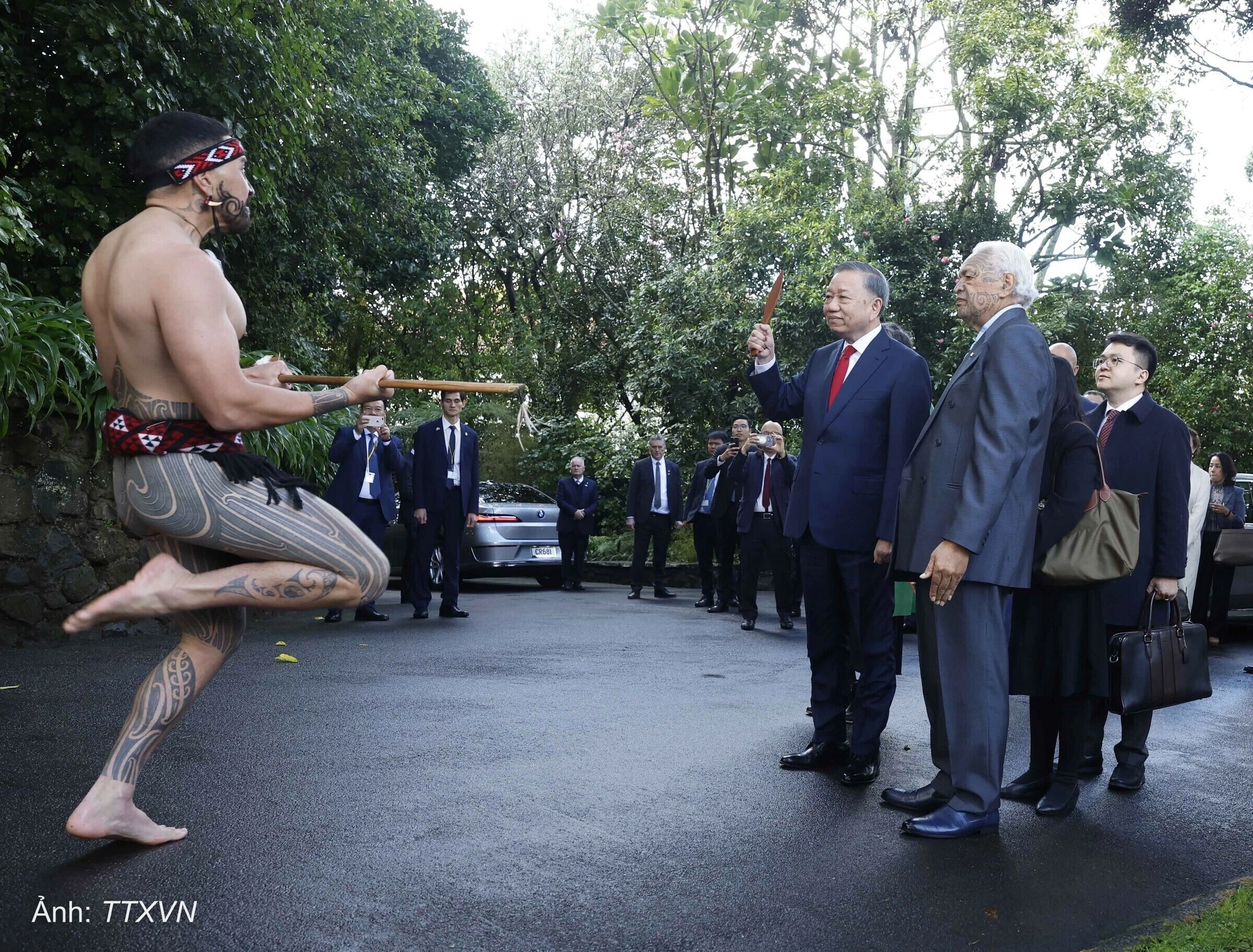 |
The welcoming ceremony for General Secretary, President To Lam was held according to traditional Maori indigenous rituals. *TTXVN* |
Hongi is a distinctive Maori greeting in New Zealand, often used when the New Zealand government hosts heads of state and royal families from other countries. According to Te Ara, the national encyclopedia managed by the New Zealand Ministry of Culture and Heritage, hongi has been part of Maori ceremonies since before Europeans arrived in New Zealand in the 17th century.
These rituals initially served a practical purpose: communities needed to determine if strangers arrived with peaceful intentions before allowing them into settlements. Today, hongi is still maintained during formal Maori occasions.
A proper hongi involves clasping the other person's hand, similar to a handshake, leaning forward, and gently pressing noses and foreheads together. Forehead to forehead, nose to nose, breath to breath. Placing a hand on the other person's shoulder is also an accepted alternative to hand-clasping.
In the Maori language, "hongi" means the sharing or exchange of breath. When performed, two people approach each other, press their foreheads and bridge of their noses together, close their eyes, and take a gentle breath.
According to Professor Angus Macfarlane, a Maori studies scholar at the University of Canterbury, New Zealand, the Maori choice to touch foreheads and noses when greeting stems from traditional cultural beliefs.
According to Maori mythology, the god Tāne-nui-a-Rangi created the first woman, Hine-ahu-one, and breathed life into her by touching his nose to hers. Tane is considered an ancestor of Te Ao Maori (the Maori people). The pressing of foreheads, touching of noses, and sharing of breath symbolize the exchange of life force, establishing trust, and fostering lasting connections between individuals, transcending geographical and cultural divides.
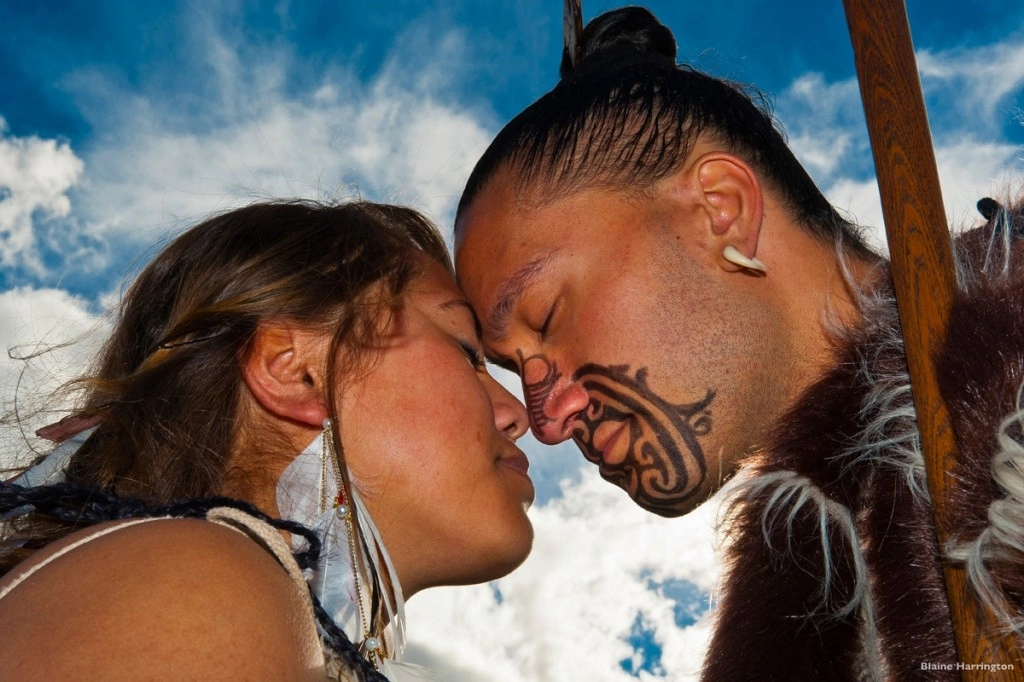 |
The Maori nose-touching greeting ritual in New Zealand. |
Those who have not visited New Zealand or are visitors are called "manuhiri". The locals perform this ritual, transforming guests into "tangata whenua", meaning "people of the land". During hongi, Maori exchange "ha", which signifies breath and the origin of life.
Professor Macfarlane explained that hongi can convey solemnity or lightness and joy, depending on the occasion. It is performed not only in ceremonies welcoming leaders and royal families but also at Maori tennis tournaments. After each match, participants approach each other to shake hands and perform hongi. Tourists can also use this greeting with locals to show respect.
According to Professor Te Hurinui Clarke, a lecturer at the University of Canterbury, New Zealand, hongi has many variations. Some forms involve only touching noses, while others combine touching foreheads, signifying the exchange of breath and knowledge. He added that hongi also carries spiritual meaning.
Living in the Bay of Plenty region, Professor Clarke noted that hongi in his homeland involves two nose touches instead of one. The first touch is to greet the person, while the second acknowledges and shows respect for their ancestors, grandparents, and parents.
Clarke often forgets and performs only one touch, then is typically prompted to do it again. "Hongi has always been an everyday greeting within the Maori community," he said.
Mai Phuong (According to Stuff, Christchurch mail)