 |
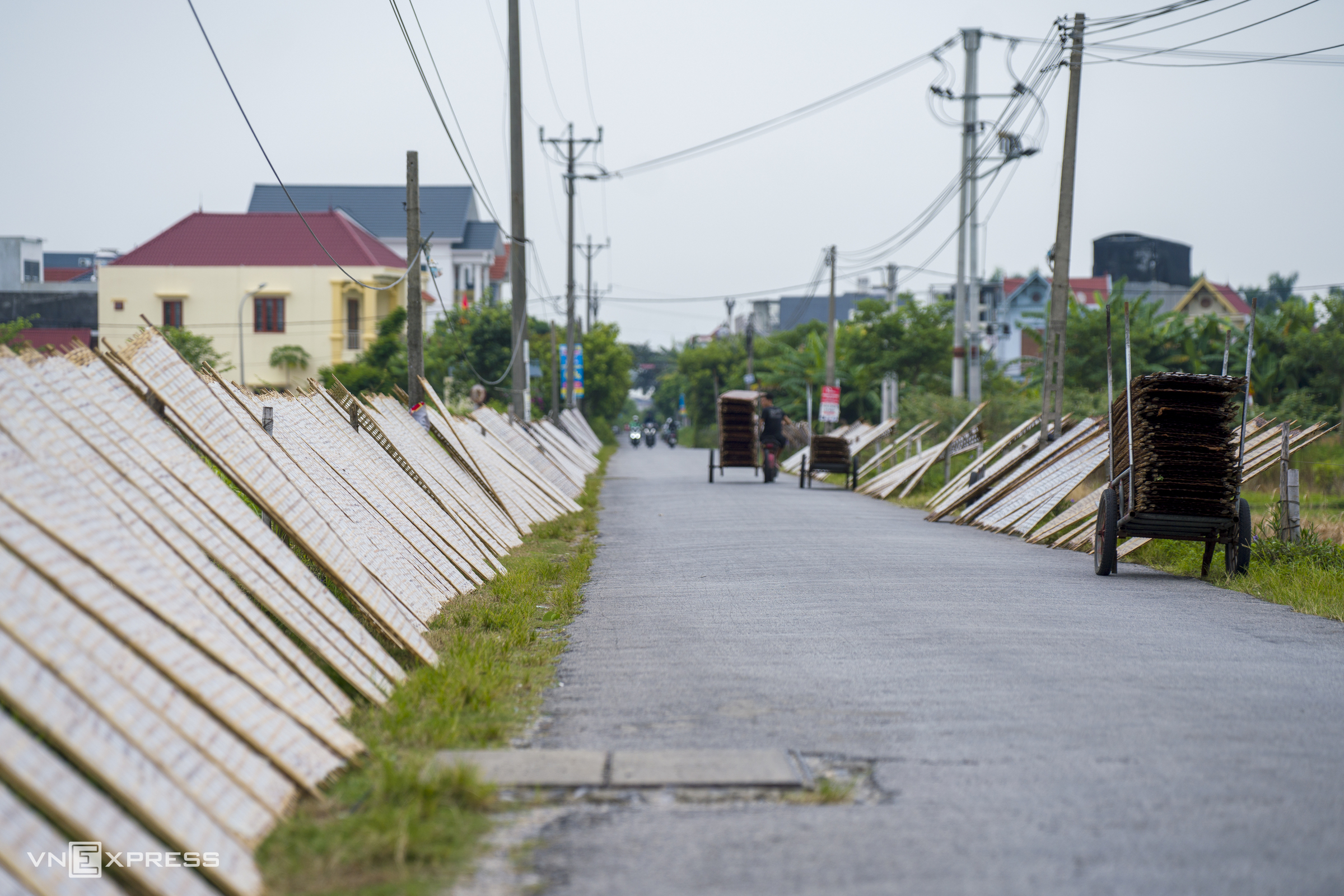
Along the roads of Nong Xa village, rows of banh da drying on bamboo frames lean, catching the sun and wind.
Nong Xa is home to about 70 households dedicated to making banh da. Many families have maintained this craft for three to four generations. Initially, the trade was a seasonal activity during agricultural downtime to supplement income, but it gradually evolved into a primary livelihood, establishing the renowned brand of red and white banh da.
 |
The main ingredient for banh da is rice known for its good expansion properties. The rice is carefully cleaned of impurities, then soaked in cold water for about one hour in summer or 10 hours in winter, before being ground into a fine flour.
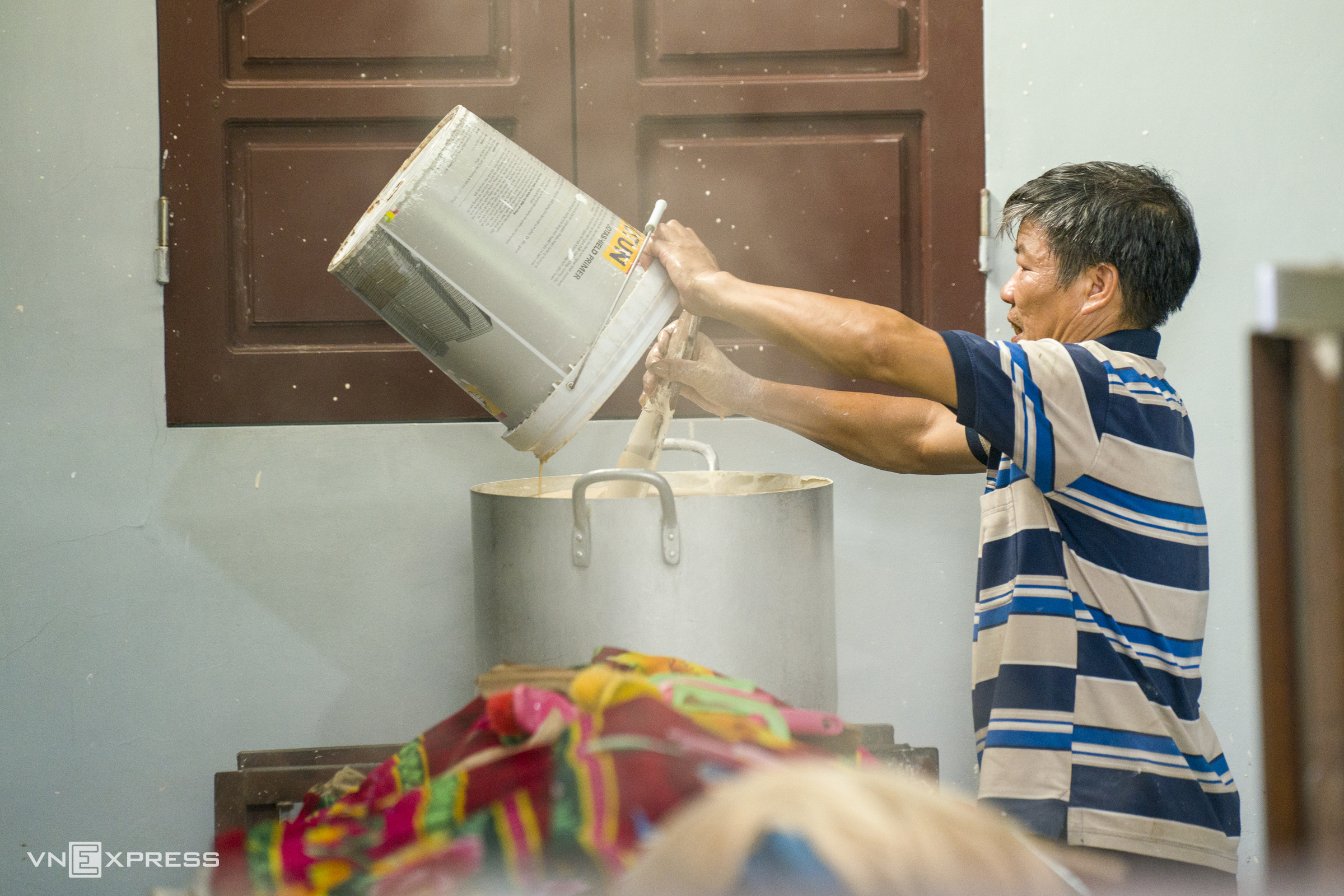 |
Trinh Van Nen pours the flour mixture into the steaming machine. Under the heat of the boiler, the flour is cooked, then passes through a rolling machine to form a thin sheet, like a silk ribbon, before being placed on bamboo frames to dry.
About 10 years ago, villagers manually steamed the noodles using boilers, similar to making banh cuon (steamed rice rolls). Today, most households use machines, which speeds up the work and reduces labor.
However, the artisans must still meticulously control the thickness of the noodles and the boiler's temperature. "If the flour contains impurities, the noodles will warp, and if the temperature is insufficient, they will break easily", Nen explains.
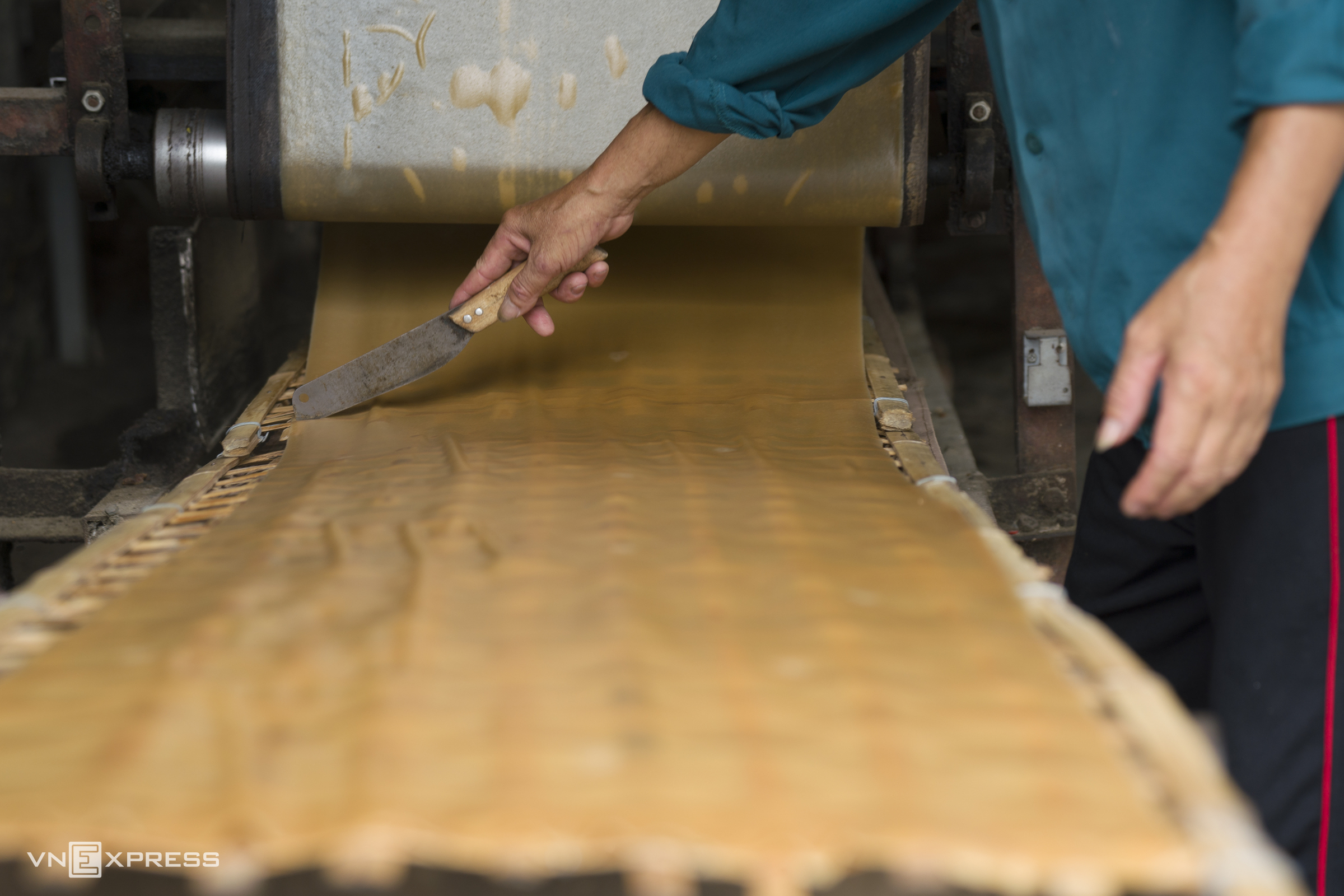 |
At the exit of the rolling machine, the artisan measures the length of the noodle sheet to fit the bamboo frame and swiftly cuts it with a knife.
The bamboo frames, approximately 50 cm wide and over 2 m long, offer high ventilation, helping the noodles dry quickly, preventing sticking, and minimizing the impact of sun exposure.
To make red banh da, a small amount of coloring water, prepared with yellow sugar, is mixed into the rice flour. For white banh da, the flour is left plain. Nong Nen affirms that banh da from Nong Xa village contains no additives or preservatives.
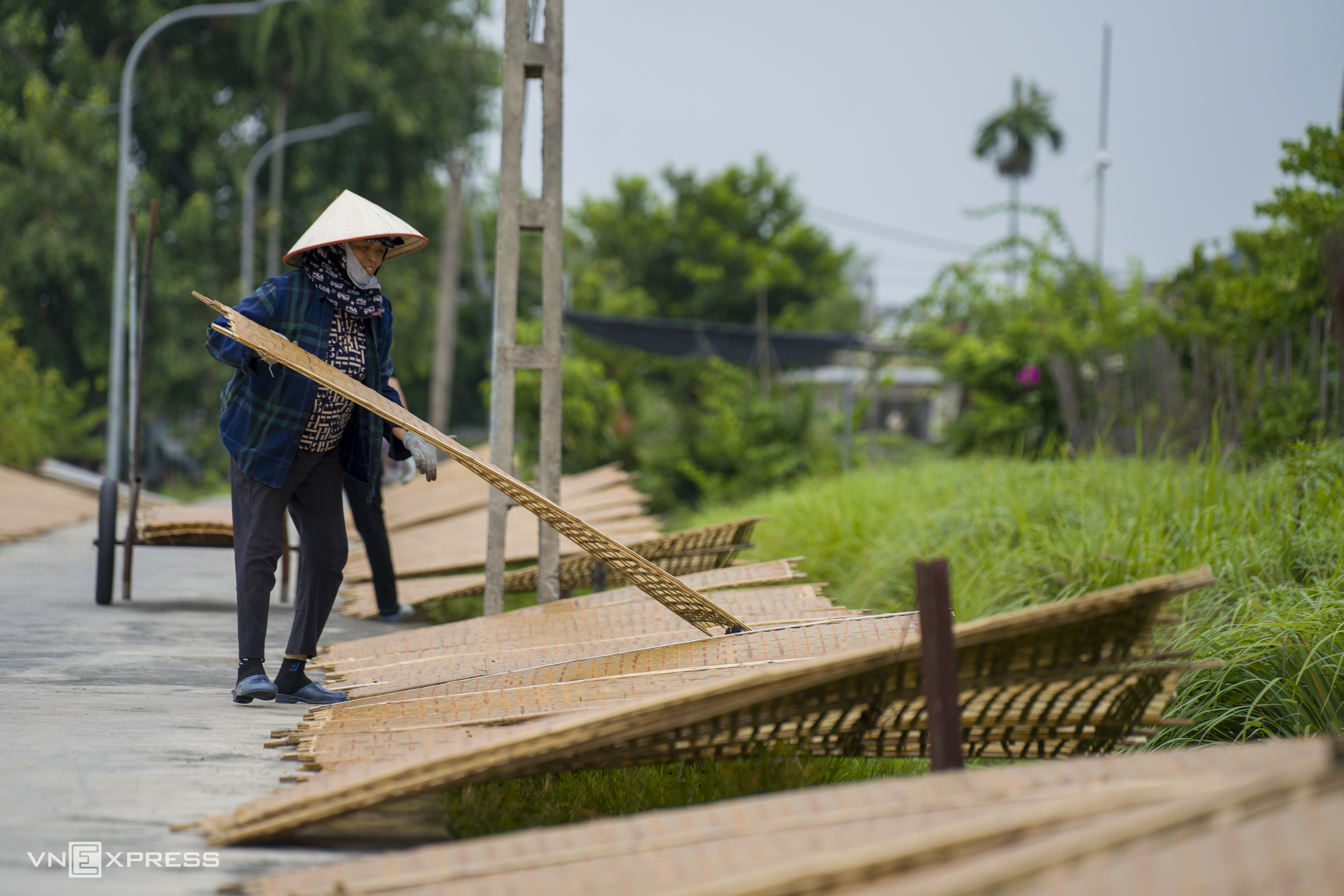 |
Do Thi Uyen carries bamboo frames of noodles to the village road for drying.
The noodle drying process resembles drying paddy. On a sunny day, the noodles dry in just over one hour. During heavy rain, they must be dried indoors using a machine.
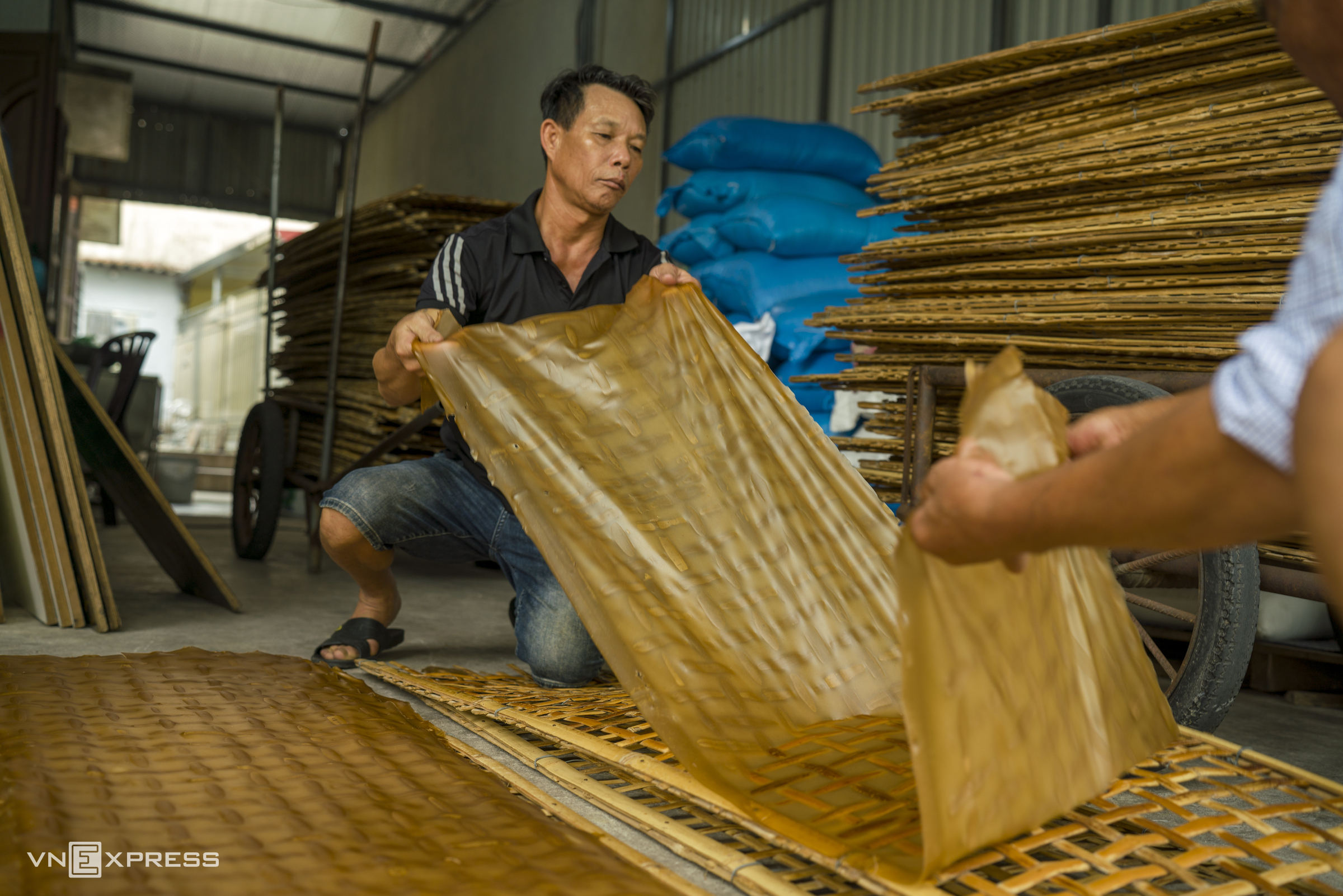 |
Once sufficiently dry, the noodles are peeled off the bamboo frames, stacked, pressed flat with a stone mortar, and then cut into strands ranging from 0.2-1 cm wide, depending on customer requirements.
The noodles come in two types: dry noodles, sold to distant provinces or as gifts; and wet noodles, supplied to local eateries for immediate use.
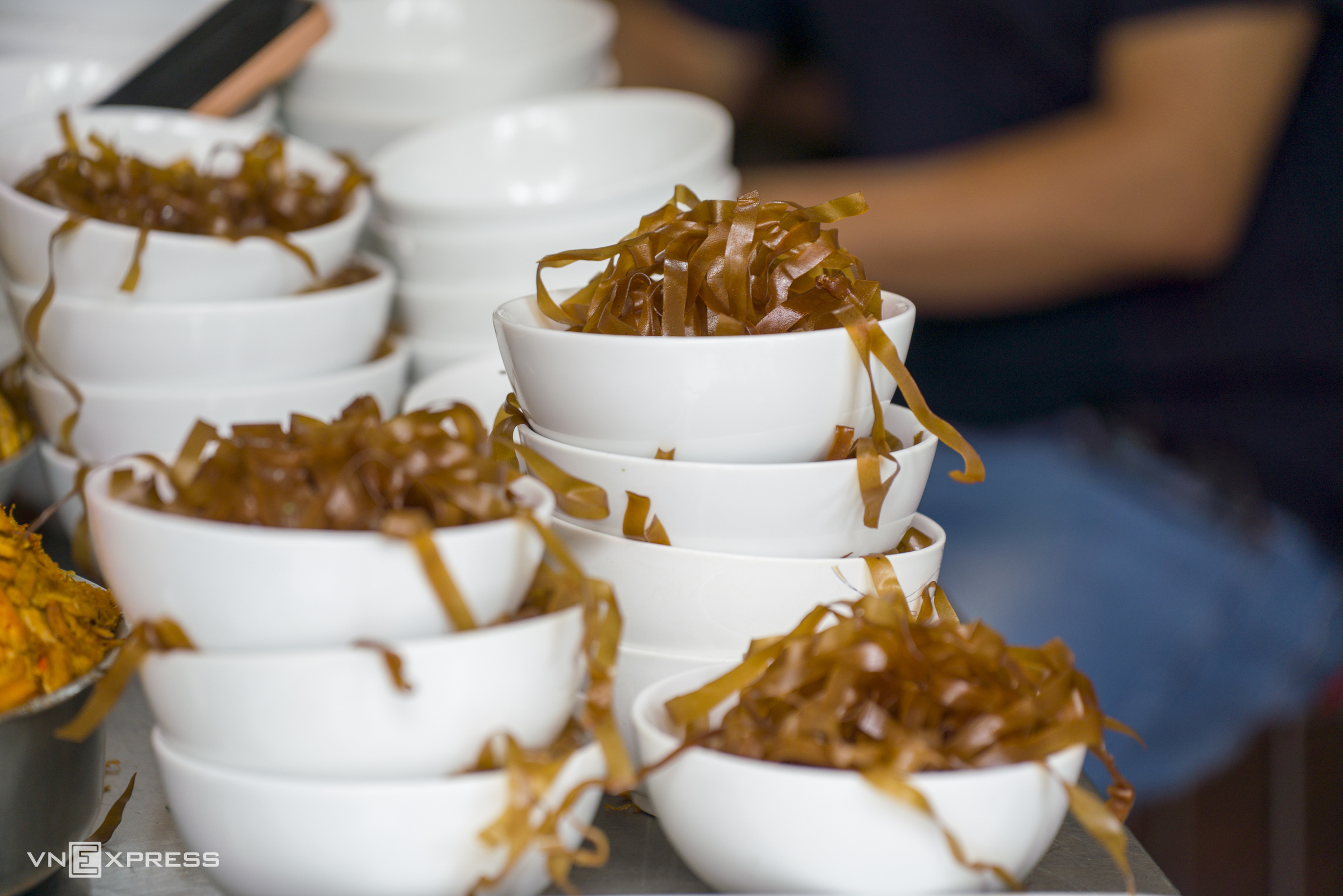 |
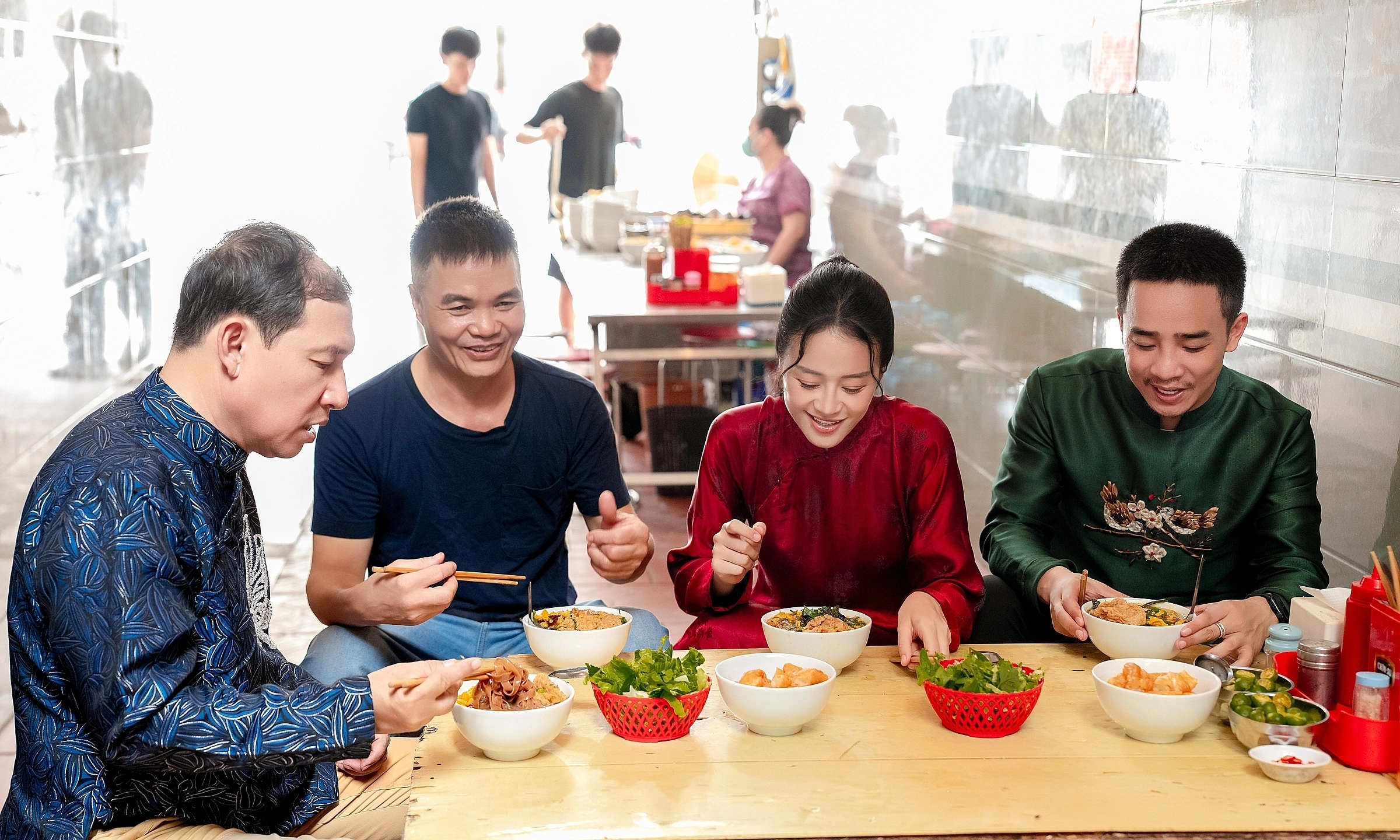
Red banh da is a crucial ingredient for Hai Phong's famous banh da cua dish.
As the noodles are already steamed, before serving, chefs simply blanch them in boiling broth. They are then placed into a bowl with various accompaniments such as fried wild betel leaf sausage, shrimp, fish cake, water spinach, and topped with crab broth to complete the city's distinctive dish.
Le Tan