A new fee structure for photography at Ho Chi Minh City's Independence Palace has sparked debate, with tourists expressing confusion over costs that can reach up to 10 million VND. Mai Vy from Hanoi, who plans to visit Ho Chi Minh City in August, voiced her concern. "Hearing about the fee for bringing a camera into the Palace, I'm puzzled because this cost is 10 times higher than the entrance ticket," she shared. She typically carries a compact camera for souvenir photos during her travels, finding the varied fee structure for photography at Independence Palace confusing and lacking clarity on its target audience.
Starting 1/8, Independence Palace, a special national relic managed by Reunification Hall in Ho Chi Minh City, implemented a new photography service price list. Fees range from 500,000 VND to 10 million VND for individuals and teams bringing recording equipment into the premises.
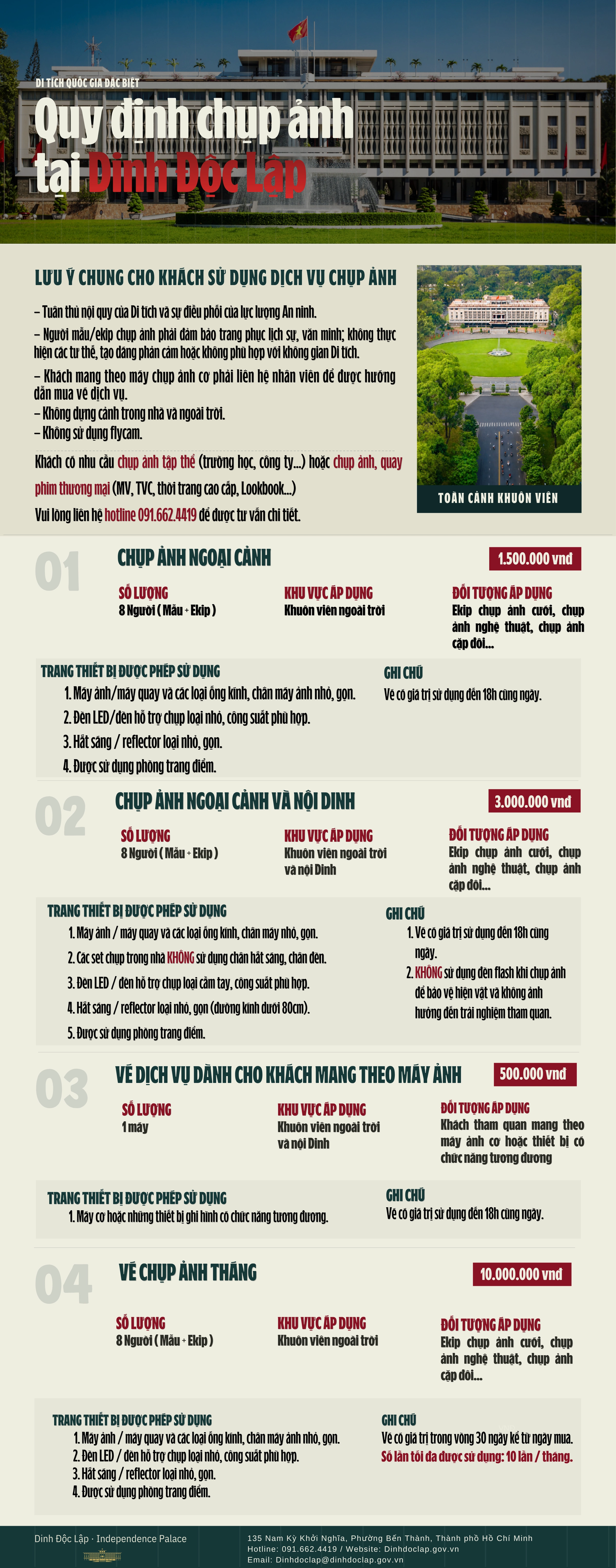 |
Regulations on photography fees at Independence Palace from 1/8. *Photo: Reunification Hall* |
Under the regulations, visitors carrying one DSLR camera or equivalent equipment must pay a 500,000 VND service fee per camera for photography of the exteriors and interior until 6 p.m. on the same day. For teams of up to 8 people, the fee for exterior photography is 1.5 million VND; combined exterior and interior photography costs 3 million VND. The Palace also offers a monthly package of 10 million VND, allowing teams of up to 8 people to photograph exteriors 10 times within 30 days. Commercial activities such as filming, music videos, TV commercials, or high-end fashion photography require direct contact with the management for negotiation.
Bui Huu Toan, Director of Reunification Hall, explained the new fees were introduced to restrict and regulate professional photography groups, preventing them from disrupting the visitor experience. According to Toan, there has been an increase in professional photography teams bringing clients into the Palace for shoots. These groups often monopolize prime photo spots for extended periods, bring bulky equipment, obstruct pathways, and negatively impact other tourists' experiences.
"The regulation for photography services is a tool to manage space, not to generate revenue or profit," Toan stated. All proceeds are managed and used in accordance with State regulations for public service units. Regarding the 500,000 VND fee for visitors carrying cameras, a management representative clarified that the initial regulation targeted individual service providers, not tourists taking souvenir photos with their cameras.
"Due to unclear wording in the document, which led to misunderstandings, the management will review and revise section 3 of the regulation for greater clarity and transparency," Toan said. He emphasized that the fees are aimed at those entering the Palace to provide photography services, not at tourists using their cameras for personal souvenirs. Currently, Independence Palace security personnel categorize visitors based on their equipment, group size, and operational procedures. Since implementing the new price list, the site has not recorded any on-site complaints or disputes from visitors.
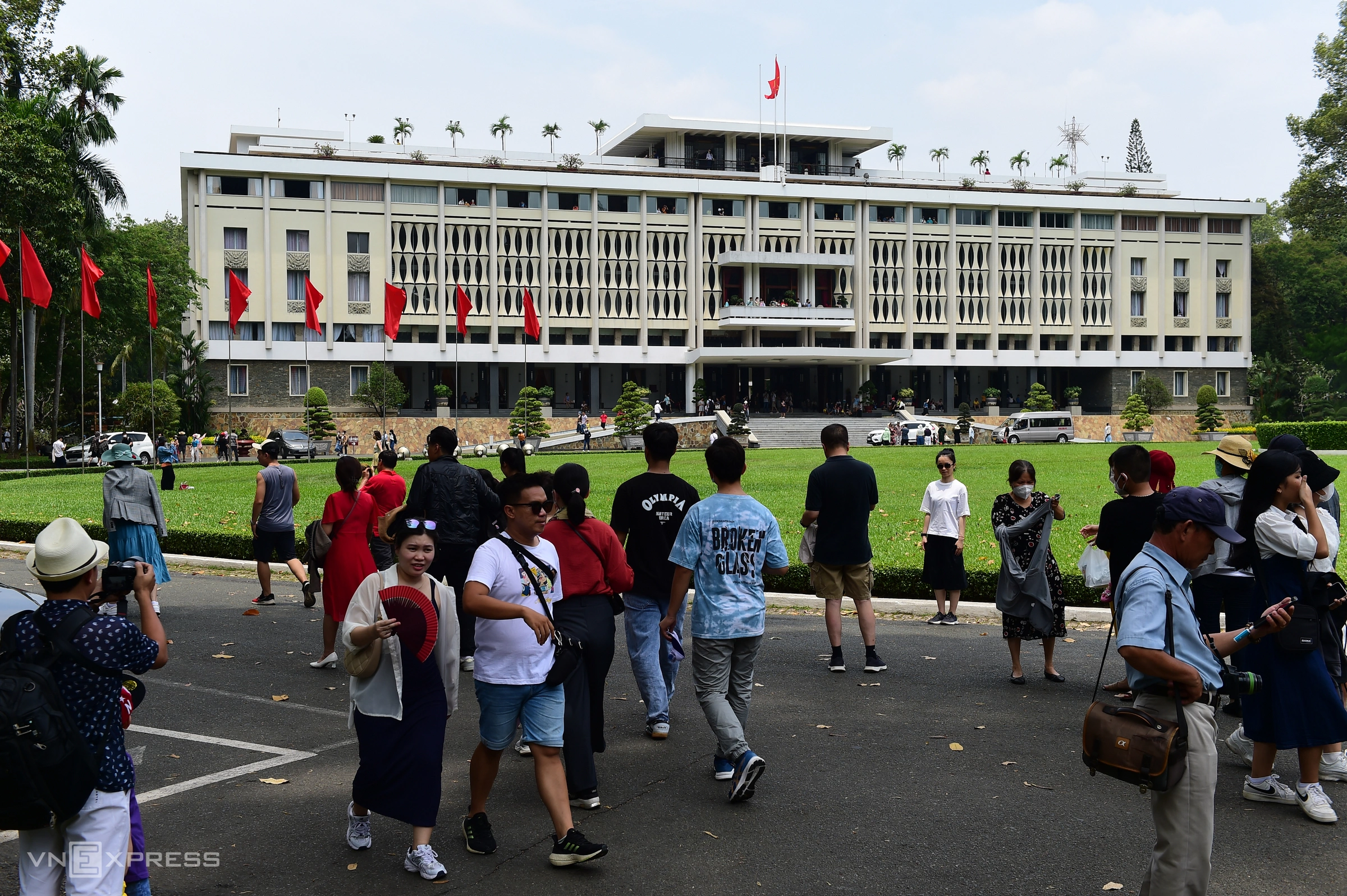 |
Visitors at Independence Palace. *Photo: Thanh Tung* |
Photography fees at historical sites and museums are not new. In Hanoi, the Vietnam National Fine Arts Museum charges 300,000 VND per camera for general photography; 1 million VND per team for wedding photos; 3 million VND for fashion photography teams; and 5-20 million VND for documentary or reportage film crews, all requiring approval from the museum director. Some historical sites adopt flexible management models. At An Dinh Palace in Hue, after purchasing an entrance ticket, visitors are free to take souvenir photos with their phones or personal cameras. The Hue Monuments Conservation Center only requires registration and applies separate service fees for wedding photography teams, commercial shoots, or professional film crews.
Globally, popular destinations also clearly differentiate between individual tourists and commercial teams. At the Louvre and the Palace of Versailles in France, visitors can take souvenir photos but must adhere to regulations concerning equipment and space. Professional or commercial photography and filming activities require prior permission and may incur site usage fees, depending on the scale and nature of the work.
According to Nguyen Tran Hoang Phuong from the Institute for Tourism Research, personal photography fees for tourists should not be imposed, as it is part of the destination experience. To limit professional teams from monopolizing space, this activity should be directly regulated instead of creating a mechanism that misleads visitors into thinking they must pay to bring a camera. He suggested that fees should only apply to clearly commercial activities like advertising, music videos, or TV commercials. Additionally, management could require professional teams to register in advance, limit personnel, equipment, time, or operational areas, especially during peak hours.
"Visitor photography should be viewed as a form of destination promotion, as images shared on social media can generate media buzz and attract more tourists," Phuong stated. He advised that historical sites should prioritize improving visitor experience and developing tourism products rather than focusing on revenue from photography.
Bich Phuong