Visitors to Gangotri temple, one of the most sacred Hindu sites in the Himalayas, are now required to perform the panchgavya ritual. This mixture, consisting of 5 components: milk, yogurt, ghee, honey, and cow urine, is considered a test of devotion by the temple management before allowing entry. The regulation aims to ensure that Gangotri temple only welcomes followers of Sanatan Dharam (traditional Hinduism).
"True devotees will not find this difficult; only those feigning belief will refuse," stated Dharmendra Semwal, Chairman of the temple's management committee, to The Independent.
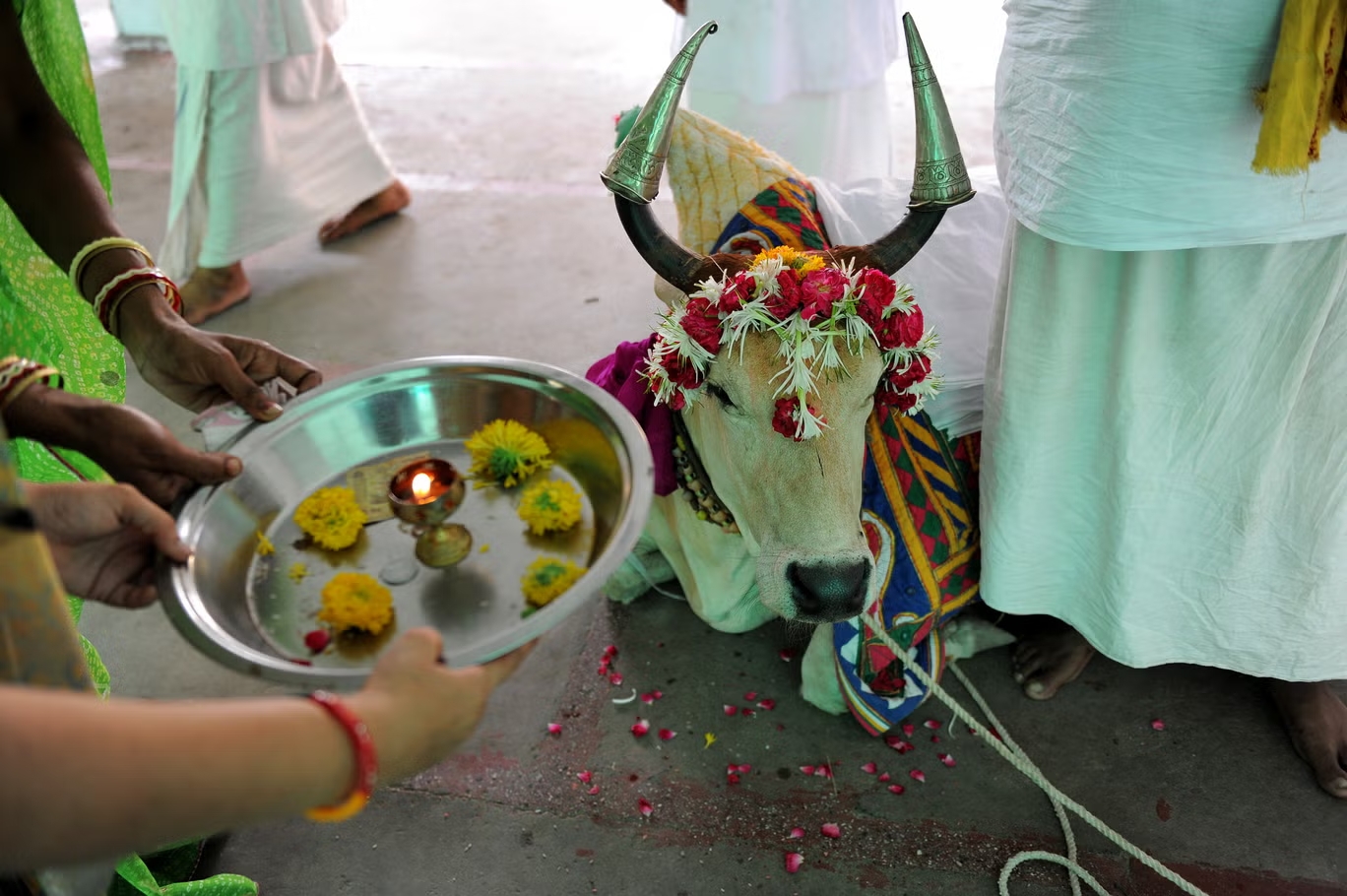 |
Devotees performing a blessing ritual with the sacred cow "Ganga" at Lord Jagannath temple, Ahmedabad. *Photo: AFP* |
Temple staff carry out the ritual at the entrance, directly providing the mixture to pilgrims. According to Semwal, this practice reinforces the spiritual devotion of followers. The announcement coincides with the start of the annual Char Dham Yatra on 19/4. This event attracts millions of people to 4 major temples in the Himalayas: Yamunotri, Gangotri, Kedarnath, and Badrinath.
While most temples in India are open to visitors, there is a growing trend of tightening controls against non-Hindus. In March, the Badrinath-Kedarnath temple management also prohibited non-Hindus from entering 47 temples under its administration. The mandatory consumption of cow urine drinks has sparked widespread debate, touching on sensitive religious and political issues in India. While some organizations promote cow-derived products for their purported healing properties, medical experts have repeatedly warned that these claims lack scientific basis. During the Covid-19 pandemic, the Indian medical community opposed the use of similar products to boost immunity due to insufficient evidence.
In 2025, the 4-temple system of Yamunotri, Gangotri, Kedarnath, and Badrinath welcomed 5,1 million visitors in less than seven months. It remains unclear how the temple management will maintain the cow urine mixture requirement when visitor numbers in the region peak in the coming period.
By Mai Phuong (Source: The Independent)