Amidst the Southeast Asian tourism industry being affected by the conflict in Iran, the region's emergence as an alternative aviation transit hub is becoming a lifeline.
According to Reuters, major airlines in the region are witnessing soaring demand for European routes. The reason is that travelers are apprehensive about Middle East aviation hubs due to the risk of missile and drone attacks.
Singapore Airlines (SIA), Cathay Pacific, Korean Air, and Qantas Airways all reported improved business performance on flights to Europe in March.
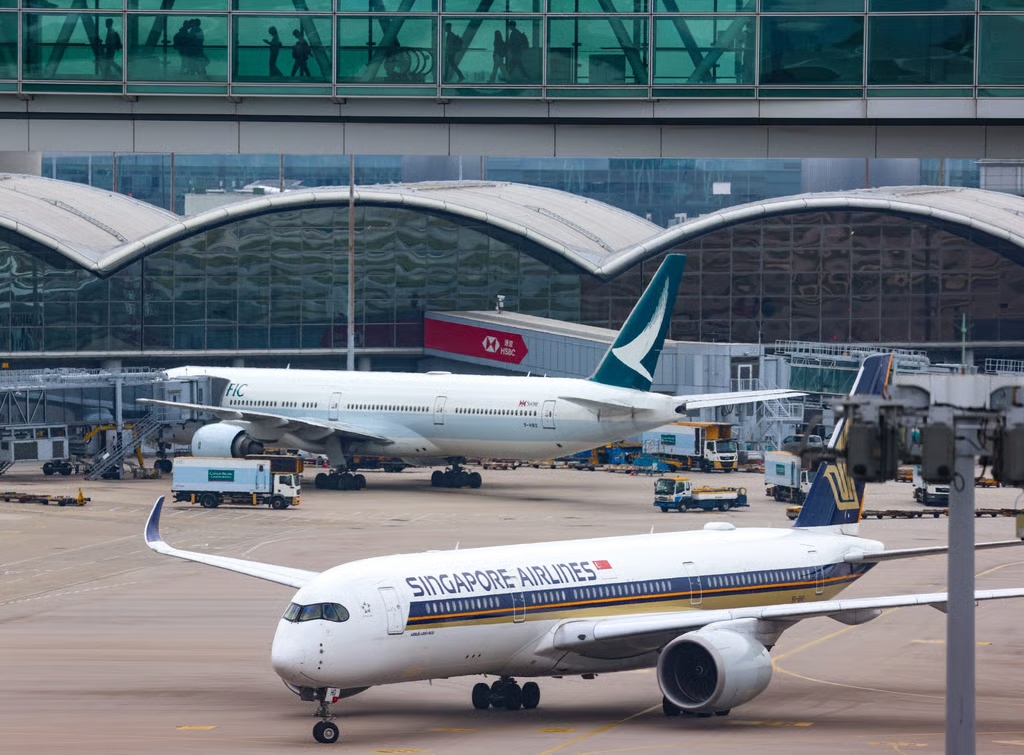 |
A Singapore Airlines aircraft moves on the tarmac, with a Cathay Pacific plane in the background at Hong Kong International Airport. Photo: Jelly Tse
A SIA representative confirmed the airline's passenger volume increased by nearly 15% compared to the same period last year. This result was driven by Easter holiday travel demand and "diverted traffic from Middle East aviation hubs due to capacity constraints caused by the conflict". The seat load factor on its European flights reached 93% in March, up from nearly 80% the previous year.
To meet demand, many airlines, including SIA, added over 15 flights connecting Singapore and Europe in March alone. Cathay Pacific also confirmed it enhanced its European services to capitalize on this customer segment.
This shift occurs as the Southeast Asian tourism market outlook, projected to exceed 39 billion USD, is overshadowed by political events. Gary Bowerman, Director of Re: Set Strategies, a Kuala Lumpur-based tourism data analytics and consulting firm specializing in the Asian market, stated the region will face challenges in the coming months as tourism demand shows signs of slowing.
Data released in late March by the ASEAN Tourism Association and Pear Anderson, a travel consultancy specializing in the Southeast Asian market, highlighted three concerning realities facing businesses in the region:
Middle East tourism segment frozen: 72% of travel businesses reported customers postponing or canceling trips to the region. Disrupted long-haul routes: 70% of European tours with transit through Gulf region airports were canceled or rescheduled. Declining business confidence: 48% of surveyed businesses expected QII business prospects to be worse than anticipated at the start of the year.
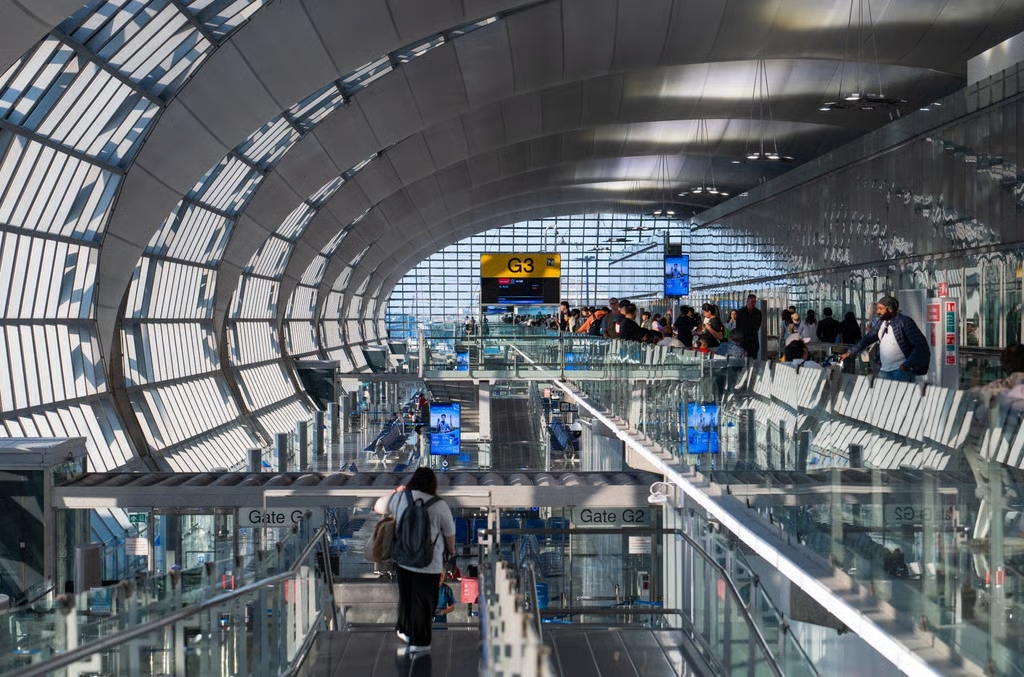 |
Passengers queue for check-in at Suvarnabhumi Airport, Bangkok. Photo: Harvey Kong
Given this context, 64% of businesses believe intra-regional Southeast Asian tourism is a viable alternative. In the Philippines, the Department of Tourism is actively encouraging domestic travel to offset the decline in international visitors.
Each nation's ability to indirectly benefit from travelers avoiding the Middle East will depend on the capacity of its airport infrastructure. Malaysia Airlines hopes to establish Kuala Lumpur International Airport (KLIA) as a new connecting hub for medium- and long-haul flights, aiming to fill the void left by Middle East transit points.
However, a clear differentiation will emerge. According to Gary Bowerman, financially strong airlines like Singapore Airlines and Cathay Pacific have an advantage due to their expanding gateway airport infrastructure. Many other countries remain heavily reliant on the connectivity provided by Gulf region airports such as Dubai, Abu Dhabi, or Doha.
"In the short term, it is difficult to fully replace the role of these hubs, especially with oil prices remaining high," Bowerman stated.
Beyond conflict pressures, Asian airlines also face the risk of aviation fuel shortages in June.
The expert from Re: Set Strategies suggests that low-cost carriers are the most vulnerable. As most low-cost airlines do not hedge against fuel price volatility, rising fuel costs will directly pressure profit margins. The low-cost segment currently accounts for 53% of total seat capacity across the region and is a key driver for intra-regional Southeast Asian tourism.
Mai Phuong (According to SCMP)