Earlier this year, a night flight from Chicago to Los Angeles, US, was delayed for nearly one hour due to an intoxicated passenger. The individual vomited shortly after the aircraft left the gate, prompting airport staff to call a cleaning crew. The passenger was subsequently asked to leave the flight.
Amelia Mularz, a writer for CNN Travel, directly witnessed the incident and stated that it was not an isolated case. Aviation safety studies indicate that alcohol is a primary cause behind most disruptive behaviors on aircraft, from arguments and violence to sexual harassment.
Analyzing more than 1.600 incident reports submitted to the US Aviation Safety Reporting System (ASRS), Lynne M. Vieraitis, a criminology lecturer at the University of Texas, US, identified a nearly absolute recurring factor: passengers had consumed alcohol.
 |
Alcoholic beverages on flights. *Photo: safeandsober*
According to the Institute of Alcohol Studies in the UK, 60% of adults in the country have encountered intoxicated passengers on flights, with more than half considering this a serious issue for the aviation industry.
Numerous serious incidents have been recorded, including passengers attempting to open emergency exits mid-flight or brawls that necessitated emergency landings.
While most opinions concur that intoxicated passengers pose a safety threat, the responsibility for handling such situations is often deferred among multiple parties. Reports submitted to ASRS primarily originate from pilots, flight attendants, and ground staff. According to Vieraitis, many flight attendants expressed a lack of confidence that these reports would be thoroughly addressed.
"Their workspace is a cabin at an altitude of over 9.000 meters. When an incident occurs, they cannot simply eject a passenger like a bar on the ground", she said.
Despite receiving training in behavior control and de-escalation techniques, flight attendants still face significant risks while simultaneously ensuring flight safety and serving passengers.
Another factor contributing to increased conflict is the growing frustration with current flying experiences, such as narrower seats, insufficient overhead bin space, and numerous additional fees. When these frustrations combine with alcohol, the risk of uncontrolled behavior escalating becomes greater.
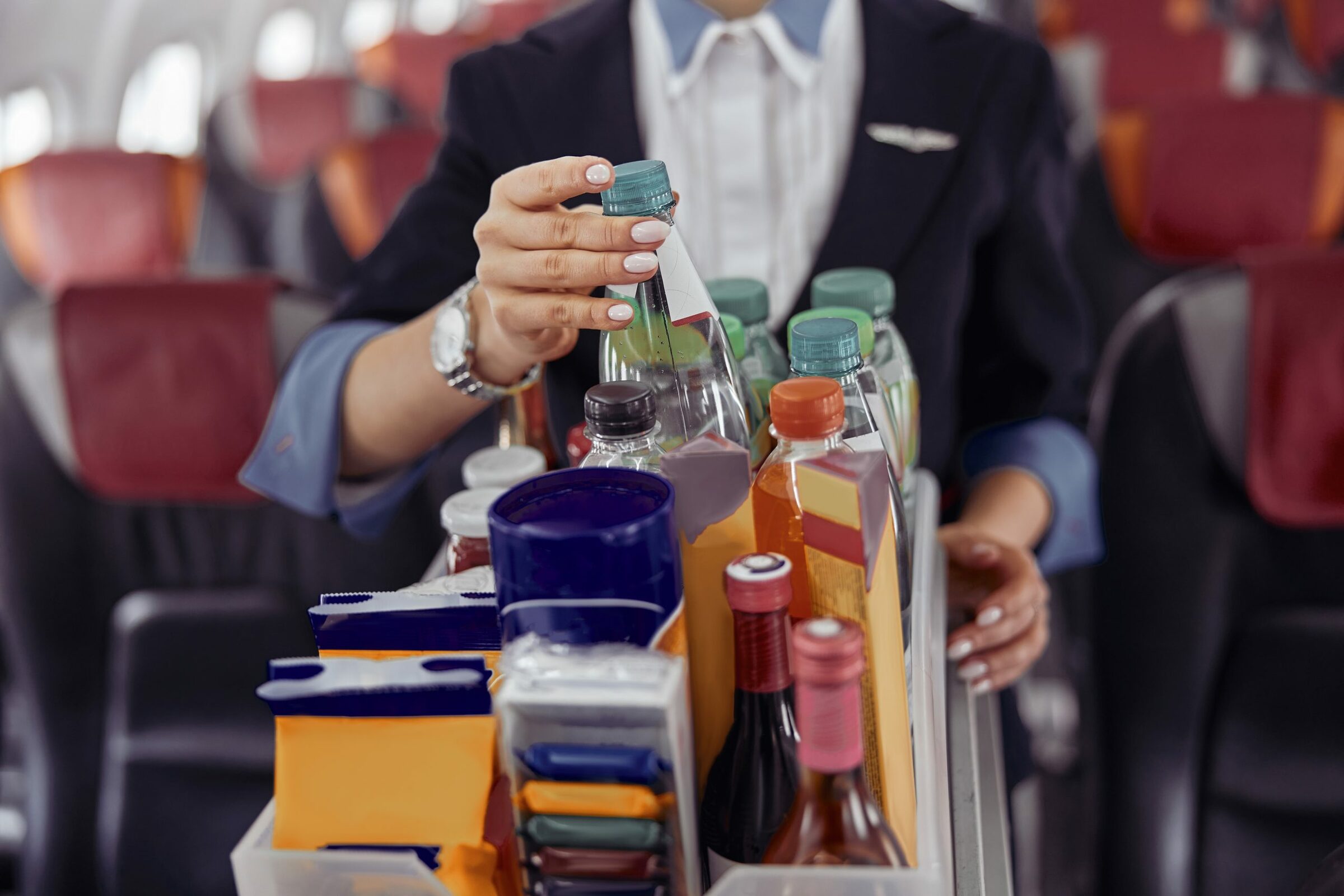
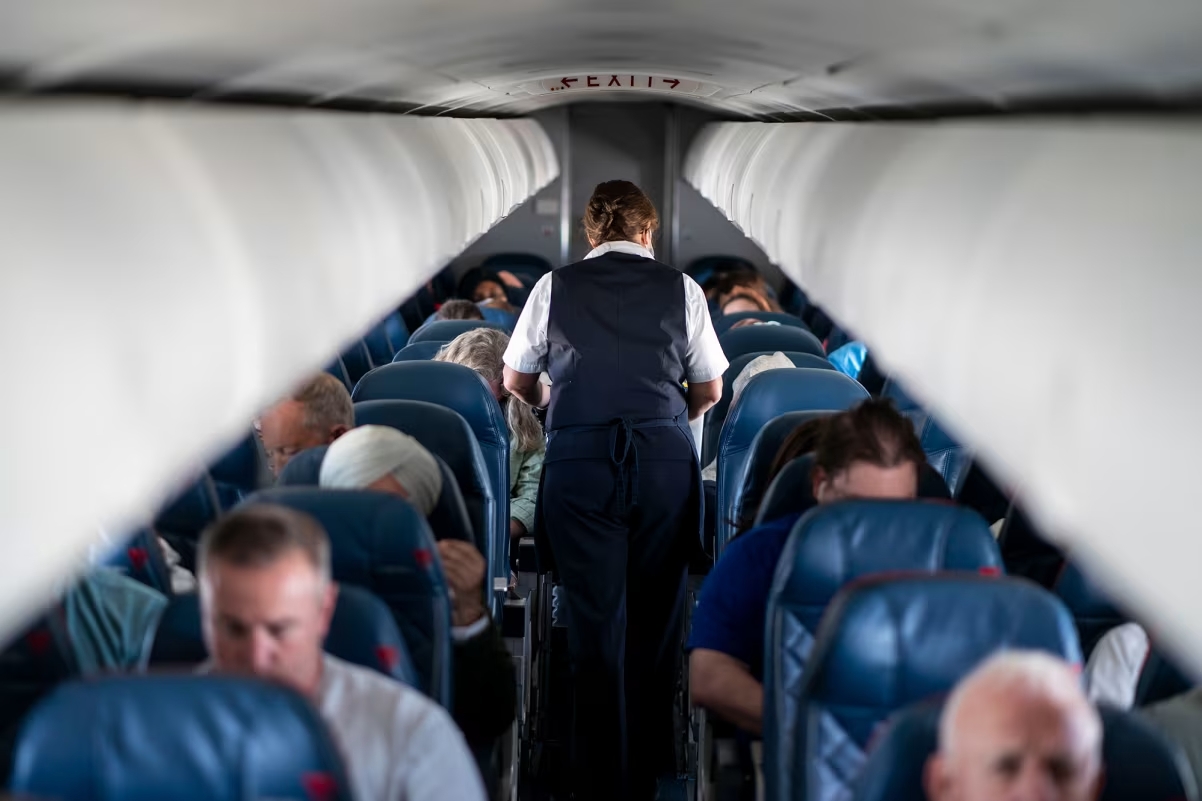 |
Flight attendants serving alcoholic beverages on a flight. *Photo: Kent Nishimura/Los Angeles Times*
In the incident Amelia Mularz witnessed, flight attendants managed the situation, but internal disagreements emerged. Some argued that ground staff failed to prevent the intoxicated passenger from boarding at the gate.
Many airlines attribute the root of the problem to airport bars. Ryanair, Europe's largest airline, has repeatedly called for stricter controls on alcohol sales at airports.
Ryanair's leadership views it as "unfair" that airports sell unlimited alcohol while airlines bear the safety risks. The airline even proposed limiting each passenger to a maximum of two drinks at airports, especially for flights heading to "party hotspots."
In the US, the Federal Aviation Administration (FAA) has the authority to penalize disruptive behavior. In 2022, a female passenger was fined nearly 82.000 USD for assaulting the flight crew and attempting to open a plane door mid-flight. Some airlines also implement permanent flight bans for serious cases.
The biggest obstacle to stricter alcohol regulations lies in profitability. Alcohol is a high-revenue item for both airlines and airports, particularly in business and first-class cabins. Many major airports worldwide decline to disclose the proportion of their revenue derived from alcoholic beverages.
Despite economic considerations, passenger attitudes are gradually shifting. A survey by the Institute of Alcohol Studies revealed that 67% of respondents support limiting drinks at airports, and 64% agree to implementing alcohol breathalyzer tests before boarding.
To date, no unified mechanism exists among airports, airlines, and regulatory bodies for controlling alcohol consumption by passengers.
While everyone acknowledges that intoxicated passengers pose a risk to flight safety, the intertwined factors of economic interests, legal responsibilities, and individual rights mean that the challenge of controlling alcohol consumption in the skies remains without a clear solution.
Mai Phuong (According to CNN)