A dive tragedy occurred in an underwater cave system on Vaavu atoll, Maldives, on 14/5, resulting in the deaths of five Italian guests and one navy diver. The group of Italian visitors consisted of scientists and students from the University of Genoa, led by Professor Monica Montefalcone, 51. They were conducting a dive to research an unannounced coral species. Among the deceased was Giorgia Sommacal, 22, Professor Montefalcone's daughter.
According to the rescue team, the likely cause of the tragedy was a "sand wall" deep inside the second cave, which completely obscured visibility and blocked the only exit.
Jonathan Volanthen, a British cave diver who participated in the 2018 rescue of a youth football team in Tham Luang cave, Thailand, stated that cave diving carries risks fundamentally different from open-water diving.
Volanthen explained that cave divers cannot ascend directly in an emergency due to overhead geological obstructions. In confined spaces, divers can easily stir up fine silt or sand, reducing visibility to zero within seconds.
The inability to surface, combined with obscured exit visibility, makes escape difficult for divers. At greater depths, increased pressure leads to higher air consumption.
"Depth is directly proportional to increased danger," Volanthen stated, emphasizing that divers must meticulously control their air supply to ensure a slow ascent and reduce the risk of decompression sickness.
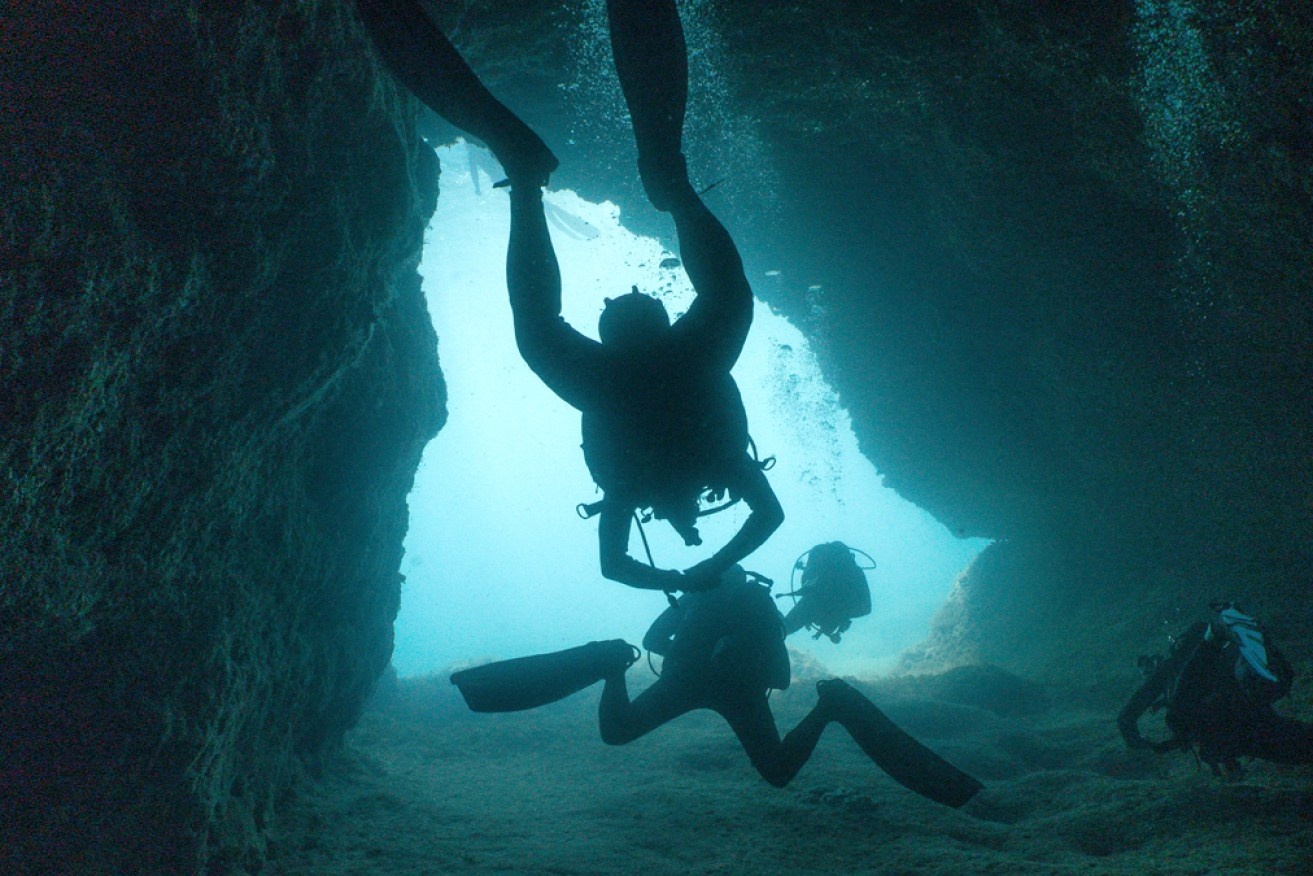 |
Illustration of cave diving in the Maldives. Photo: The New Daily |
Edd Sorenson, an American cave diving expert, clarified a common misconception that human eyes can adjust to darkness.
Unlike nocturnal darkness at home, where eyes can still adjust to see dimly, deep cave environments completely eliminate light.
Without any reflective rays, if a dive light fails or is obscured, human eyes are completely useless deep inside a cave. This state causes divers to lose spatial awareness and direction instantly.
For survival, a mandatory principle is to always maintain a continuous guideline from the dive position to the surface. Sorenson stressed the philosophy of "independent redundancy" for all critical systems. When cave diving, divers must prepare a minimum of two air tanks for two regulators, three lights, and two dive computers to monitor depth and ascent rate.
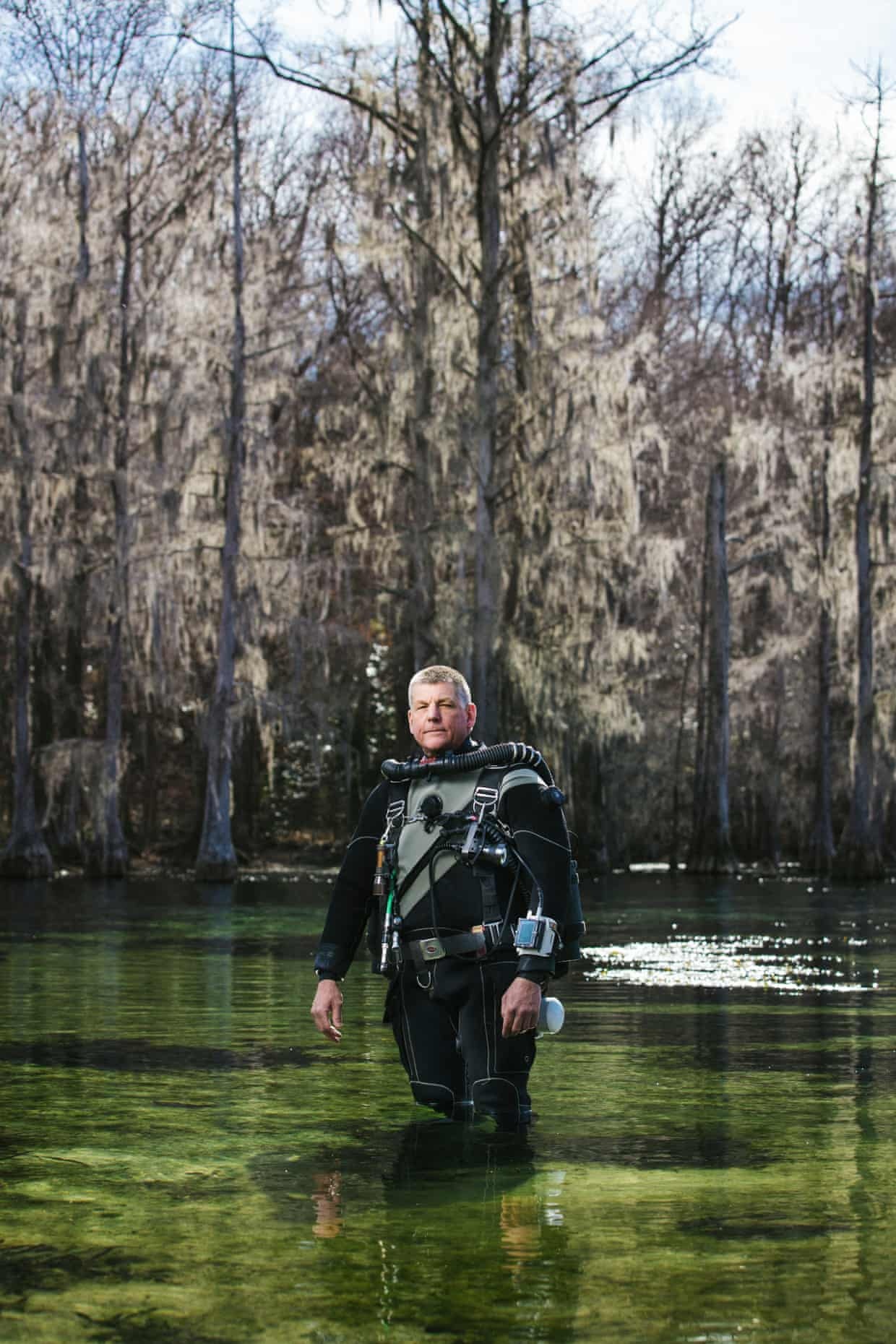 |
Sorenson before a dive. Photo: AP |
With decades of experience, experts believe that proper training and understanding personal limits are vital. However, Sorenson cautioned that experience can also lead to overconfidence among instructors.
Exceeding safety limits in cave diving means risking one's life.
Cristina Zenato, a cave diving instructor based in the Bahamas with over 4,500 cave dives and more than 80 km of guideline laid across various cave systems, noted that the underwater environment demands absolute human respect. Beyond technical skills, a stable mental state is a core component for making accurate decisions.
"You can be extremely well-trained, but I've sat at the water's edge and told myself, 'not today'," she said. "When you ask yourself the question, you know you have the right answer."
By Hoai Anh (Source: Guardian)