The exhibition features 50 works by photographers Nicolas Cornet, Vu Khoi Nguyen, Alexis Chaigneau, along with illustrations by Paul Rey, panoramas, and a short documentary involving scientists.
The event takes place at Explora Science Quy Nhon - Center for Science Discovery and Innovation, from 25/9 to 25/3/2027.
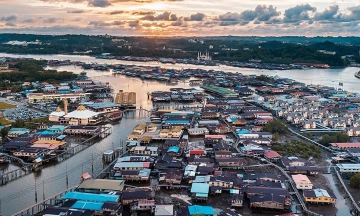
Located at the gateway to Quy Nhon, Thi Nai Lagoon spans about 50 square kilometers. It serves as a transitional zone between the Kon River and Ha Thanh River, and between land and sea, facilitating a continuous exchange of water, sediment, nutrients, and organisms.
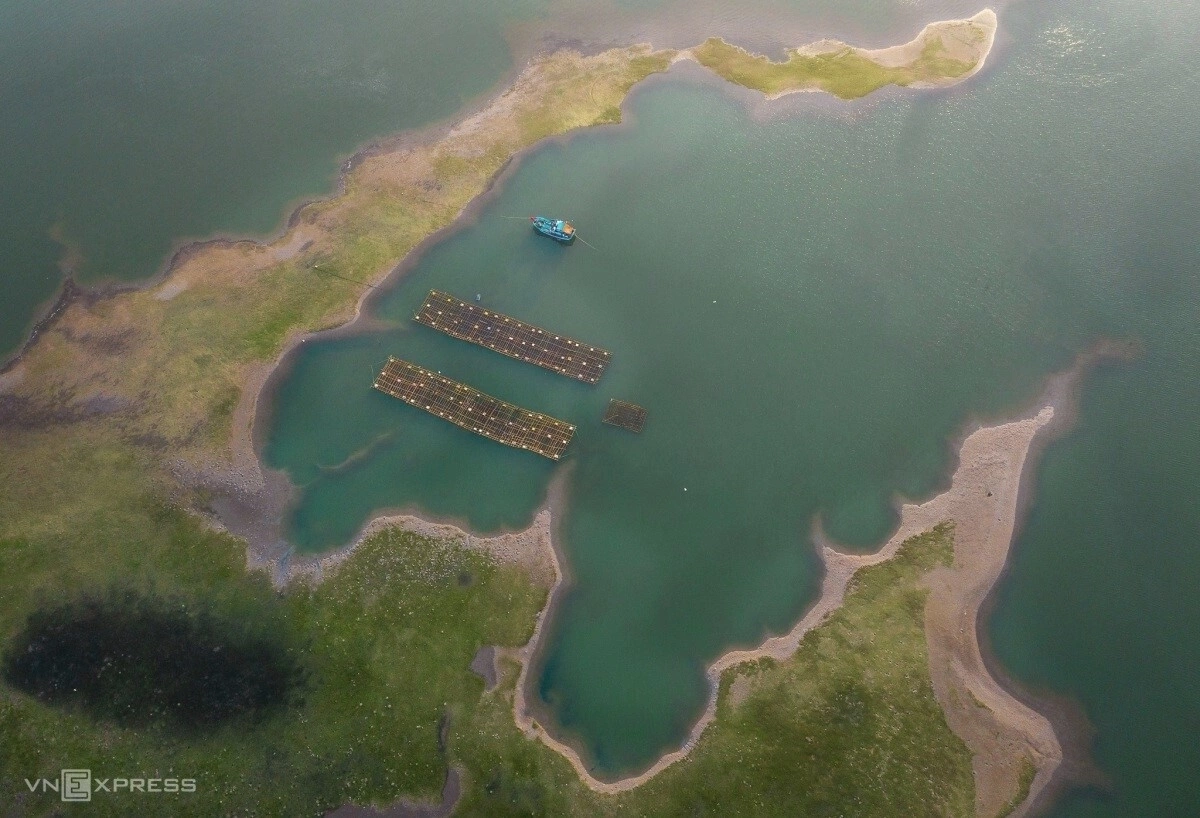 |
A view of Thi Nai Lagoon from above. Photo: Nguyen Tien Trinh |
Its ecosystem is influenced by tides, seasonal flows, climate, and human activities. It provides aquatic resources and numerous ecosystem services to the communities living along the lagoon.
Doctor Sylvain Ouillon, Head of Representative Office for the French National Research Institute for Sustainable Development (IRD) in Vietnam, stated that Thi Nai Lagoon is a rich ecosystem. Formed by interactions between organisms, the aquatic environment, and humans, it offers significant economic benefits and landscape value. The research conducted at the lagoon involves numerous surveys, collecting and analyzing hundreds of water and sediment samples. This research combines field observations, satellite data, and digital models for the area.
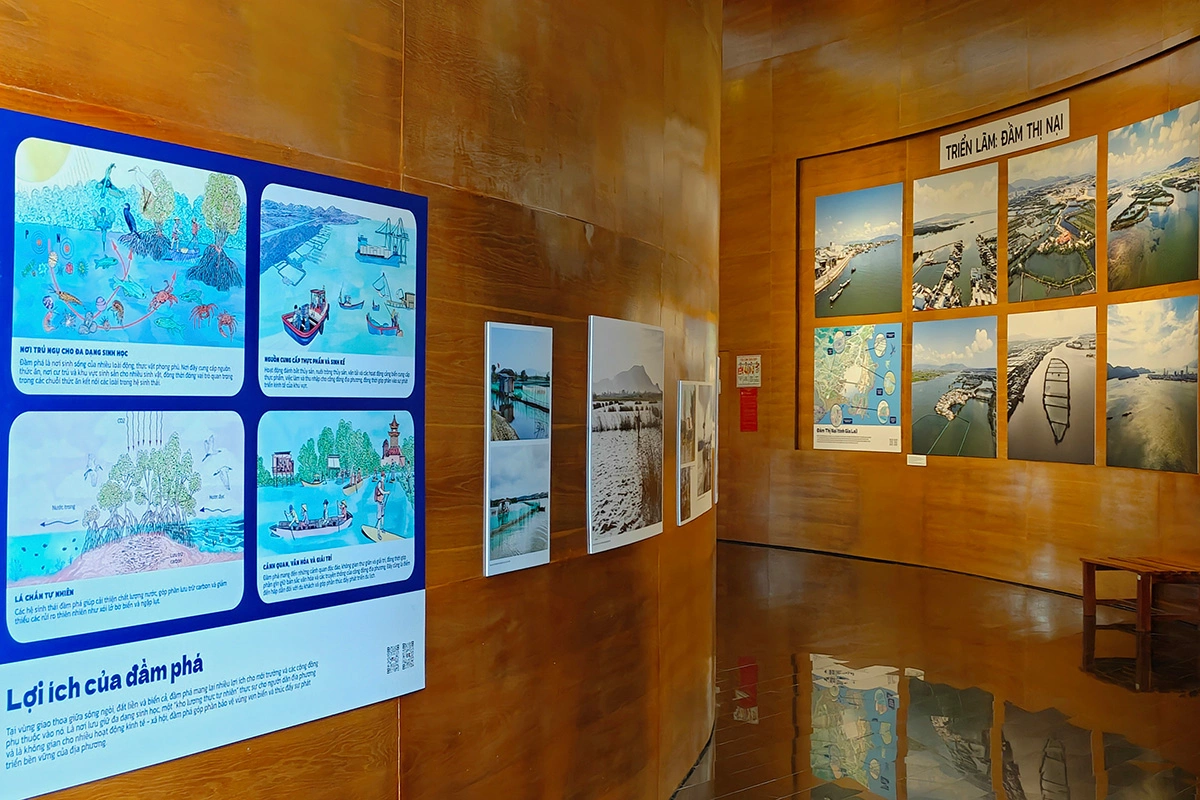 |
50 works are introduced at the exhibition. Photo: ICISE |
Since 2025, scientists from the IRD and Hanoi University of Science and Technology (USTH), along with Vietnamese and French partners, have carried out extensive surveys at the lagoon. Their work includes collecting and analyzing hundreds of water and sediment samples. This research integrates field observations, satellite data, and digital models to clarify the operational mechanisms, seasonal changes, and the exchange between the river, lagoon, and sea.
Ms. Vo Cao Thi Mong Hoai, Deputy Director of Gia Lai Department of Science and Technology, emphasized that scientific data must serve as a basis for development decisions. To sustainably harness the lagoon's economic, tourism, and livelihood values, it is essential to determine the ecosystem's carrying capacity, identify areas needing protection, and establish appropriate exploitation levels.
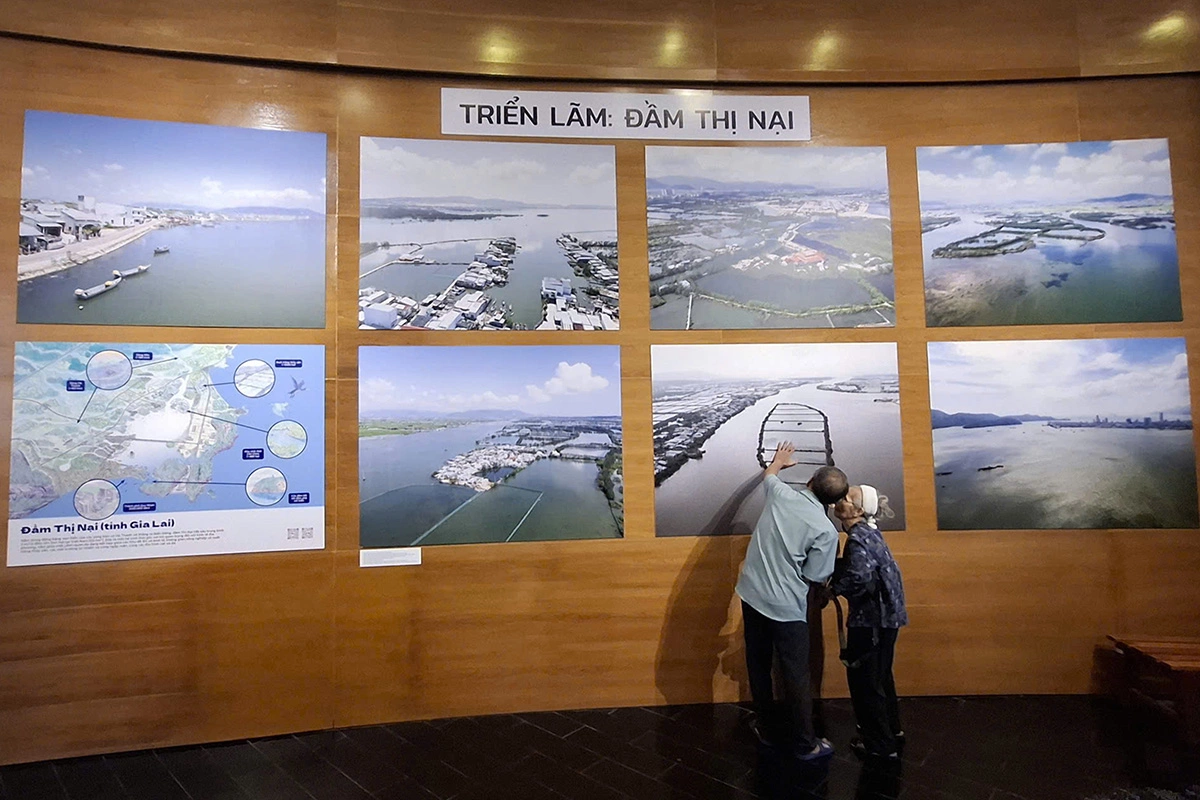 |
Thi Nai Lagoon through photographs. Photo: ICISE |
According to Ms. Hoai, conserving Thi Nai Lagoon does not mean halting development. Instead, it requires a harmonious balance between exploitation and protection, with active participation from the community, management agencies, scientists, and businesses.
Ngoc Oanh