According to Science Times, a US-based science and technology website, even visually clean rooms can harbor pathogens in overlooked spots such as carpets, light switches, landline phones, kettles, or coffee makers.
Walking barefoot exposes skin directly to the floor, increasing the risk of contact with disease-causing agents. If a previous guest had human papillomavirus (HPV) and walked barefoot on the carpet, subsequent occupants risk developing plantar warts. Similarly, Staphylococcus aureus bacteria, including antibiotic-resistant strains, can enter through unsterilized cuts or abrasions on the skin.
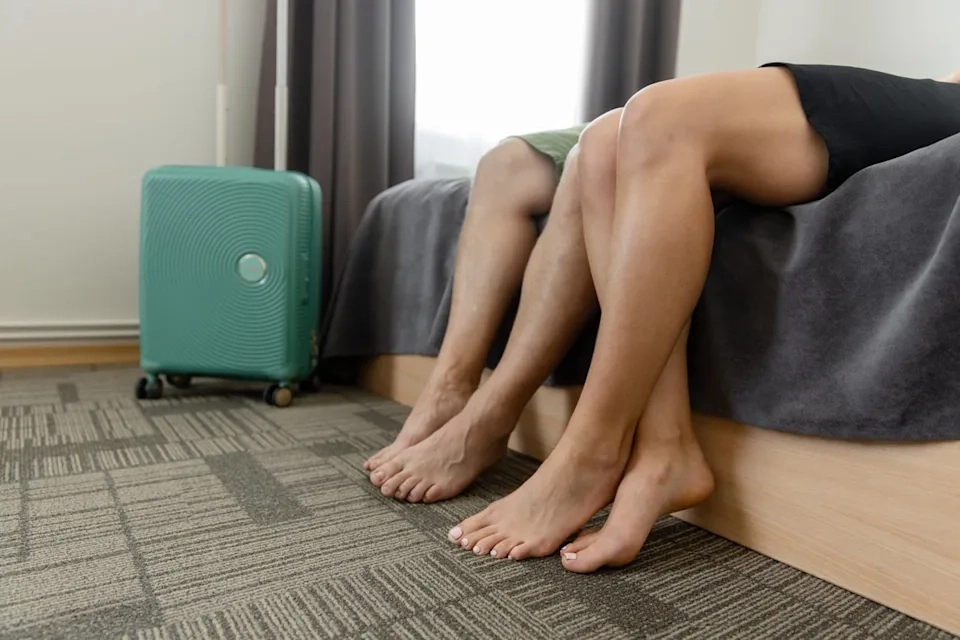 |
Walking barefoot in hotel rooms is a habit for many travelers. *Photo: AOL* |
Fungi causing athlete's foot also thrive in warm, moist environments. Hotel rooms are often cleaned quickly before new guests arrive, meaning contamination sources are not always fully removed, especially in hot, humid, or tropical regions.
Studies on carpet microbiomes indicate that this material can accumulate more dust than hard surfaces. Due to its porous structure and high absorbency, carpets can retain many hidden pollutants that are difficult to remove completely, according to the US National Institutes of Health (NIH).
Experts from the travel advice publication Islands state that carpets can contain 620 times more bacteria per square centimeter than a toilet seat. Beyond bacteria, other contaminants can also persist in carpet fibers, including E. coli (causing intestinal diseases) and fungi responsible for ringworm.
Beyond human feet, many other items can introduce microorganisms into a room. Shoe soles, luggage wheels, or spilled food can all contribute to the accumulation of microorganisms in carpets.
Experts advise travelers to use slippers, especially when walking on carpets or potentially damp surfaces. Guests should also avoid placing personal items that contact the body, such as clothes, toiletries, or phones, directly on the floor.