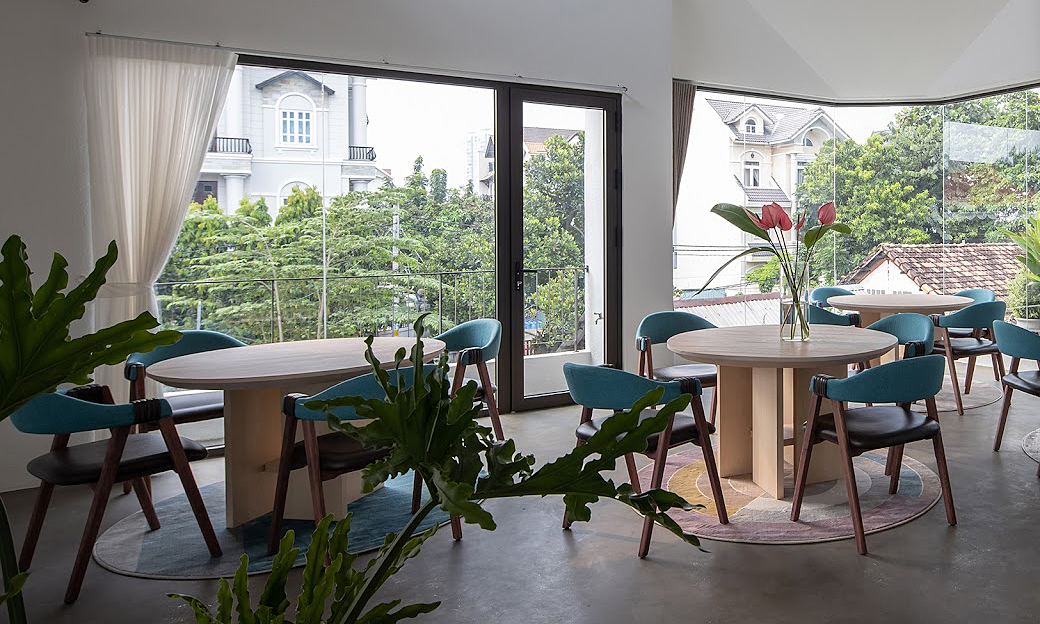
A representative from Oxalis Company announced that the Phong Nha Cave Exploration Information Center, located in Phong Nha commune, officially opened its doors to visitors free of charge from april 26.
The center's highlight is the Son Doong expedition experience offered through VR 5D technology, featuring 8K image quality. The Oxalis representative stated that this activity is a "gift" for those passionate about exploration but unable to undertake the actual journey.
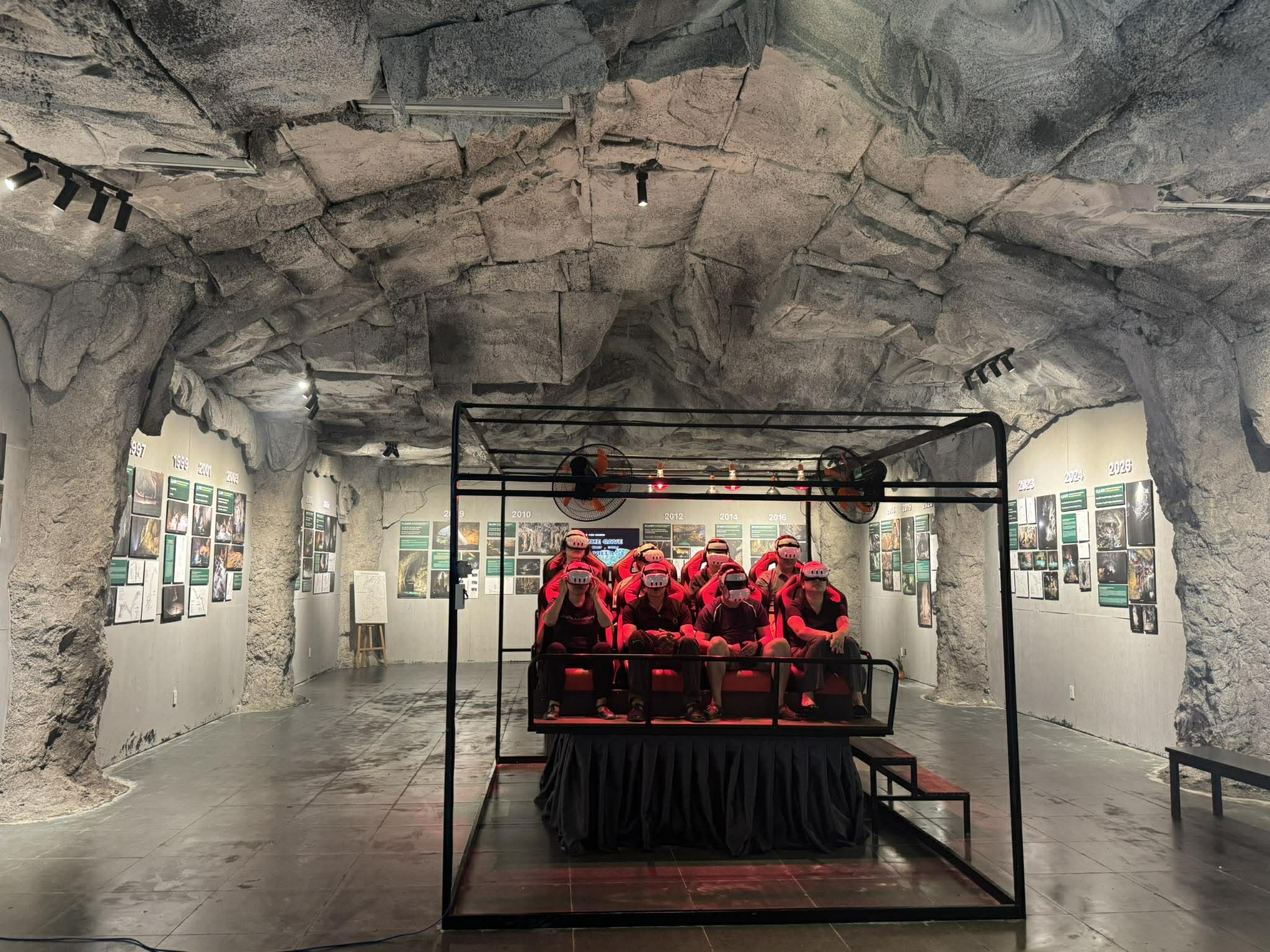 |
Du khach trai nghiem kham pha hang Son Doong bang cong nghe VR 5D. Anh: Oxalis
The 5D virtual reality experience is designed to immerse viewers in a realistic expedition. It combines 180-degree visuals with sound, a motion system that reacts to each frame, and changes in temperature and humidity. As the journey begins, visitors will feel the cold air, the creeping mist, and the distinct echoes: from water droplets in the dark to wind whistling through giant cave arches.
Nguyen Chau A, Director of Oxalis Company, explained that the technology is not meant to replace a real trip. Instead, it serves as a gateway for newcomers to visualize the experience and offers an emotional perspective for those wishing to relive the expedition in a different way.
The Son Doong expedition tour using VR 5D technology is sold separately, priced at 500,000 VND for each 15-minute session. Revenue from this experience will be contributed to the Oxalis Foundation, supporting local community activities.
The Phong Nha Cave Exploration Information Center was built to acknowledge and honor the contributions of British Royal Cave Expert Howard Limbert, Debora Claire Limbert, Ho Khanh, and the other expedition members. Here, visitors can see images published for the first time.
The organizers designed the layout to recreate the explorers' over 35-year journey of conquering the underground world. The public will be guided through chapters of history, from valuable documentary films and images of the first surveys to specialized exploration equipment and detailed hand-drawn cave maps.
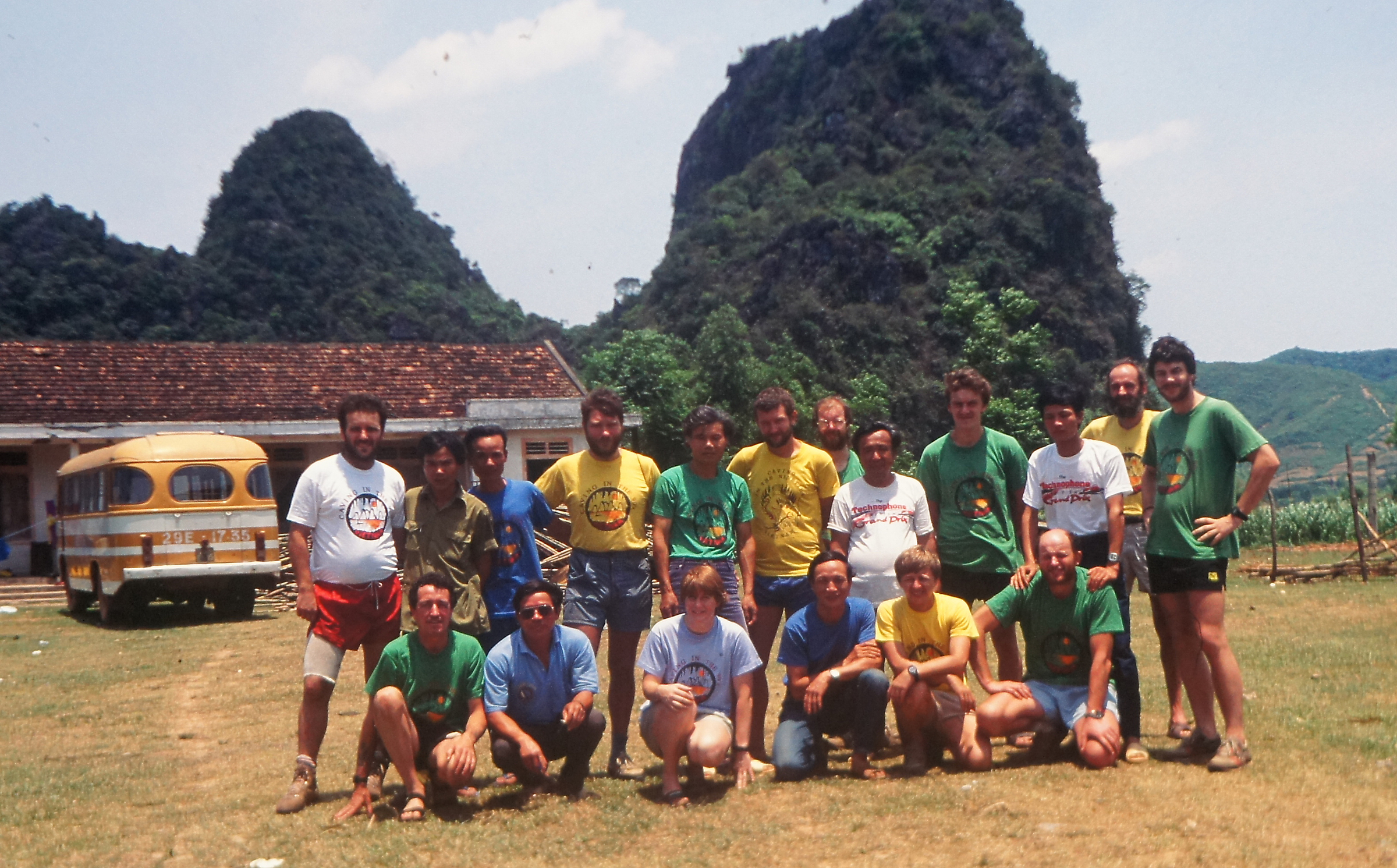 |
Doan tham hiem hang dong Phong Nha - ke Bang nhung nam 1994. Anh: Oxalis Adventure
The center also utilizes visual experience technologies, helping visitors clearly feel the grandeur of the stalactite formations in Hang Va or the mysteries of underground rivers.
The structure is designed to fully simulate the environment of a natural cave. The ceiling is shaped with hanging stalactites, combined with artistic lighting systems that replicate the light found underground.
A modern ventilation system is engineered to maintain an authentic airflow, as if directly passing through limestone formations.
Visitors can listen to live explanations at the site or scan QR codes at each exhibition area to access information in Vietnamese, English, French, Spanish, and German.
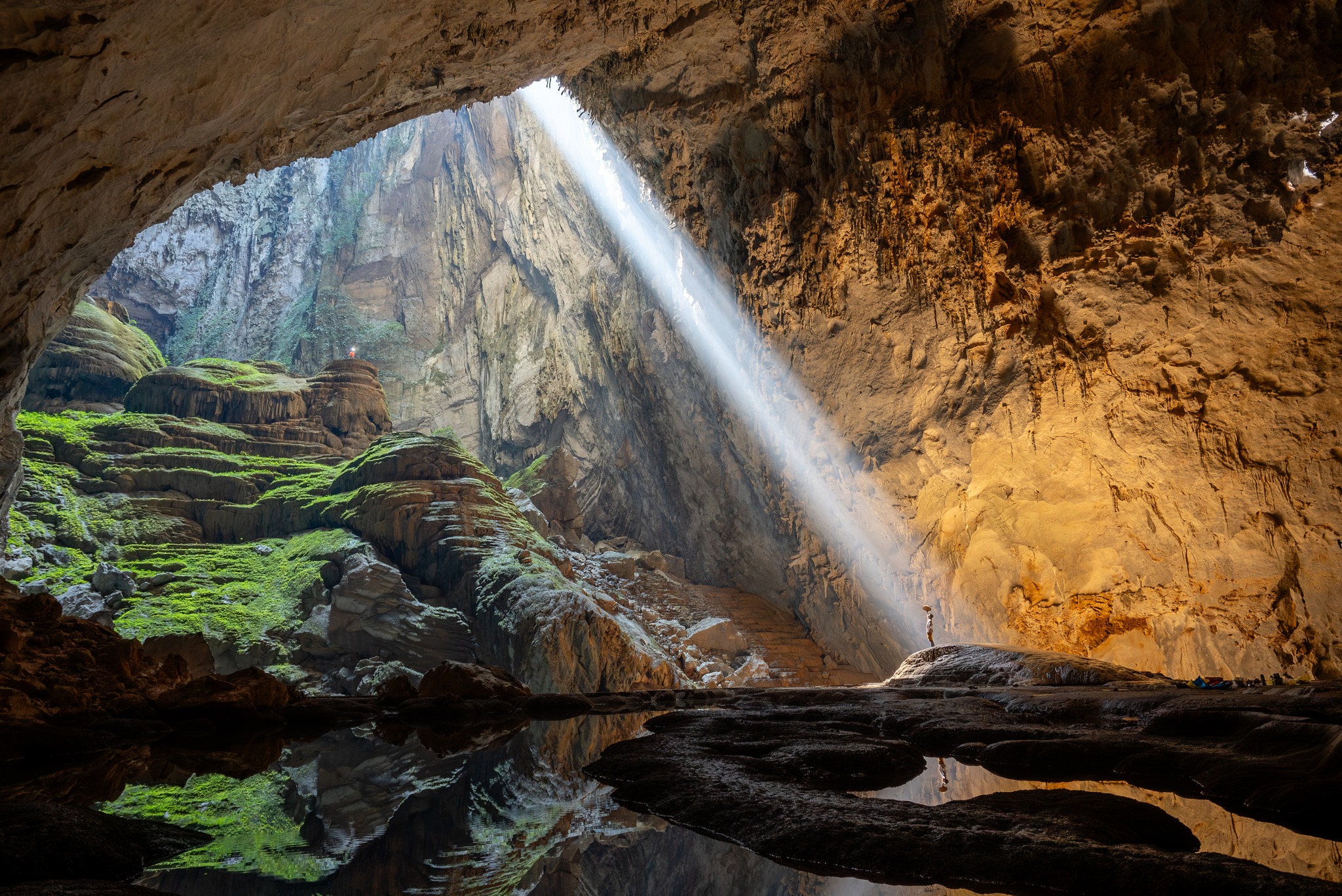 |
Cua vao hang Son Doong. Anh: Oxalis Adventure
Before 1990, Phong Nha was a remote village along the Son river, almost isolated from the outside world. Most local residents at that time made a living from the forest through logging or collecting forest products. Caves were a part of daily life, used as shelters from rain, sources of fresh water, or as landmarks in the dense jungle.
In the early 1990s, the British Royal Cave Expedition team, led by Howard Limbert, conducted surveys, recorded findings, and took valuable documentary photographs of the cave system. Recognizing its development potential, local authorities officially opened Phong Nha cave, built roads, and brought electricity to the village. Tourism gradually transformed the area.
After over 35 years of self-funded searching and surveying, Howard Limbert's expedition team successfully explored 476 caves with a total length of 330 km. Many of these sites are globally famous and have been developed for sustainable tourism, such as Thien Duong cave, Hang En, Hang Va, and notably Son Doong, the world's largest natural cave.
Most recently, on march 24, Howard Limbert's expedition team and the Phong Nha - Ke Bang National Park Management Board announced the results of cave surveys conducted from march 21 to april 11. This led to the discovery of 26 new caves and the survey of three caves in Phong Nha, Thuong Trach, Kim Phu, Kim Dien, Tan Thanh, Tuyen Lam, and Truong Son communes.
According to the Quang Tri Department of Tourism, tourism activities in Phong Nha create jobs for over 5,000 local laborers, alongside the establishment of over 150 hotels and homestays. The development of cave tourism has significantly contributed to the overall socio-economic growth of the entire province.
Bich Phuong