The influx of people into Ceuta continued throughout the night. Although the numbers were lower than during the day, migrants kept crossing the border overnight, and the flow had not stopped by this morning, AFP reported, citing Spanish police.
Ceuta is separated from Morocco by a 10-meter high border fence, but migrants from Morocco can swim around it to reach Tarajal beach in Ceuta.
Spain's Interior Ministry stated that an estimated 49,000 migrants crossed into the North African territory of Ceuta in the past 24 hours, both by sea and land from Morocco. According to a ministry spokesperson, at least 18 people died while attempting the sea crossing to Ceuta.
Rachid Sbihi, head of a local association representing members of the Spanish Civil Defense Force, said most victims drowned while crossing the sea. However, some also died from being trampled as crowds pushed past the seawall at Tarajal beach.
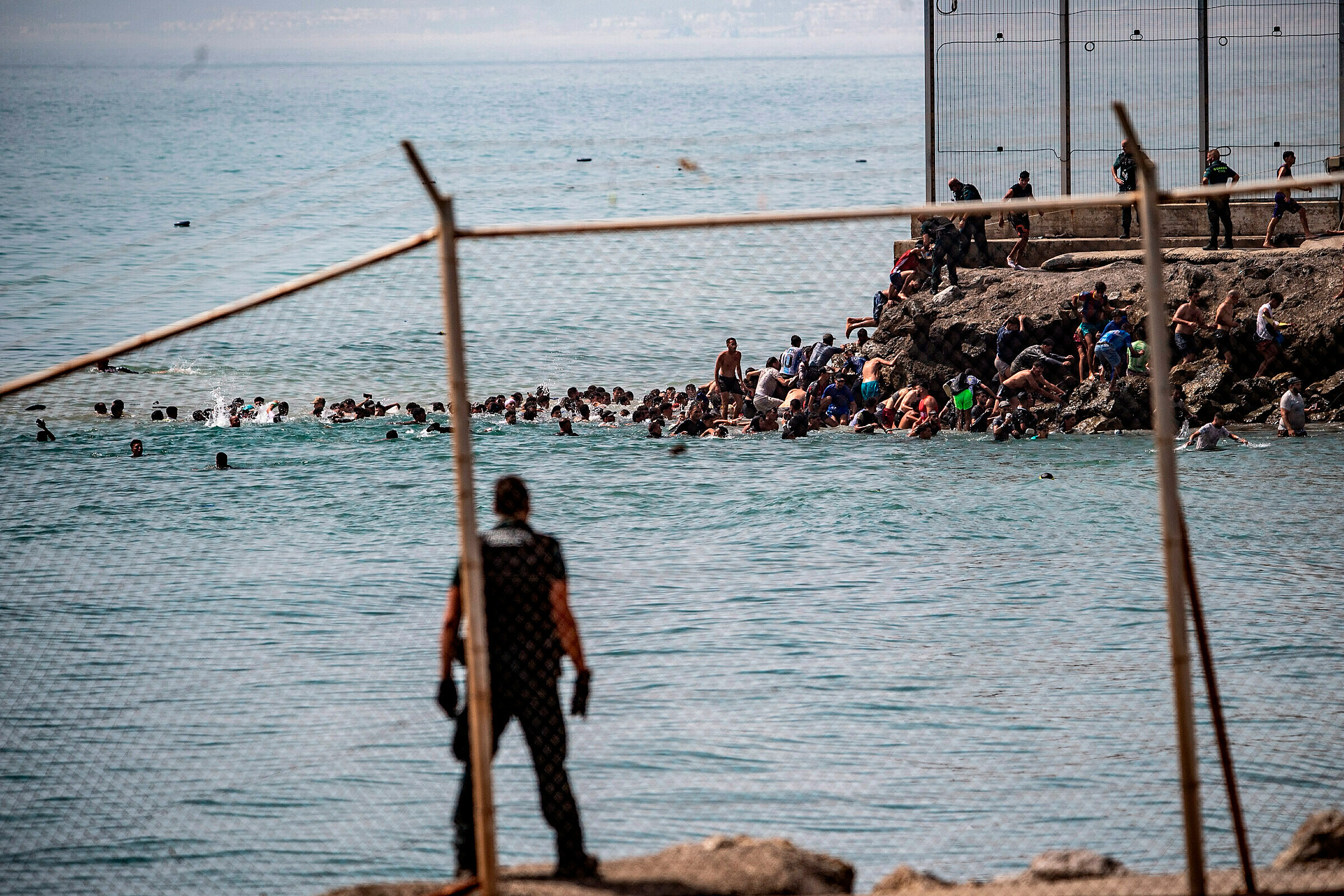 |
Migrants cross from Morocco into Spain's territory of Ceuta on 30/7. AP
Spain is a primary gateway for migrants entering Europe, who hope to find better economic opportunities or escape violence in their home countries.
Ceuta, along with Melilla, are two Spanish autonomous cities located in northern Morocco. They form the only land border between the European Union and Africa. These two locations frequently experience waves of migrants attempting to cross from Morocco into Europe.
Tensions at the border between Spain and Morocco escalated after the number of people entering Ceuta surged from 29/7. On-site video footage showed thousands of people, mostly men, swimming around the seawalls at Tarajal beach or breaching gates on the border fence to enter the city. Some, upon entering Spanish territory, chanted "Long live Spain."
Morocco reportedly opened the Tarajal crossing, allowing the flow of people into Spanish territory. Moroccan officials have not yet commented on the incident.
Migrants flood into Ceuta city on 30/7. Video: X/Cerfia
Spain deployed its military to assist Ceuta's authorities in restoring order and ensuring security. It also requested Morocco's cooperation to control the situation and plan the earliest possible return of those who crossed the border.
Ceuta's leader, Juan Jesus Vivas, urged the government to declare a national security emergency, increase police presence, and deploy military forces to the territory to "ensure the inviolability of the border and the safety of the population." He stated that migrant reception centers were already overwhelmed.
"Migrants continue to pour in. The reinforcements deployed are currently only sufficient to assist the injured and carry out other humanitarian operations," Sbihi said.
According to Sbihi, lacking shelter, thousands of migrants, including many unaccompanied children, had to sleep overnight in parks and on sidewalks, while others wandered the streets. "Everything is chaotic," he emphasized.
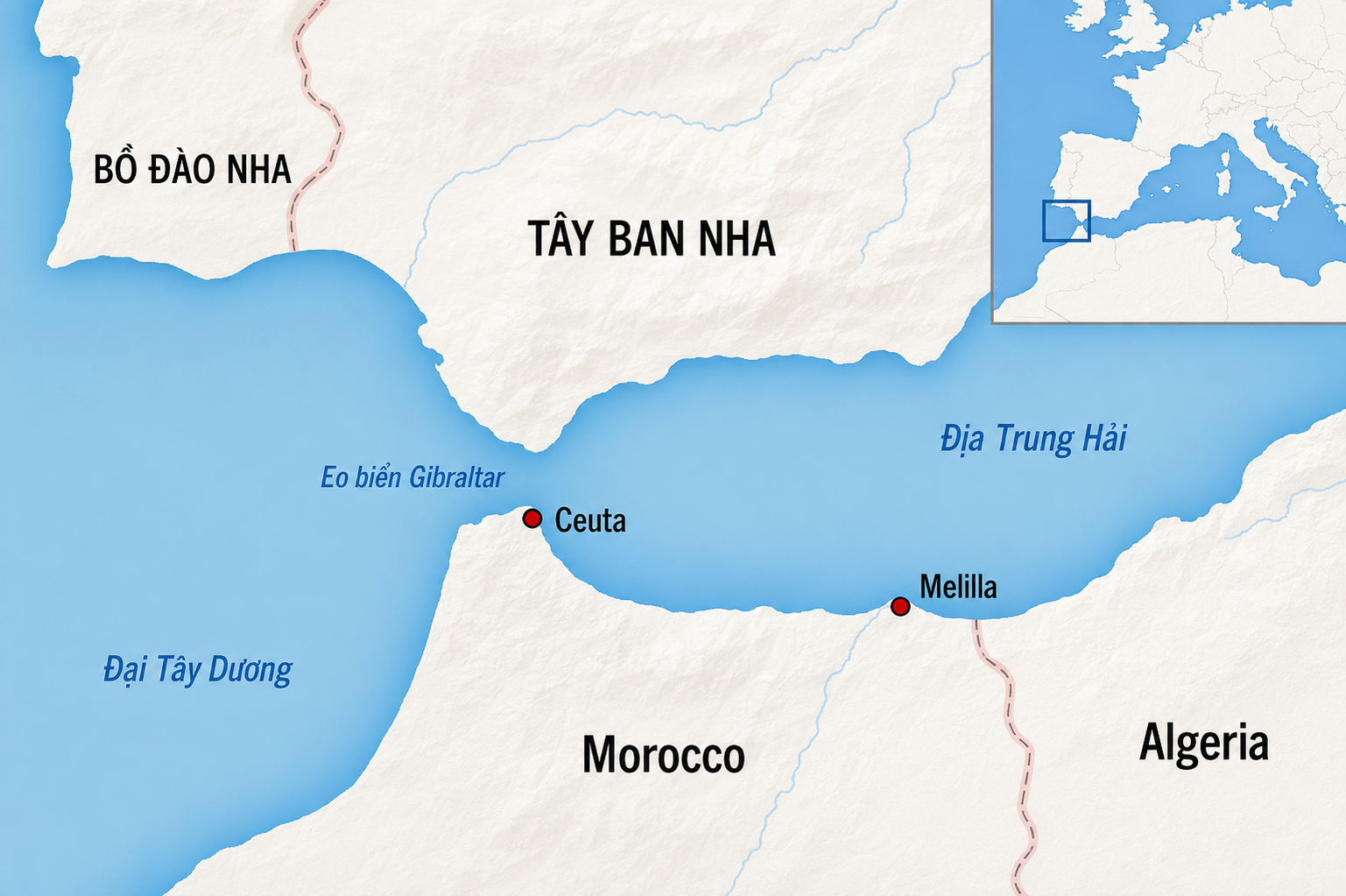 |
Location of Morocco, Spain, and the cities of Ceuta, Melilla. Graphic: Open Society Foundations
The precise reason for such a large number of migrants simultaneously attempting to cross into Ceuta remains unclear. Previously, Ceuta authorities suggested the surge was linked to a Spanish Supreme Court ruling earlier this month. This ruling prohibited officials from immediately expelling migrants arriving by sea without completing full legal procedures.
However, some activists in Morocco expressed skepticism about this assessment, arguing that most migrants would likely be unaware of such legal decisions. Furthermore, the ruling does not apply to those entering by land, including climbing over the border fence.
Huyen Le (According to AFP, Reuters, AP)