Japan's Ministry of Health, Labor and Welfare announced on 15/9 that the number of people aged 100 or older in Japan reached 107,677 this September, an increase of 7,914 from last year, and surpassing the 100,000 mark for the first time.
This increase marks the 56th consecutive year. Of these, 94,298 are women, accounting for 87.6%. In fiscal year 2026, an additional 54,294 individuals in Japan will turn 100.
This milestone reinforces Japan's position as a global leader in longevity, reflecting advancements in public health and medical care, along with a healthy diet and active lifestyle. According to United Nations estimates, the global population aged over 100 is approximately 672,000, with Japan accounting for the largest share.
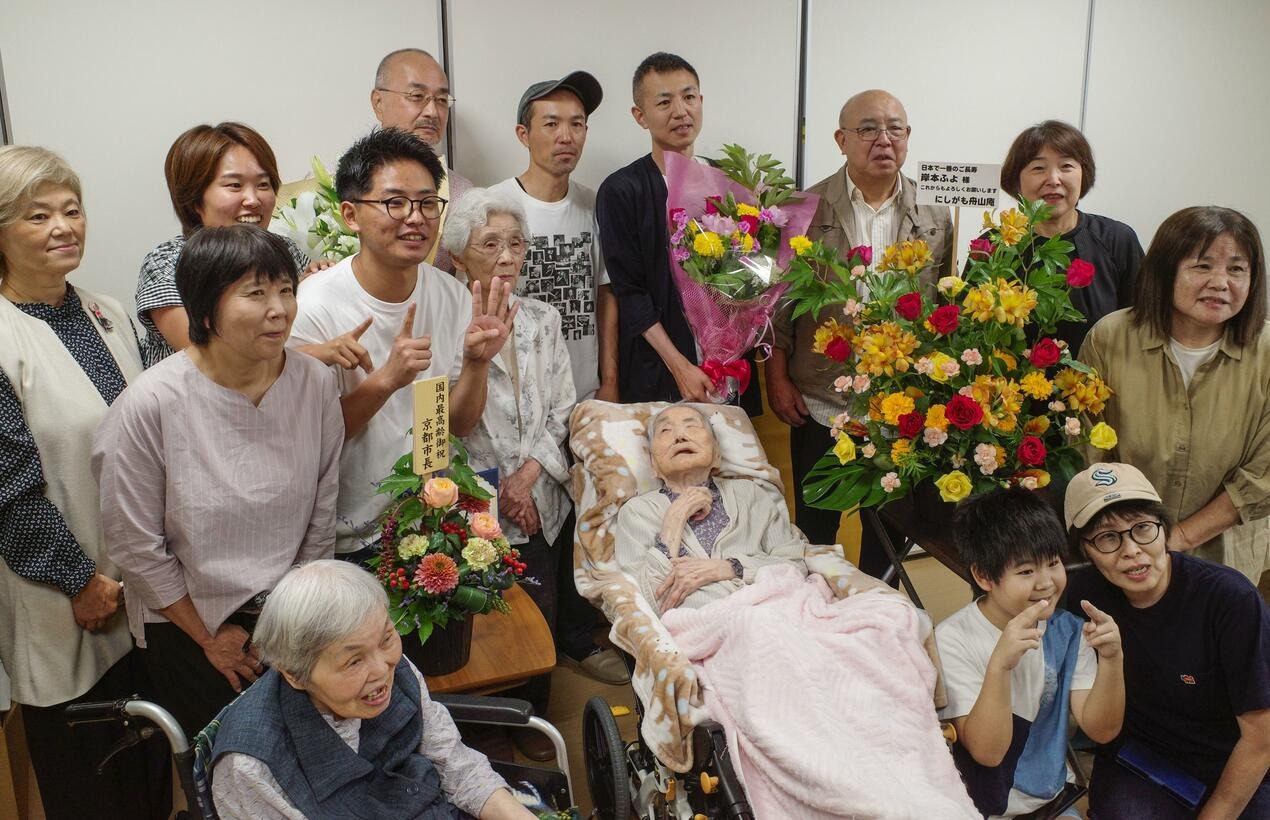 |
Fuyo Kishimoto (seated), Japan's oldest person, photographed with her descendants in Kyoto on 10/9. Photo: Kyodo |
Fuyo Kishimoto, a 114-year-old Kyoto resident born on 20/12/1911, is Japan's oldest woman, while Hikaru Kato, a 112-year-old man from Kumamoto born on 2/5/1914, is the oldest man.
The average number of centenarians per 100,000 population in Japan is 87.51. In 1963, when data collection began, there were 153 centenarians in Japan. By 1970, this figure rose to 310 and increased annually, exceeding 1,000 in 1981, 10,000 in 1998, and 50,000 in 2012.
Average life expectancy in Japan for 2025 is 87.33 for women and 81.35 for men.
Health Minister Kenichiro Ueno stated, "We are pleased that many people are living longer and remaining active, partly due to advancements in medical technology. As the population continues to age, ensuring the sustainability of the social security system is crucial."
Japan's social security costs are increasing annually due to a declining birth rate and an aging population, putting pressure on the state budget. Currently, 40 million people, or one-third of the population, receive pensions, placing an increasing burden of healthcare and nursing costs on a shrinking workforce.
According to Japan's Ministry of Health, the nation's birth rate continued to decline in 2025, marking the 10th consecutive year and reaching its lowest level since 1947. The total number of births in 2025 was approximately 671,000, while deaths totaled 1.59 million.
Hong Hanh (Kyodo News, CNA)