Last week, Houthi forces in Yemen captured the strategic Perim Island at the mouth of the Red Sea and the port city of Mocha. This move aims to tighten control over the Bab el-Mandeb Strait, one of the world's remaining vital energy shipping lanes.
Concurrently, Saudi Arabia’s crucial East-West oil pipeline was shut down following a drone attack from Iraq. While no group claimed responsibility, US President Donald Trump attributed the attack to Tehran, which backs proxy forces in Iraq.
Since the conflict in Iran crippled the Strait of Hormuz, Saudi Arabia has maximized the East-West pipeline's capacity, redirecting approximately 5 million barrels of oil daily instead of using tankers waiting in the Persian Gulf.
This latest incident exacerbates concerns Riyadh raised last month. A senior official told CNN that Saudi Arabia is enduring coordinated attacks from multiple directions, carried out by Iraqi militias in conjunction with the Houthi.
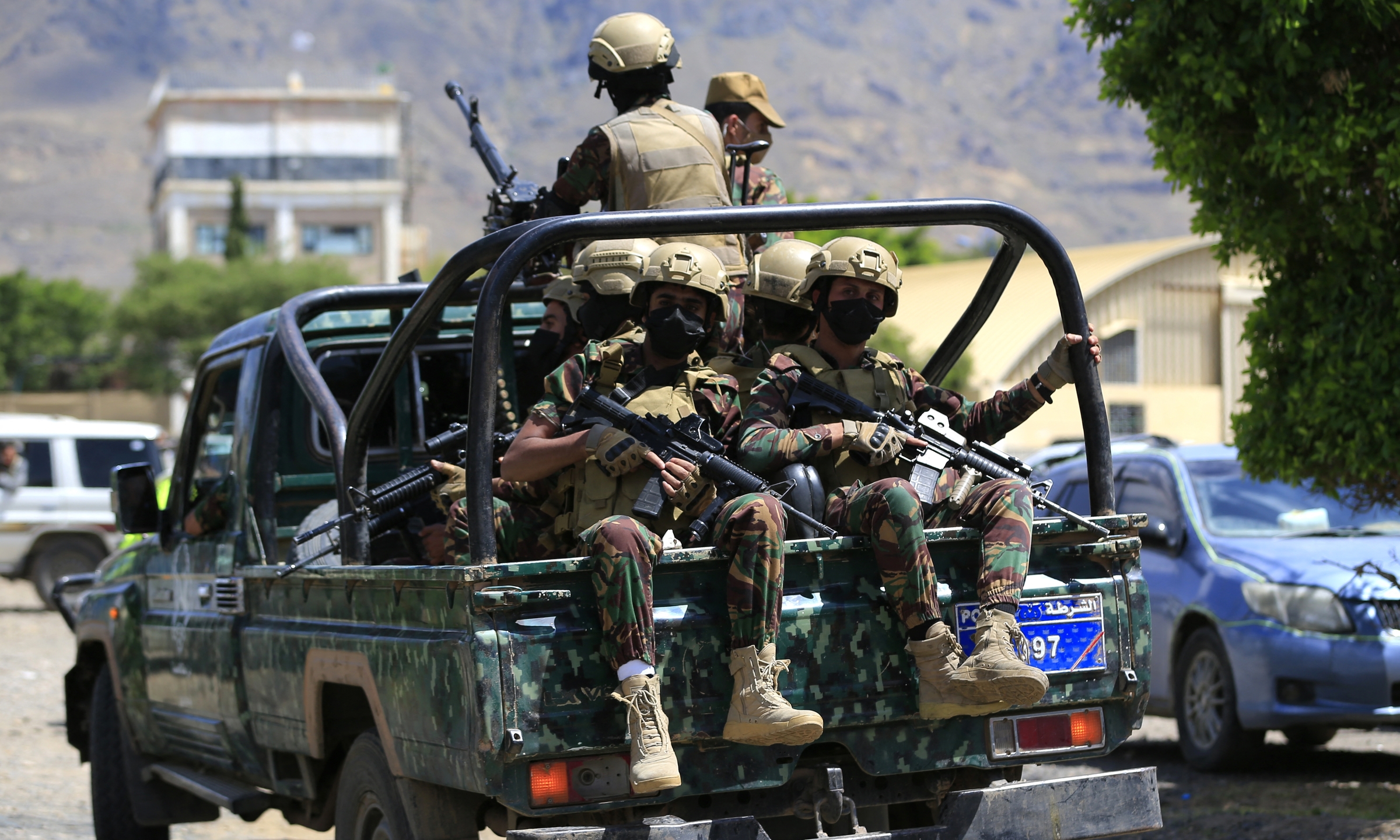 |
Houthi fighters in Sanaa, Yemen, on 12/9. Photo: *AFP* |
A persistent thorn
Theoretically, this is a lopsided confrontation: wealthy Saudi Arabia possesses one of the most modern armies, while the Houthi are an armed rebel group from impoverished Yemen. However, the Houthi have proven to be a persistent thorn, according to Mohammed al-Basha, a Yemen geopolitical expert.
Once underestimated, the Houthi spent years upgrading their arsenal and refining combat capabilities. The group's influence in the Middle East has grown after direct attacks on Israel following the Gaza war in 2023.
Yemen plunged into crisis in 2014 after Houthi forces seized the capital Sanaa, forcing the internationally recognized government into exile. A year later, Saudi Arabia led a military coalition to intervene in Yemen, aiming to repel the armed group while maintaining a strict blockade on Houthi-controlled areas. Meanwhile, Iran consistently provides weapons, training, and significant influence over the group’s decisions.
The Houthi's demand has remained constant for years: an end to Saudi Arabia's economic and air blockades, which isolate a large territory in northern Yemen. Despite being an ally of Tehran, the Houthi pursue their own strategic calculations.
Nasr al-Din Amer, head of the Houthi-run Saba news agency, announced on 11/9 that the group would continue to "increase pressure" on Saudi Arabia until they "break the unjust blockade imposed by the enemy for the past 12 years." This signals their readiness to escalate the conflict.
A difficult dilemma
Despite continuous setbacks, Saudi Arabia has not launched a full retaliatory strike, leading many to question its next moves.
"Saudi Arabia truly doesn't have many options in its confrontation with the Houthi," observed Cinzia Bianco, a specialist at the European Council on Foreign Relations. "One option they could choose is to escalate the conflict, but the cost for Riyadh would be extremely high."
According to Bianco, if Saudi Arabia decides to "go all in", the conflict could become a prolonged quagmire, something they have long tried to avoid.
Moreover, an all-out war between Saudi Arabia and the Houthi would likely draw Iran into the conflict. "At that point, it would be difficult to consider this an internal matter for Yemen alone. It would become a new chapter in the intense confrontation between the US and Iran, with Saudi Arabia directly entering the vortex as a US combat ally," Bianco said.
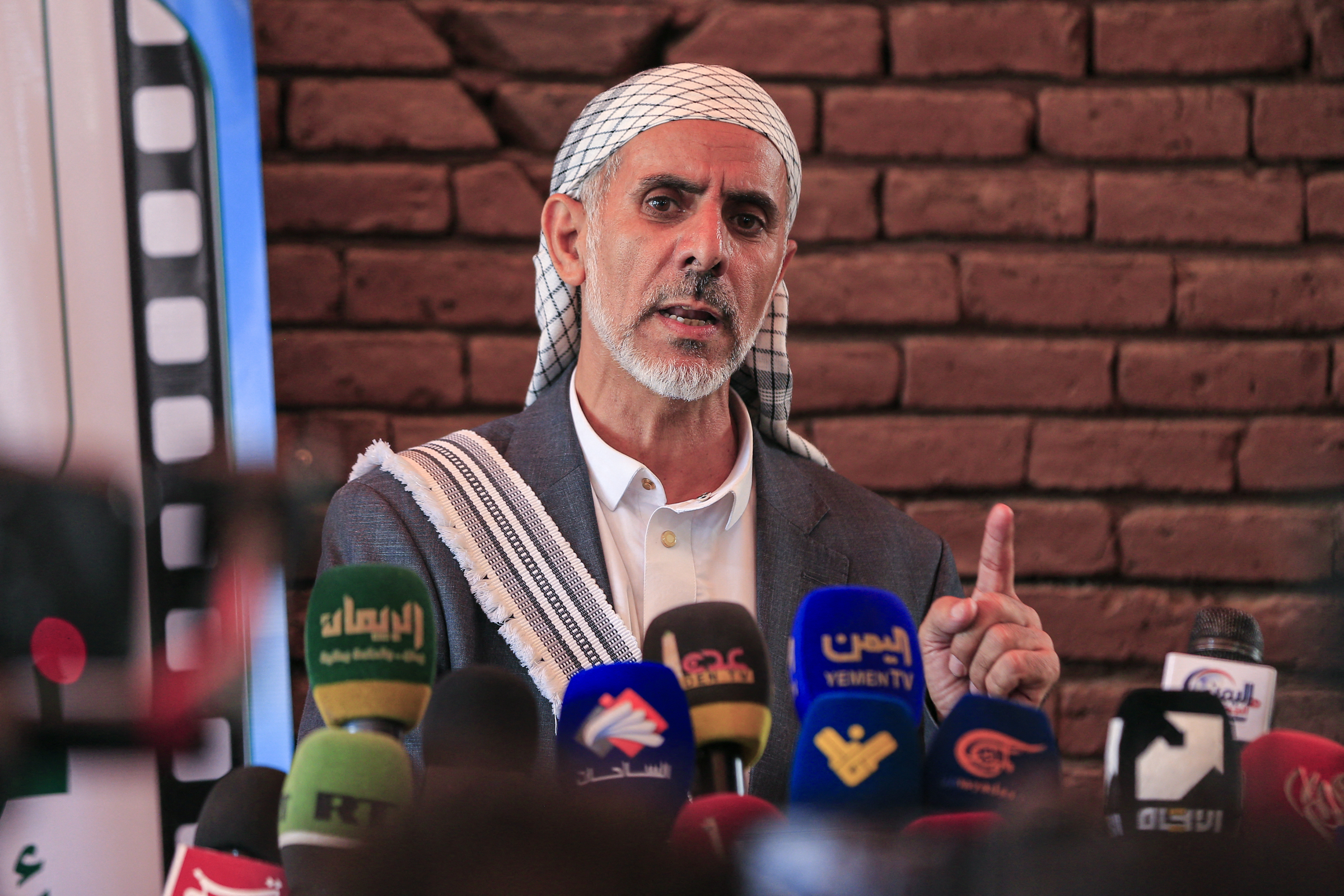 |
Houthi political leader Mohammed Ahmed Miftah speaks at a press conference in Sanaa, Yemen, on 12/9. Photo: *AFP* |
The US is currently in a difficult position to intervene militarily against the Houthi, especially with tensions in the Strait of Hormuz still high, midterm elections approaching, and intense domestic debates about squandering resources in the Middle East quagmire.
"Trump is not in a position to commit more resources to the region at such a politically sensitive time," Bianco noted.
Behind the scenes, the US consistently rejects pressure from Saudi Arabia, refusing to enter a new cycle of conflict.
On 12/9, President Trump stated that the Houthi had reached out to his administration, signaling they would concede to the US so Washington would not directly intervene in the war.
"They understand that the US shouldn't get involved, and in fact, they still allow most ships to pass. There's only one country that bothers them, but things will sort themselves out," he said.
CNN cited an informed source who said the Saudi Crown Prince spoke with President Trump twice last week, urging the US to attack the Houthi as the group advanced towards the Red Sea, but Trump refused. Despite this, the US deployed approximately 100 military advisors to Saudi Arabia to provide intelligence support for the anti-Houthi operation.
However, according to Nawaf Obaid, a senior expert at the Department of War Studies at King's College London and former advisor to the Saudi government, Riyadh "never asked Washington to launch airstrikes," only for intelligence support. "To date, that support has remained minimal," he said.
Another path is seeking a political solution to end the war, but at this point, this option may be too late, according to CNN analyst Nadeen Ebrahim.
For months, Saudi Arabia has maintained a state of "strategic patience," exercising maximum restraint in responding to the Houthi. They have consistently issued warnings and strong condemnations against both the Houthi and Iran, but actions have stopped there.
In response to the attack on the East-West oil pipeline, the Saudi Ministry of Foreign Affairs declared its "decision to restrain military action in support of the Iraqi government's efforts to control the situation," where the attack originated, but affirmed its "right to take all necessary measures to protect national sovereignty."
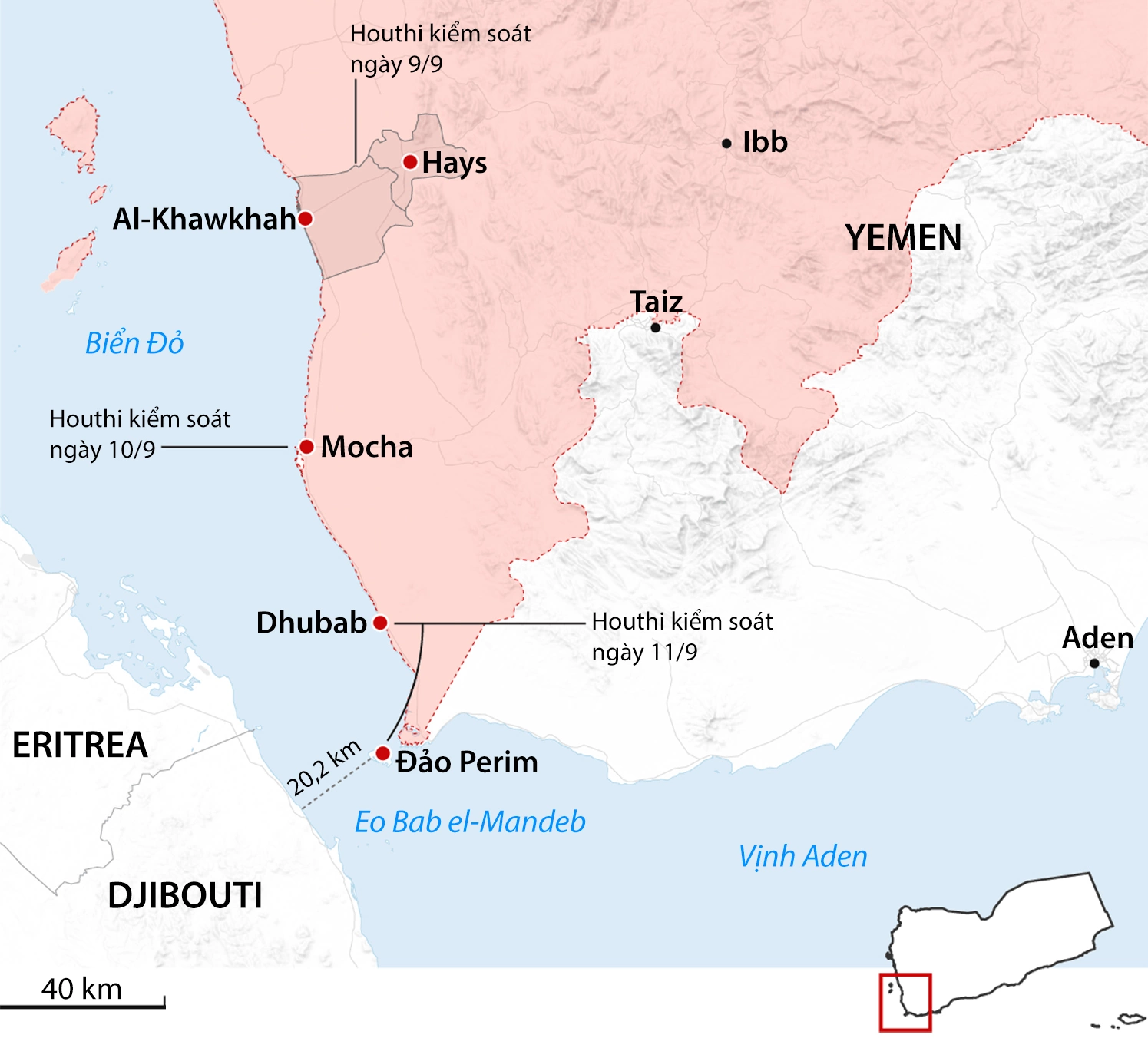 |
Location of Perim Island and the Bab el-Mandeb Strait. Graphic: *Guardian* |
Bianco believes Saudi Arabia has "run out of room for political solutions." Even if Riyadh accepts a compromise with the Houthi, the cost would still be too high.
According to al-Basha, this would amount to a complete concession to the Houthi's demands. "That's essentially an act of surrender," he said.
Salman al-Ansari, a Saudi geopolitical analyst, speculates that with support from the Riyadh-led military coalition, the Yemeni government may be ready for a military escalation against the Houthi. However, Saudi Arabia "will not launch a full-scale war without unwavering, long-term, and clear international support," he noted.
The international community "made a serious mistake by ignoring previous warnings from the Saudi and Yemeni governments about the Houthi threat," he added. "Saudi Arabia now certainly hopes the world will correct this error and fully support dislodging this force."
Yet, many believe that if the Houthi continue to escalate, Riyadh will be forced to act, with or without international assistance.
"Saudi Arabia is facing a barrage of attacks from both the Houthi and Iraqi militias. They have no other way out," al-Basha said. "Truly, no one wants to be in their position right now."
Vu Hoang (According to CNN, AFP, Reuters)