On September 11, Saudi Arabia announced its East-West Pipeline (Petroline) suffered several drone attacks a day earlier. Launched from Iraq, these attacks caused material damage and injured some people, leading to the pipeline's shutdown as a precaution.
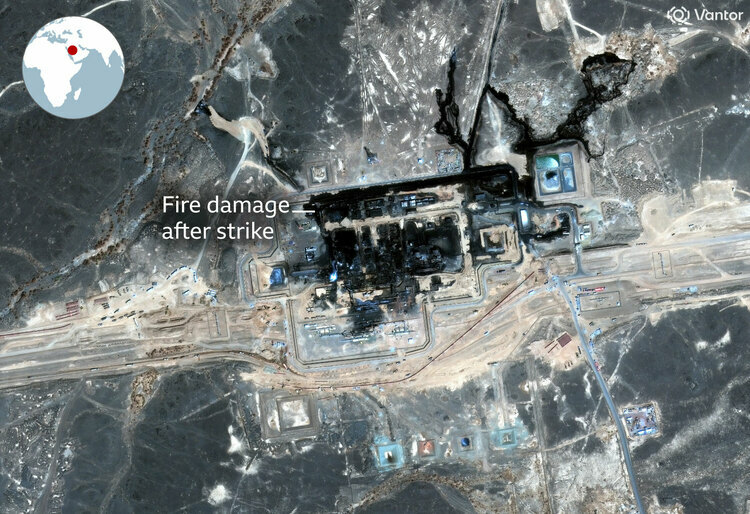
Officials have not fully disclosed the damage extent or when the pipeline will resume operations. Satellite images revealed a pumping station along the route sustained significant damage, with another showing a large plume of smoke on September 10. Petroline is vital for Saudi Arabia, enabling it to transport oil from eastern production areas to the Red Sea port of Yanbu, thereby avoiding the Strait of Hormuz, a chokepoint affected by the US-Iran conflict.
Bob McNally, president of US-based geopolitical consulting firm Rapidan Energy Group, stressed the pipeline's importance to CNN: "It would be a real disaster if Petroline is not repaired and operational soon. This is the most important route, far more than others, helping Saudi Arabia divert crude oil flows."
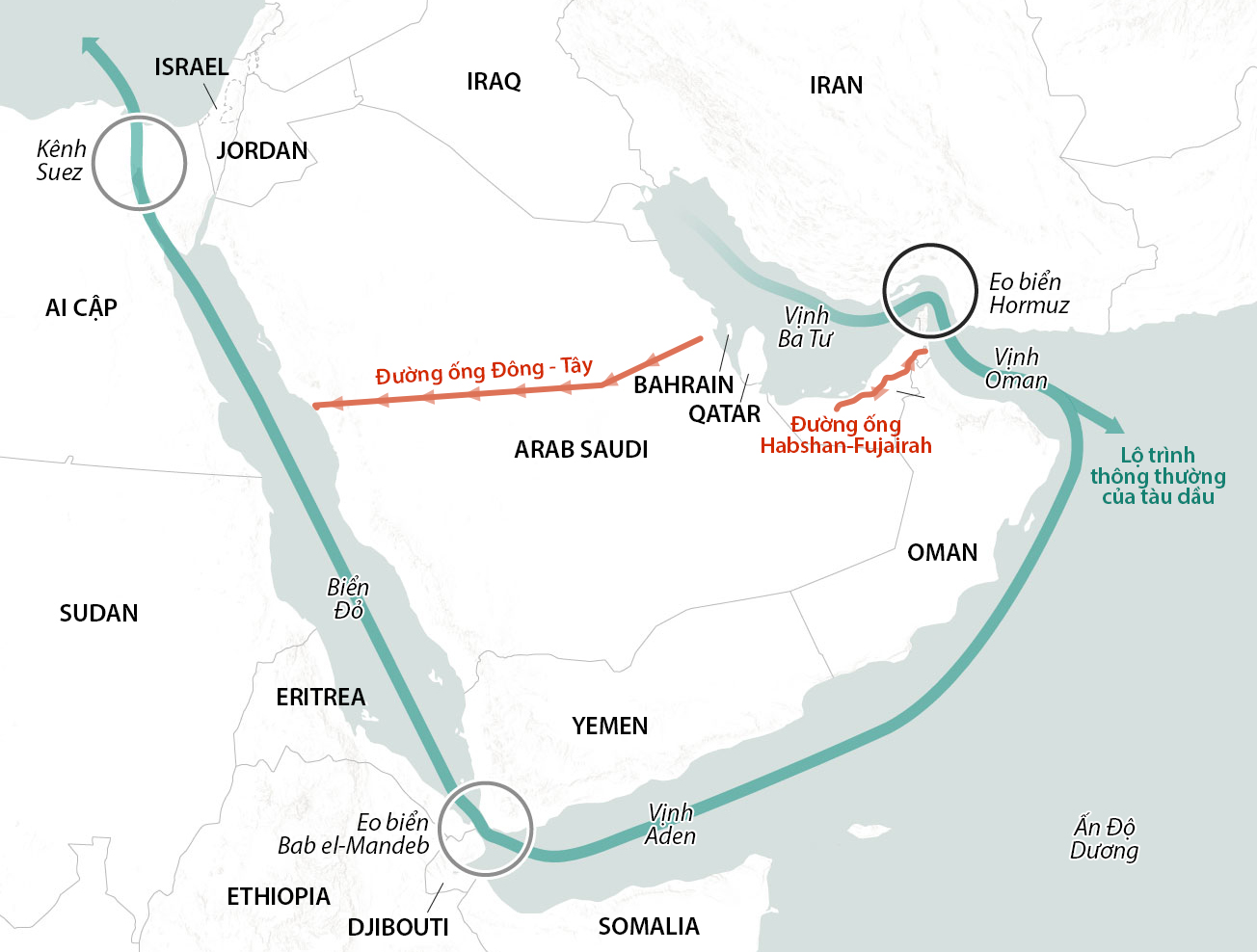 |
Location of the Petroline pipeline and the area around Saudi Arabia. Graphics: CNN |
These incidents raise questions about the safety of alternative routes to Hormuz, especially as the energy market contends with Middle East conflicts. Unlike adaptable oil tankers, pipelines and pumping stations are fixed targets. Anne-Sophie Corbeau, an expert at the Center on Global Energy Policy at Columbia University, told the BBC, "The recent attacks show that options used to avoid the Strait of Hormuz may not be as useful as expected because they can be destroyed."
Constructed in 1981, Petroline is a 1,200 km pipeline system crossing Saudi territory. It comprises two parallel pipelines, 1,2 m and 1,4 m in diameter, linking the Abqaiq refinery complexes in the Eastern province to Yanbu on the Red Sea coast. Initially, Petroline had a capacity of 5 million barrels per day, later increasing to 7 million barrels per day. Of this, 2 million barrels per day serve domestic refineries, with the remainder designated for export.
From April to June, Saudi crude oil exports via Yanbu exceeded 4 million barrels per day, representing about 4% of global oil supply, according to LSEG data. However, following a Houthi blockade targeting Saudi oil tankers in the Red Sea in late July, Riyadh's oil exports in August dropped to 1,1 million barrels per day.
 |
An oil refinery facility in Abqaiq, Saudi Arabia in September 2019. Photo: AFP |
Damage to Saudi Arabia's East-West Pipeline seen from above. Photo: Vantor
During the pipeline shutdown, Saudi Arabia can maintain Yanbu exports by utilizing stored oil. Kpler data estimated Yanbu's oil stocks on September 14 at about 9 million barrels, against a total storage capacity of 24 million barrels. Janiv Shah, an analyst at Rystad Energy, indicated this volume would only suffice for about three days of exports, potentially ranging from two to six days based on loading rates. Saudi Arabia could extend this for about one more week by tapping strategic reserves in Egyptian facilities.
While a short-term incident typically has minimal market impact, a prolonged disruption could force European and Asian refineries reliant on Saudi oil to reduce capacity while seeking alternative sources, according to June Goh, an analyst at Sparta Commodities. A further challenge lies in the specific type of oil transported via Petroline: medium sour crude oil, characterized by medium sulfur content and specific gravity. Finding an equivalent replacement is not simple. Shah noted that recent sharp oil price increases suggest the market has already begun reacting to a significant supply reduction.
Saudi Arabia aims to restore part of the system in the coming days. Since Petroline comprises two parallel pipelines with separate pumping systems, Saudi Arabia can bring one line into operation after safety checks while continuing repairs on the other. However, Homayoun Falakshahi, an analyst at Kpler, stated that based on current information, repairing the pipeline could take four to six weeks due to limited spare parts availability and supply chain disruptions.
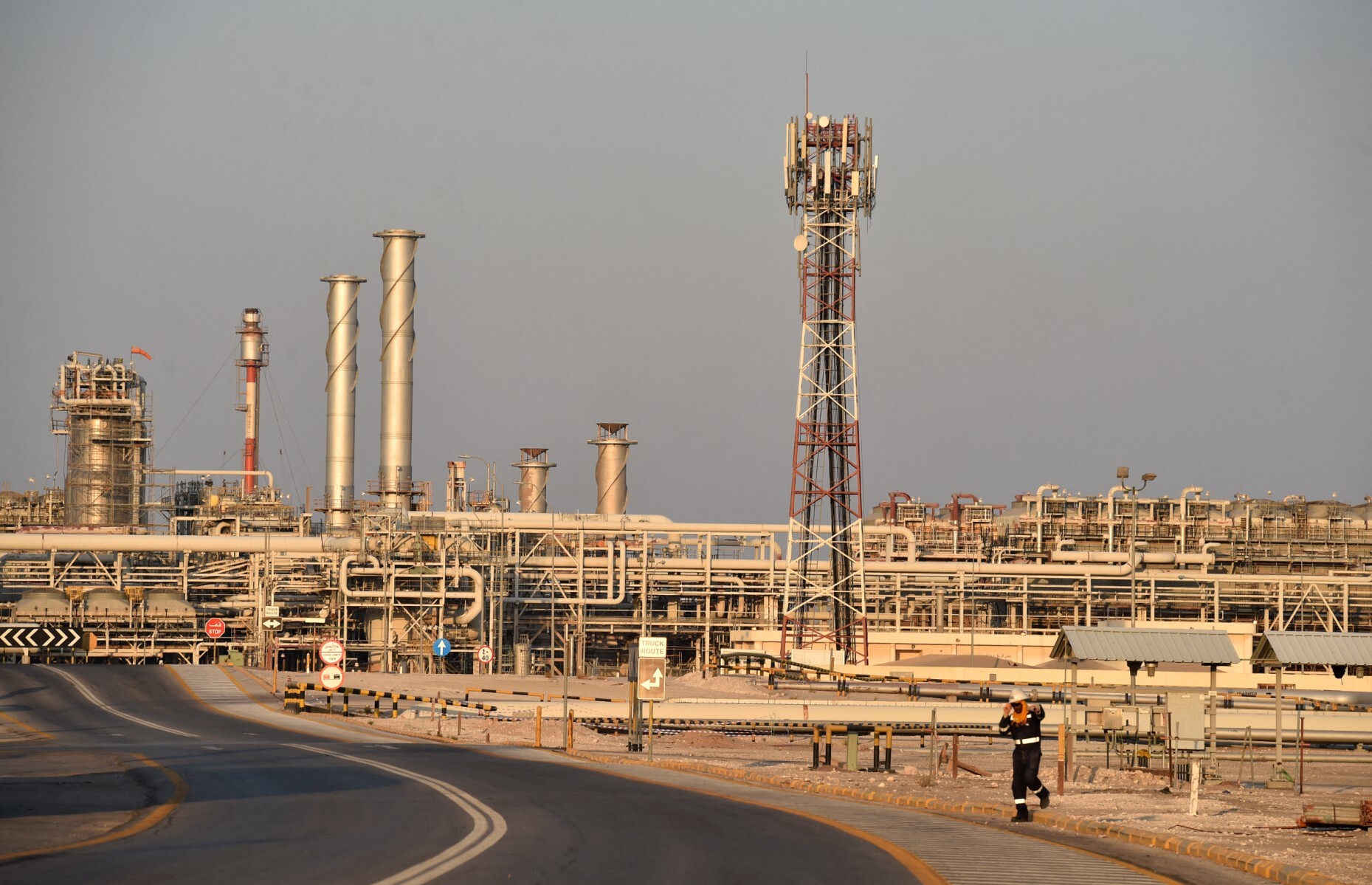 |
An oil refinery facility in Abqaiq, Saudi Arabia in September 2019. Photo: AFP
Petroline was previously attacked in April, damaging a pumping station and reducing capacity by about 700,000 barrels per day; full capacity was restored in less than one week. Salvatore Mercogliano, a professor of maritime history at Campbell University in North Carolina, highlighted that Saudi Arabia retains the option of using the Strait of Hormuz shipping route. "If Petroline were the only way for Saudi Arabia to bring oil to market, the situation would be truly serious," Mercogliano told AP. "But the route through Hormuz has more or less resumed operations, so this is not a fatal blow to Saudi Arabia. They can still get oil to market."
Nhu Tam (According to WSJ, CNN, AP)