


Belgian Prime Minister Bart De Wever, leader of the conservative New Flemish Alliance (N-VA) party, last weekend suggested the European Union (EU) was "losing on all fronts." He argued the bloc needed to end its conflict with Russia "for Europe's benefit." De Wever stated that the EU needs both to rearm and to normalize relations with Russia to once again access cheap energy. He claimed European leaders agreed with this view, but "no one dares to say it aloud."
However, Belgian Foreign Minister Maxime Prevot on 16/3 publicly countered De Wever's stance, arguing that such a statement was "exactly what Russia wants." Prevot explained, "Russia refuses to allow Europe to participate in negotiations. They insist on their demands. As long as this situation remains unchanged, discussing normalization will be seen as weakness, fracturing the unity Europe needs more than ever."
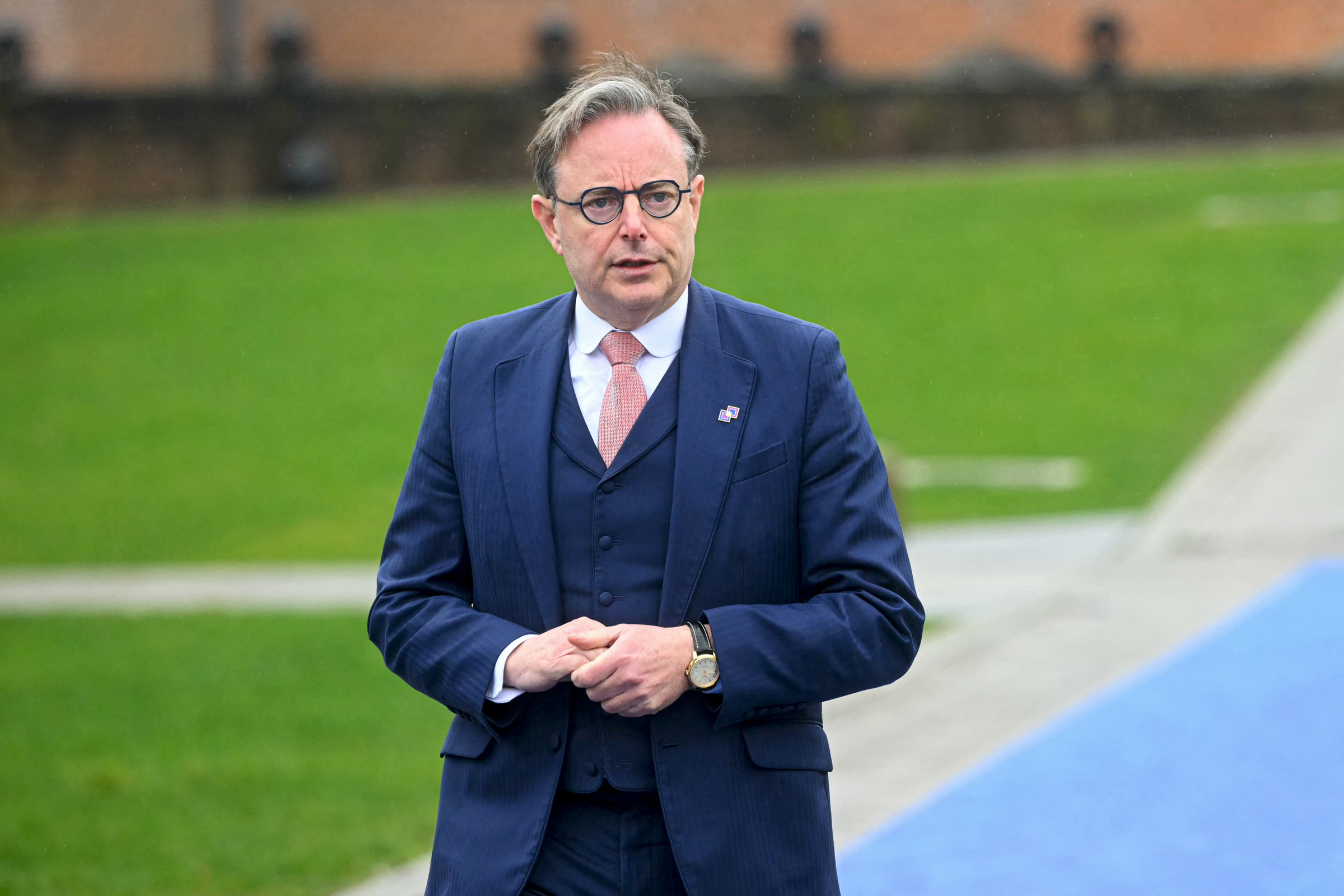 |
Belgian Prime Minister Bart De Wever at a closed-door meeting of European leaders in Belgium on 12/2. *Photo: AFP* |
Lithuanian Foreign Minister Kestutis Budrys also objected to the Belgian prime minister's view. He recalled Russia's conditions in 2021, just before launching the war in Ukraine. These demands included NATO withdrawing all troops or weapons deployed to countries that joined the alliance after 1997, which encompasses most of Eastern Europe, including Poland, the Baltic states, and the Balkan countries. "We have known what Russia wants since 2021," Budrys said. "They are not only targeting Ukraine but also us, our military and security. Therefore, we must unite to protect ourselves."
Budrys expressed hope for positive negotiation outcomes with Russia, leveraging Russia's frozen assets, a large portion of which are held in Belgium.
This is not the first time the Belgian prime minister has conveyed a message at odds with the EU's official position. He previously played a key role in preventing the EU from using frozen Russian assets to aid Ukraine, arguing that Belgium could be liable for repayment if Russia sued.
De Wever's stance prioritizing cheap energy from Russia directly contradicts the EU's common goal. According to an agreement in 12/2025, the EU will gradually phase out Russian gas before 11/2027 and aim to completely end Russian oil imports by the end of 2027.
EU Energy Commissioner Dan Jorgensen on 16/3 affirmed that the entire bloc must adhere to its stated objectives. He argued that Europe had been "dependent on Russian energy for too long." "It would be a huge mistake if we were to fall into that trap again," he said.
In 12/2025, EU leaders reached a consensus on a 90 billion euro (106 billion USD) loan for Ukraine after months of intense negotiations. Under this agreement, 24 of the 27 EU member states would collectively raise the funds through international financial markets to support Ukraine. The Union temporarily bears this debt, along with interest amounting to up to 3,5 billion USD annually, to sustain military aid and general costs for Ukraine during the fiscal year 2026-2027. This agreement is currently being delayed by Hungary.
*Hong Hanh (via Guardian)*


