Canadian Prime Minister Mark Carney and US President Donald Trump sat together last weekend, watching the World Cup final and the closing ceremony of the tournament co-hosted by three North American countries. The image of the two leaders smiling and chatting created a sense that bilateral relations had cooled after months of tension.
However, less than 24 hours later, everything changed. On 20/7, Trump signed three documents imposing tariffs of up to 50% on various goods imported from Canada, regardless of whether they qualified for preferential treatment under the US-Mexico-Canada Agreement (USMCA).
"Prime Minister Carney now faces a difficult situation. If he retaliates against the US, he risks further deterioration of trade relations with Canada's largest partner. However, making concessions could undermine Canada's position at the negotiating table," according to Jessica Murphy and Nadine Yousif, two BBC writers specializing in Canada.
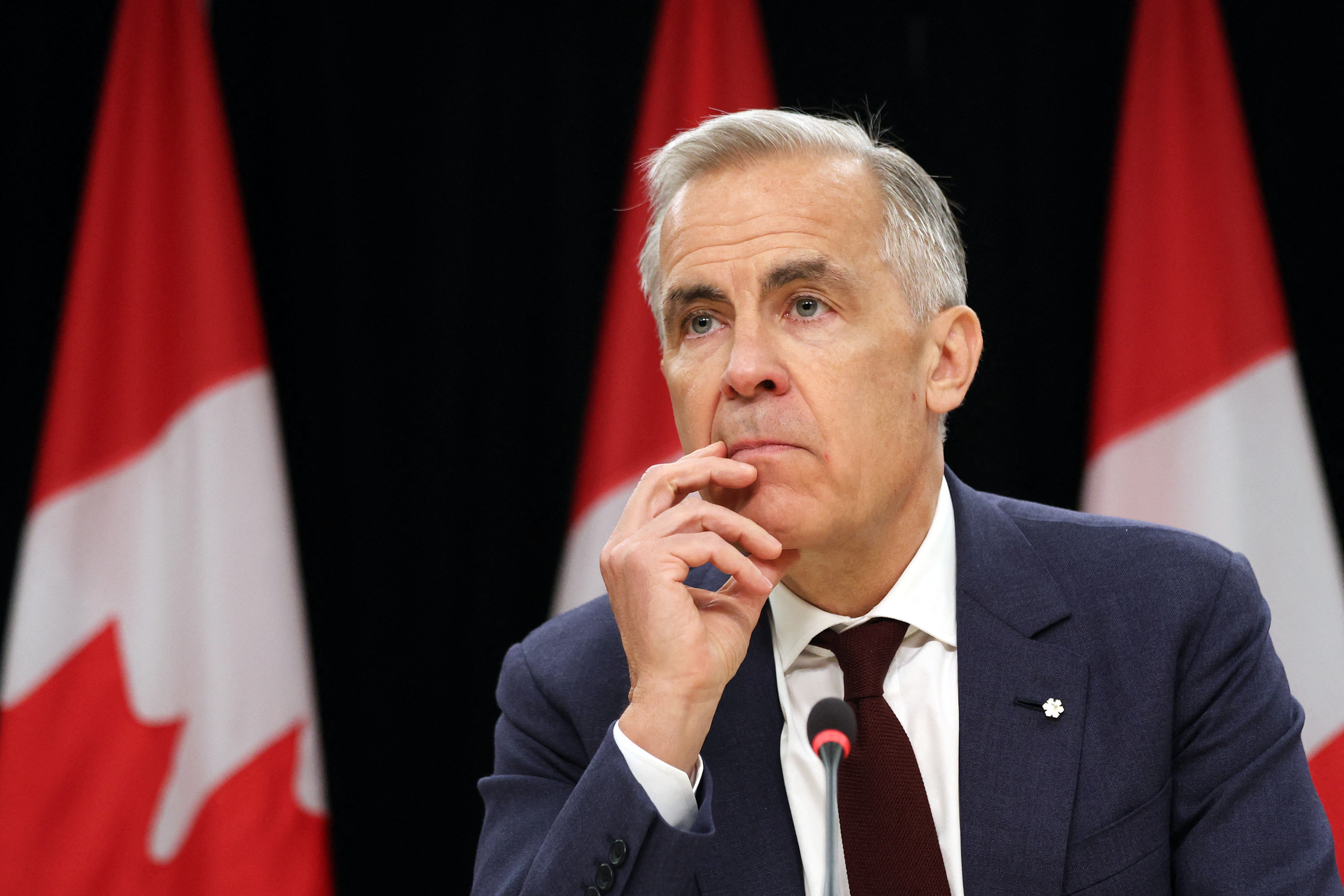 |
Canadian Prime Minister Mark Carney at a press conference in Ottawa on 25/6. Photo: AFP |
President Trump announced the new tariffs as the US pushes for negotiations with Canada and Mexico to amend the USMCA. This 16-year free trade agreement was signed by Trump himself in 7/2020 to replace the North American Free Trade Agreement (NAFTA).
The USMCA is reviewed every six years and can be extended for 16 years. The first review began on 1/7, and the Office of the US Trade Representative stated that Washington would not agree to an extension with the current terms. This action does not invalidate the USMCA but triggers a process for annual reviews of the agreement.
Mahmood Nanji, a researcher at Ivey Business School, Western University, believes this latest move is a pressure tactic by the Trump administration to force Canada to reach a trade agreement quickly.
"President Trump is using every card he has to gain maximum advantage in negotiations," Nanji said, adding that the "pressure first, negotiate later" approach has also been applied by the US leader to other trade partners such as Mexico, China, and the European Union.
The reasons cited by the US also revolve around long-standing disagreements between the two countries. The Trump administration accuses Canada of maintaining barriers to US automobiles, dairy, and alcoholic beverages. It also criticized several Canadian provinces for stopping imports and distribution of US alcohol in retaliation for previous tariffs.
The list of goods subject to tariffs also indicates careful calculation by US officials. These products are symbolic of Canada, such as hockey sticks or down jackets, while crude oil, potash, strategic minerals, and automotive components are exempt. This allows the US to pressure Canada while limiting adverse effects on domestic consumers and businesses.
According to Brian Clow, an advisor on US-Canada relations under former Prime Minister Justin Trudeau, Washington's increased pressure did not surprise policymakers in Ottawa.
"Anyone following this issue understands that the US could continue to escalate," Clow told CBC.
Canada's economy is closely tied to the US. About 75% of its exports go to the neighboring market, while the automotive, steel, and aluminum industries operate through cross-border supply chains. A prolonged trade war would affect businesses in both countries, but Canada would typically suffer more due to its smaller economic scale.
The new tariffs take effect on 19/8, giving Canada an opportunity to consider concessions to the US to avoid damage. However, this is not an easy choice for Prime Minister Carney, as too much yielding would lead to domestic political pressure.
After Trump began his second term and repeatedly imposed tariffs on Canadian goods, public sentiment in Canada shifted significantly. Surveys show that a majority of Canadians no longer believe Washington will treat Ottawa fairly and want their government to take a tougher stance.
This pressure also comes from the provinces. Premier Doug Ford of Ontario, Canada's largest provincial economy, has openly called for the government to retaliate strongly rather than continue making concessions. This makes Carney's decisions not just an economic calculation but also a test of his leadership capabilities.
Furthermore, concessions could set a precedent for Washington to continue using tariffs as a pressure tool in the future. This would mean Ottawa gradually losing its equal footing in relations with its largest trading partner.
Carney himself has repeatedly affirmed that Canada will not accept "unfavorable terms just to get a deal."
If Canada retaliates with new tariffs, it would send a message that it will not be coerced at the negotiating table. However, it would also have to accept the risk of the Trump administration escalating further with additional tariffs or expanding into other sectors. This could prolong instability for businesses, slow investment, and continue to disrupt North American supply chains.
A greater risk is that USMCA negotiations could stall. This agreement governs nearly 2 trillion USD in trade annually between the US, Canada, and Mexico. If negotiations are prolonged or collapse, businesses in all three countries will face years of policy uncertainty.
"The list of targeted goods includes important Canadian industries. Therefore, the risk of job losses is very real," John Boscariol, an international trade and investment lawyer at McCarthy Tetrault law firm, based in Toronto, Ontario, told Global News.
Boscariol noted that the impact on employment would not be immediate, but if the US continues to expand tariffs to individual Canadian industries, the trend of labor reductions would persist.
Economists from three major Canadian banks – BMO, CIBC, and TD – estimate that the industries targeted by new US tariffs account for about 5% of Canada's total exports to the US, equivalent to about 30 billion USD worth of goods.
According to Andrew DiCapua, chief economist at the Canadian Chamber of Commerce, this scale corresponds to about 100,000 jobs at risk, ranging from reduced hours to layoffs due to declining demand.
"Many industries will be affected. If businesses producing these goods are no longer competitive while facing 50% tariffs, their operations will be under immense pressure," DiCapua warned.
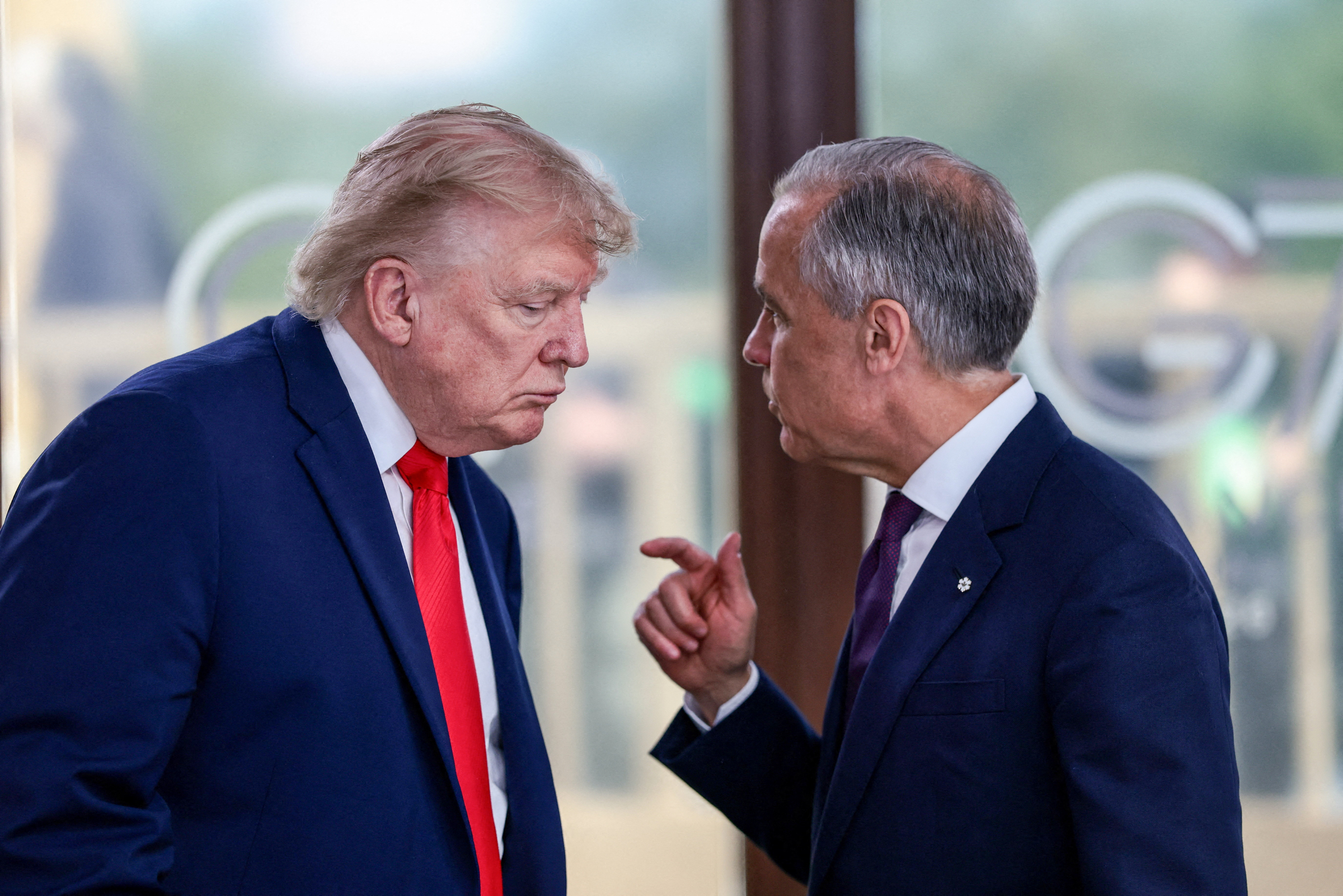 |
US President Donald Trump (left) and Canadian Prime Minister Mark Carney converse at the G7 summit in Evian, France on 16/6. Photo: AFP |
Amid increasing tariff pressure, Prime Minister Carney affirmed that Canada's goal is not just to resolve individual disputes within the USMCA, but to achieve a comprehensive trade agreement with the Trump administration. According to Carney, Canada and Mexico both believe the USMCA needs adjustments so that key industries such as steel, aluminum, timber, and automobiles can compete globally, benefiting workers in all three countries.
On 20/7, Prime Minister Carney emphasized that Washington was the first to impose tariffs, violating the USMCA, while Canada "only took corresponding measures within its authority."
US Trade Representative Jamieson Greer described Carney's stance as "firm but moderate," affirming that negotiations are ongoing.
"I will continue to communicate with my Canadian counterparts. They have not cut off negotiations, so we are still working with them," Greer said.
As Tam (According to BBC, CBC, Reuters)