Prime Minister Mark Carney stated on 3/3 that Canada supports the US attack on Iran because "the nuclear program poses a grave threat to international peace and security." He emphasized that this support is not unconditional. "We are not participating in that war, nor are we demanding anything in return for that support. It is simply our clear stance," he said, reaffirming that international law binds all warring parties.
Carney expressed regret over the necessity of this position. "Canada actively confronts the world as it is, rather than passively waiting for the world we desire. However, we regret having to take this stance because the current conflict is another example of the failure of the international order," he noted. This view aligns with his speech at the World Economic Forum in Davos, Switzerland, in January, where the Canadian leader warned that the US-led world order was fracturing.
 |
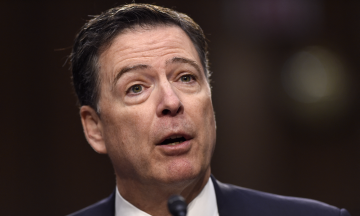
Canadian Prime Minister Mark Carney at a press conference in Vaughan, Ontario on 5/2. *Photo: AFP*
The Canadian prime minister pointed out that despite the United Nations Security Council issuing numerous resolutions over decades to prevent Iran's nuclear program, Tehran continues to be a "nuclear threat." He highlighted that the US and Israel acted "without consulting the United Nations or allies, including Canada." Carney urged rapid de-escalation of the conflict, stating: "Diplomatic cooperation is essential to avoid a larger conflict. Innocent civilians must be protected, and all parties must commit to seeking a lasting agreement to end nuclear proliferation."
Carney's support for the US-led war against Iran did not receive universal agreement from all members of the ruling Liberal Party. Former foreign minister Lloyd Axworthy compared Carney's statement on Iran to Canada's 2003 decision not to support the US-initiated war in Iraq. He argued that, similar to the Iraq war, international law cannot justify the attack on Iran under the United Nations Charter.
"The Iran case is not unique. This is the 7th nation where US President Donald Trump unilaterally ordered the use of force during his tenure. That should have been a wake-up call for a middle power like Canada," Axworthy said.
On 28/2, the US and Israel launched airstrikes against Iran, targeting intelligence and defense agencies and numerous high-ranking officials, killing Supreme Leader Ali Khamenei. Iran subsequently launched missiles and unmanned aerial vehicles (UAVs) at Israel and US bases in the region in retaliation. Both the US and Israel cited "preemptive strikes" to prevent Iran from developing nuclear and ballistic missile capabilities, as they consider Tehran a threat. However, this justification has no basis in international law.
Israeli military strikes "the heart of Tehran" in a video released on 1/3. *Video: IDF*
The United Nations Charter prohibits the use of force against the territorial integrity or political independence of any state. According to experts, the right to preemptive self-defense is only recognized under extremely narrow conditions, as outlined by the Caroline Doctrine. US Secretary of State Daniel Webster formulated this doctrine after a serious diplomatic crisis between Britain and the US in 1837, which involved the British military attacking and burning the US steamboat Caroline on the Niagara River.
The Caroline Doctrine stipulates that the use of force must be the only remaining means of self-defense. The threat from the adversary must meet four core conditions: instant, overwhelming, no alternative, and no time for deliberation. "No such conditions existed for Iran on 28/2," wrote two international relations experts, Shannon Brincat and Juan Zahir Naranjo Caceres, from the University of Sunshine Coast, Australia, on Conversation.
For years, the US and Israel have accused Iran of seeking to enrich uranium to build nuclear weapons. Tehran denies this, asserting its nuclear program is for civilian purposes. In 2015, Iran signed the Joint Comprehensive Plan of Action (JCPOA) with the P5+1 group (comprising: Britain, France, China, Russia, the US, and Germany), agreeing to limit its nuclear program in exchange for Western nations lifting all sanctions against Tehran. However, in 2018, during his first term, President Trump announced the US withdrawal from the JCPOA. Tensions have escalated since then, before erupting into conflict.
The Iranian Red Crescent announced on 3/3 that 787 people had died in Iran due to the conflict. At least 11 people in Israel, 6 US soldiers, and many others in Middle Eastern countries also died.
Huyen Le (According to CBC News, CNN)