UK Foreign Secretary Yvette Cooper on 2/4 chaired an online conference with representatives from over 40 nations to discuss strategies for reopening the Strait of Hormuz. This critical global oil artery is currently blockaded by Iran in retaliation against the US and Israel, causing a halt to maritime traffic through the region.
"The multinational alliance will mobilize all economic and diplomatic tools to ensure the Strait of Hormuz is reopened safely and sustainably," Cooper stated.
Experts believe the alliance will struggle to create immediate change unless it reaches an agreement with Iran. Military intervention, meanwhile, depends on member readiness and coordination with the US.
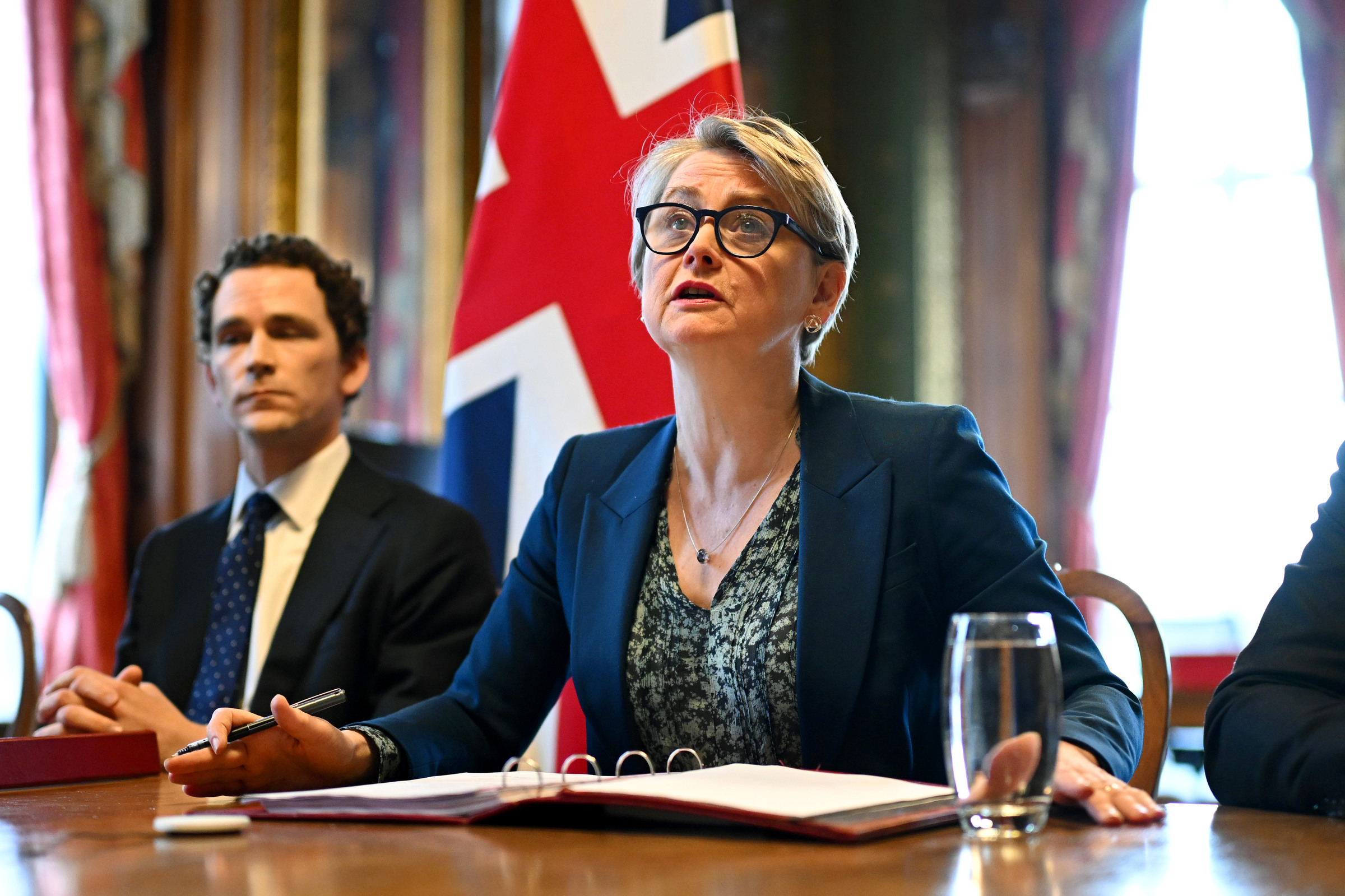 |
UK Foreign Secretary Yvette Cooper speaks at an online conference on reopening the Strait of Hormuz with over 40 nations in London on 2/4. Anh: AP |
The online meeting included representatives from many European countries, such as France, Netherlands, Germany, and Italy, along with nations from Asia and the Middle East. Initially, Europe was hesitant, fearing entanglement in the conflict, but surging oil and gas prices forced the region to alter its stance.
The UK-led alliance aims to restore freedom of navigation and safety for commercial vessels passing through Hormuz. Cooper noted the alliance is considering appropriate tools, potentially including additional economic sanctions on Iran, to achieve this goal.
Italy, the Netherlands, and the UAE issued a joint statement calling for a "humanitarian corridor" to ensure the transport of fertilizers through Hormuz, preventing a food crisis. Military planners from various nations will also convene later to outline options for securing the strait once hostilities cease.
Ahead of the conference, UK Prime Minister Keir Starmer emphasized that countries would "evaluate all feasible diplomatic and political measures." However, he acknowledged the reality, noting that reopening Hormuz "is not easy."
The greatest challenge comes from Iran, which holds a geographical advantage to control the area and use Hormuz for strategic leverage. In peacetime, this route transports about 20% of global oil supply from the Gulf. Currently, Iran allows only some vessels from "friendly" nations to pass, completely blocking those linked to the US, Israel, and their allies.
According to data from Lloyd's List Intelligence, vessel traffic through Hormuz from 1/3 decreased by 94% compared to the same period last year. Tehran also established a "toll station" system to control passing ships, indicating an effort to shape a new management mechanism in the region.
Meanwhile, the US is not participating in the UK-led alliance. President Donald Trump previously called on European allies to deploy warships to join Washington in reopening Hormuz, but received no response.
"For those nations unable to access fuel through Hormuz, such as the UK, which refused to join the Iran operation, I have this suggestion. First, buy US oil; we have plenty. Second, muster some belated courage, go to Hormuz, and take it back yourselves," Trump wrote on Truth Social on 31/3.
Observers assess that the absence of the US raises doubts about the alliance's military capability, as Washington has long been a key force in maritime security operations. When Houthi forces in Yemen blockaded the Red Sea in late 2023 to support Hamas in the Gaza conflict, the US also formed a maritime alliance to escort commercial vessels through the area.
"Given the current context, the prospects for the UK-led alliance are very dim, unless they reach some agreement with Iran on access to the strait," Ian Lesser, an expert at the non-partisan public policy institute German Marshall Fund, based in the US, told Al Jazeera.
A military solution is almost unfeasible, as the alliance lacks clear internal consensus. European countries remain cautious about deploying military forces, raising doubts about their ability to translate commitments into concrete action.
Former European Union High Representative for Foreign Affairs Cathy Ashton described Cooper's conference as more of an "exploratory effort" than a practical action plan.
"Discussions will not focus on things like 'let's gather our navies and go on a military operation,'" Ashton commented. "But that does not mean there will be no dialogue about military action."
Lesser argued that reopening the strait by force requires close cooperation between the US and Europe, while Washington is criticizing its allies and threatening to withdraw from NATO.
"However, the alliance will be well-positioned to ensure the security of commercial shipping lanes after hostilities cease," Lesser added. "Ideally, the alliance should not replace, but operate alongside the US. The Trump administration understands it is unlikely to receive any support beyond this alliance, so Washington might offer assurances."
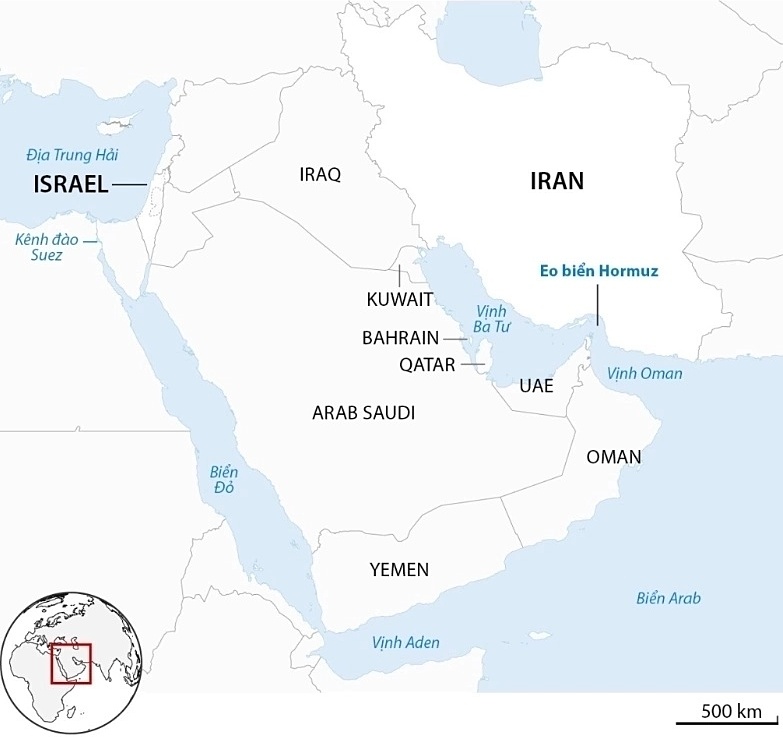 |
Location of the Strait of Hormuz. Do hoa: Guardian |
Edmund Fitton-Brown, an expert at the US-based Foundation for Defense of Democracies (FDD), views the formation of a maritime alliance as a wise move by Prime Minister Starmer to demonstrate UK leadership among a group of nations often hesitant to use force.
"The purpose of the meeting is to consider all feasible options to reopen the Strait of Hormuz after hostilities end. However, things are unlikely to return to normal soon, because even if the US unilaterally ceases military operations, Iran could still cause significant disruptions in this strait," Fitton-Brown commented.
Nhu Tam (According to Al Jazeera, euronews, Reuters)