China is implementing extensive preparations for typhoon Dolphin, a massive storm projected to make landfall on its eastern coast. China's National Meteorological Center reported that as of the morning of 7/8, the typhoon was approximately 820 km off the country's eastern coast. It is expected to make landfall between the afternoon of 9/8 and the morning of 10/8, impacting the region between Zhejiang province and northern Fujian province.
The center maintained a yellow-level alert, the third strongest in a 4-tier system, for strong winds and heavy rainfall in Zhejiang, Fujian, and Taiwan. Shen Yuyang, a meteorologist at the center, stated that as of this morning, the typhoon had expanded to nearly 13 times the size of Zhejiang province, equivalent to 1,230 times the area of Hong Kong special administrative region. The center noted that the typhoon's path after landfall remained uncertain, but estimated it could move westward or northwestward.
In response to the approaching storm, many localities have halted construction activities, evacuated residents, and deployed unmanned aerial vehicles (drones) for sea patrols. The SCMP reported on 7/8 that these measures are part of a broader effort to mitigate the typhoon's impact.
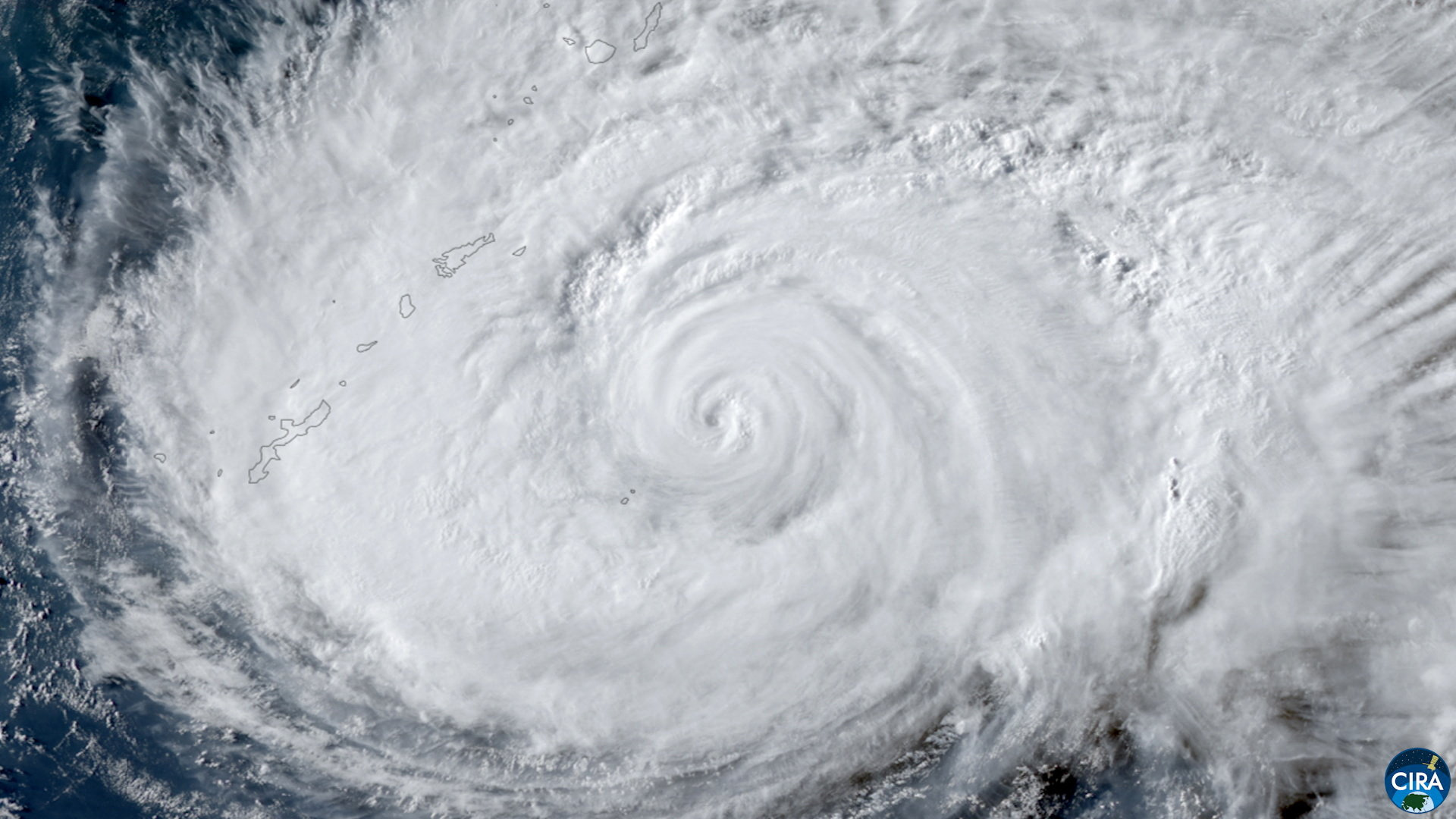 |
Satellite image of typhoon Dolphin approaching Okinawa, Japan, on 6/8. Photo: Reuters |
Authorities are also leveraging new technology to enhance their response. China's state broadcaster CCTV reported on 6/8 that an artificial intelligence (AI)-powered forecasting system has been adopted at the National Marine Environmental Forecasting Center. This system is capable of predicting the typhoon's path, intensity, and landfall-related factors for the next 240 hours.
Given the extensive reach of the typhoon's winds, the center emphasized that not only coastal residents but also those further inland need to pay close attention. CCTV further stated that many areas could experience heavy rainfall and advised residents to closely monitor flash flood warnings, particularly for potential flash floods.
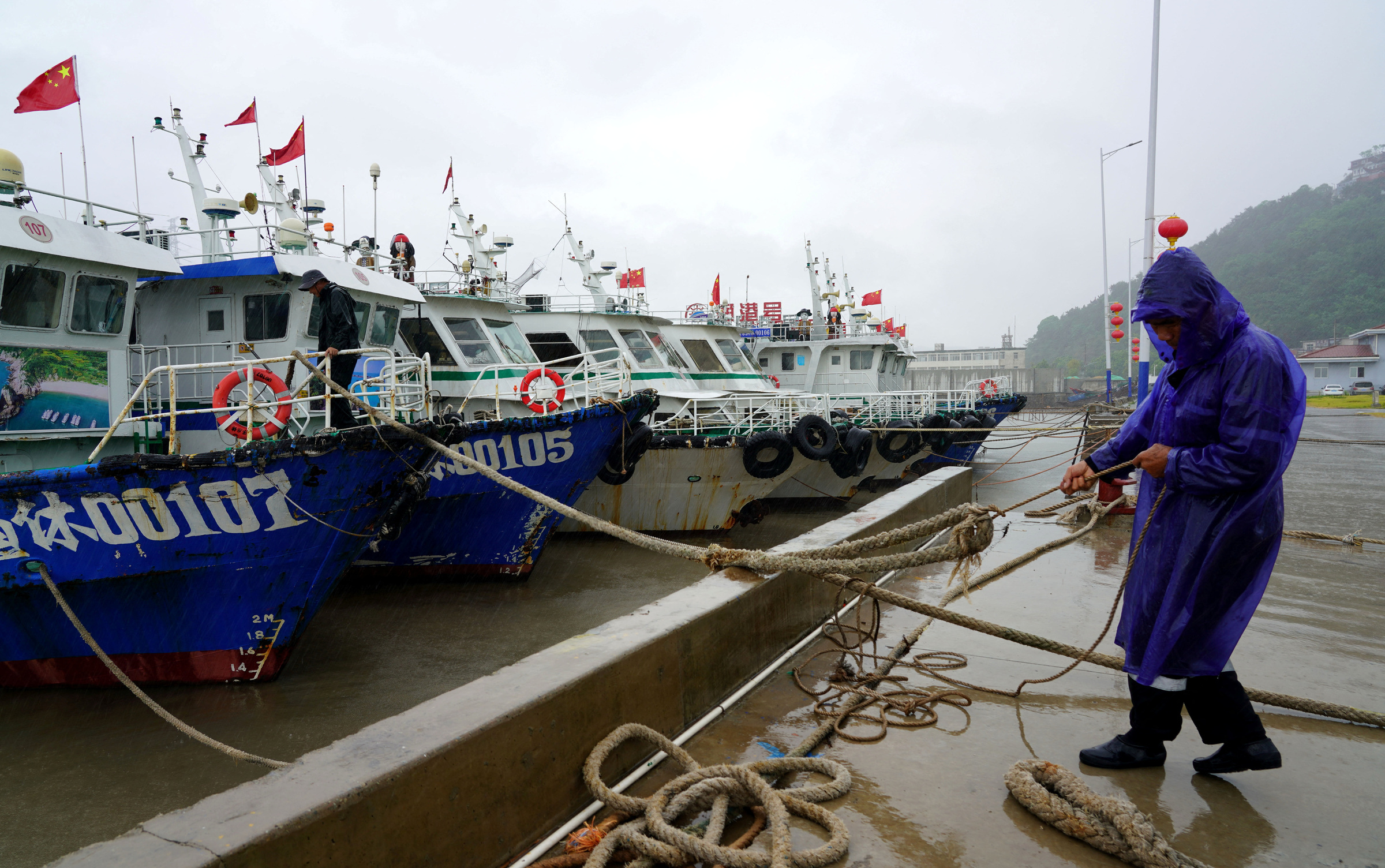 |
Crew members securing a boat in Yueqing Bay, Wenzhou, Zhejiang province, China, on 5/8. Photo: Reuters |
Specific emergency response mechanisms have been activated at the provincial level. According to CCTV, Zhejiang province activated a level two emergency response, the second highest in a 4-tier system. This involved suspending operations for 162 ferry routes and 193 water-based construction projects. Additionally, authorities mandated 474 vessels to anchor safely and deployed 15 tugboats to be on standby for emergencies.
Fujian province activated a level 4 emergency response mechanism, requiring localities to strictly manage fishing boats, ferries, and offshore wind power stations. The provincial government also instructed localities to evacuate residents, inspect high-risk areas, and prepare emergency resources and supplies.
These preparations come after previous typhoons this year caused significant damage. Typhoons Maysak, Bavi, and Noul had caused at least 50 deaths in China and resulted in estimated economic damages of at least 3,4 billion USD.
Ngoc Anh (According to AFP, Reuters)