The Korean Central News Agency (KCNA) reported today that the Democratic People's Republic of Korea Missile Administration (DPRK-MA) successfully tested a new weapon. Leader Kim Jong-un personally guided the event two days prior. "The test proceeded as planned and did not cause any negative impact on the security of neighboring countries," the report stated.
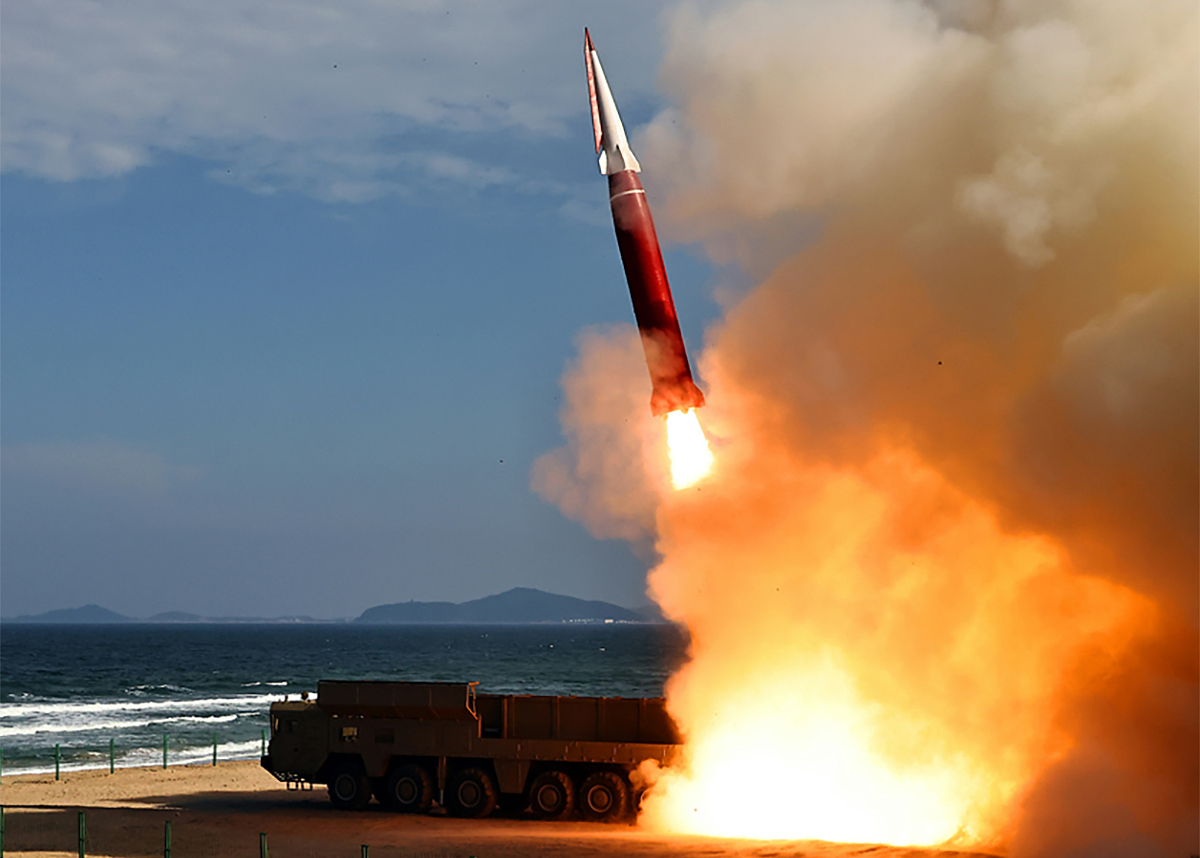 |
Images released showed a ballistic missile with a red-painted body leaving its transporter erector launcher in a coastal area. The missile's warhead was white and resembled a hypersonic glide vehicle (HGV).
In another photo, Kim Jong-un and his daughter stood before a screen displaying test information, which included the text "Hwasongpho-11Ma-1". This indicated the projectile appeared to be an upgraded variant of the Hwasongpho-11Ma series, also known as Hwasong-11Ma or Hwasong-11E.
"North Korea's adversaries will understand the significance of this military technological advancement without further explanation. This reality will give adversaries chronic headaches, and allow for powerful, unavoidable strikes," KCNA quoted Kim Jong-un as saying after the test.
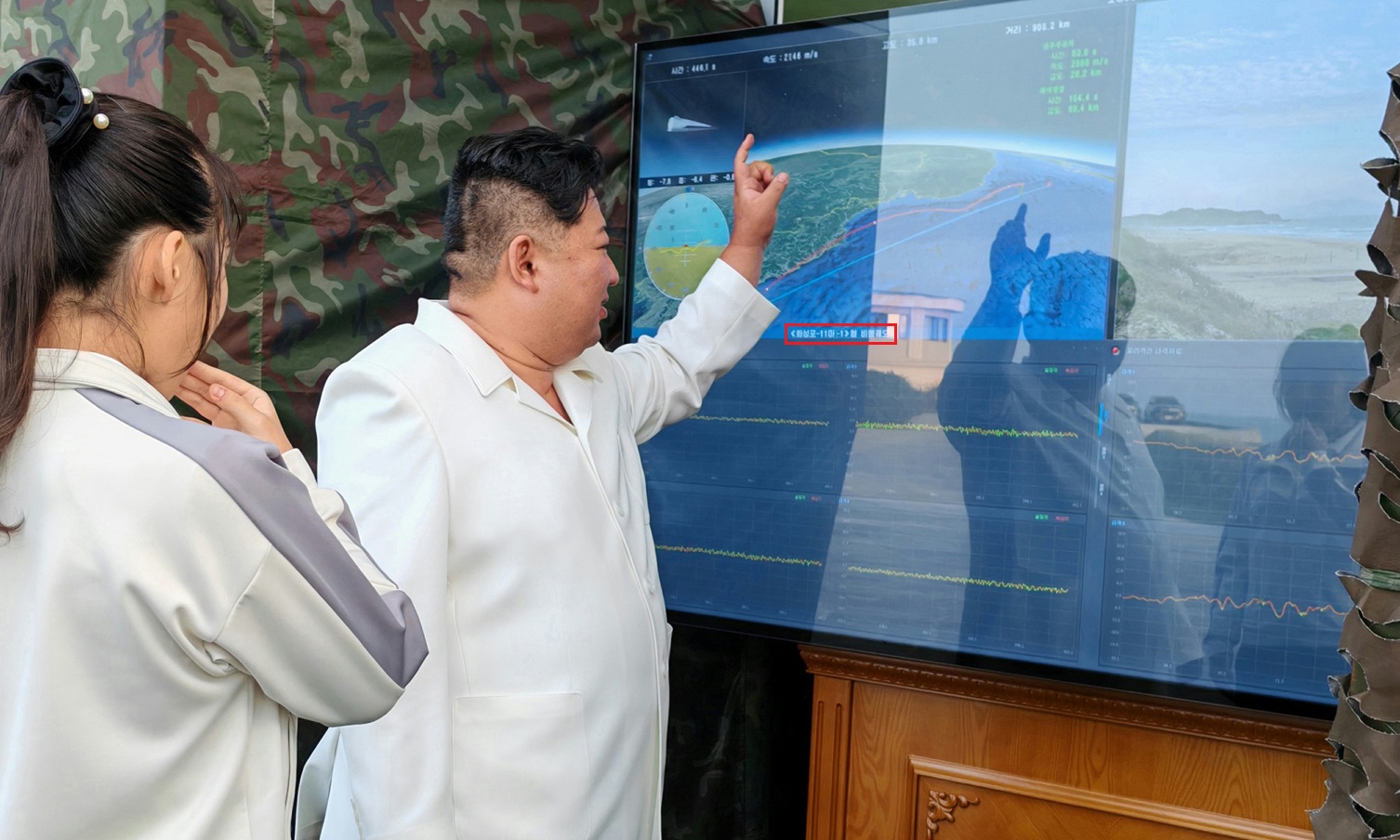 |
The text Hwasongpho-11Ma (circled in red) on the screen displaying missile parameters. *Photo: KCNA* |
The South Korean military reported on 20/9 that North Korea conducted two separate missile launches within 3 hours. One of these was assessed to be a Hwasong-11 tactical ballistic missile. North Korea typically fires one or more missiles per launch, rarely conducting multiple launches hours apart on the same day.
South Korea urged North Korea to cease ballistic missile activities. Japan sent a strong diplomatic protest regarding North Korea's launches, considering them a threat to regional peace and security.
The Hwasong-11Ma evolved from the Hwasong-11 tactical ballistic missile platform, which has a maximum range of 900 km. It specializes in carrying HGVs rather than traditional warheads. Experts estimate the Hwasong-11Ma has a range of 800-1,500 km, sufficient to penetrate South Korean and US defense systems.
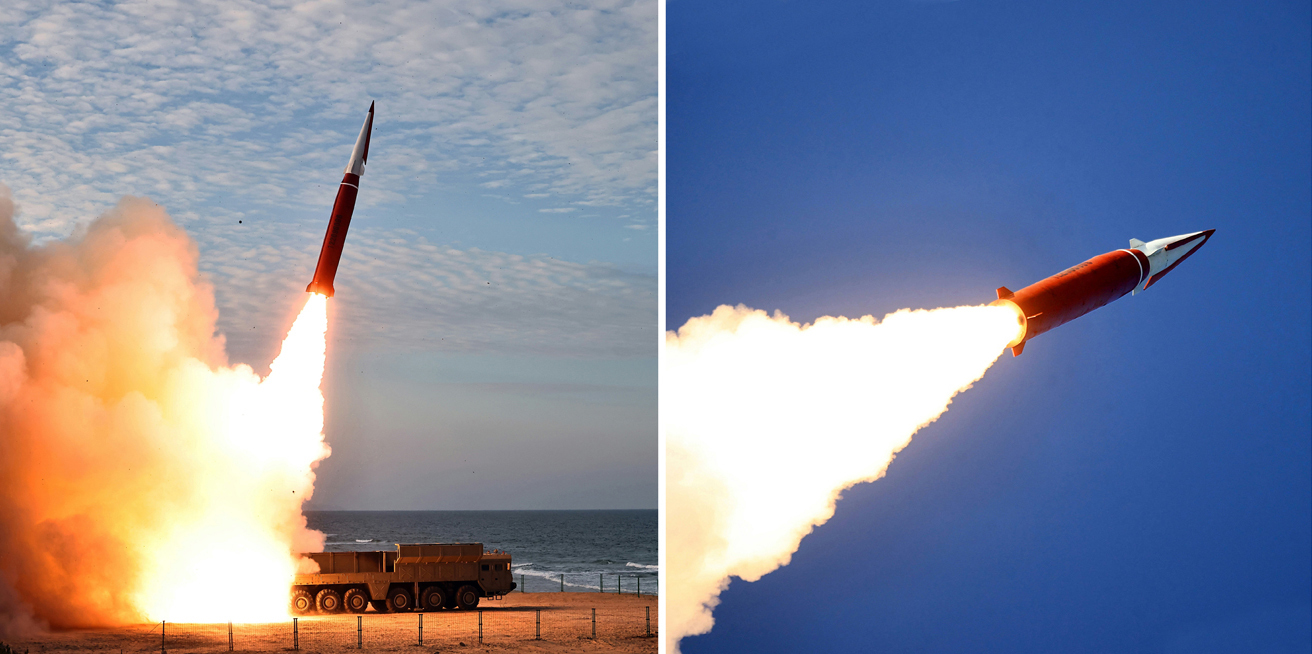 |
North Korean missile departing its launcher during the 20/9 test. *Photo: KCNA* |
Unlike traditional ballistic missiles, HGVs fly at relatively low, flat trajectories at hypersonic speeds, with maneuverability throughout their flight path. This makes them significantly harder to detect and intercept compared to conventional re-entry vehicles.
Tyler Rogoway, editor of the US military specialized website War Zone, stated that HGVs can strike targets significantly off a fixed ballistic trajectory and are "nearly impossible to intercept."
Nguyen Tien (According to KCNA, AFP)