The confrontation over tariffs, rare earth minerals, and export restrictions between the United States and China concluded with a temporary truce between President Donald Trump and President Xi Jinping during their meeting in Korea in october.
Many foreign policy strategists and Chinese analysts believe this moment marks a significant opportunity for China. They argue that US-China relations have entered a new era, where Beijing has demonstrated its strength by firmly responding to Washington's threats and compelling the US to de-escalate.
"The US-China relationship has undergone a structural change. The US side recognizes China's power. Washington has learned to be more pragmatic in dealing with Beijing and shows more respect," said Wang Yong, director of the Center for American Studies at Peking University.
During their meeting in Korea, President Trump surprised President Xi by discussing a G2 model, where the US and China would jointly manage global affairs. This concept of "a new type of great power relations" was one President Xi had previously raised with President Barack Obama in Sunnylands, California, in 2013.
However, President Obama at the time rejected this idea, viewing it as an abandonment of US allies and Washington's global role. He instead pursued a "pivot to asia" strategy to counter China's growing influence in the region.
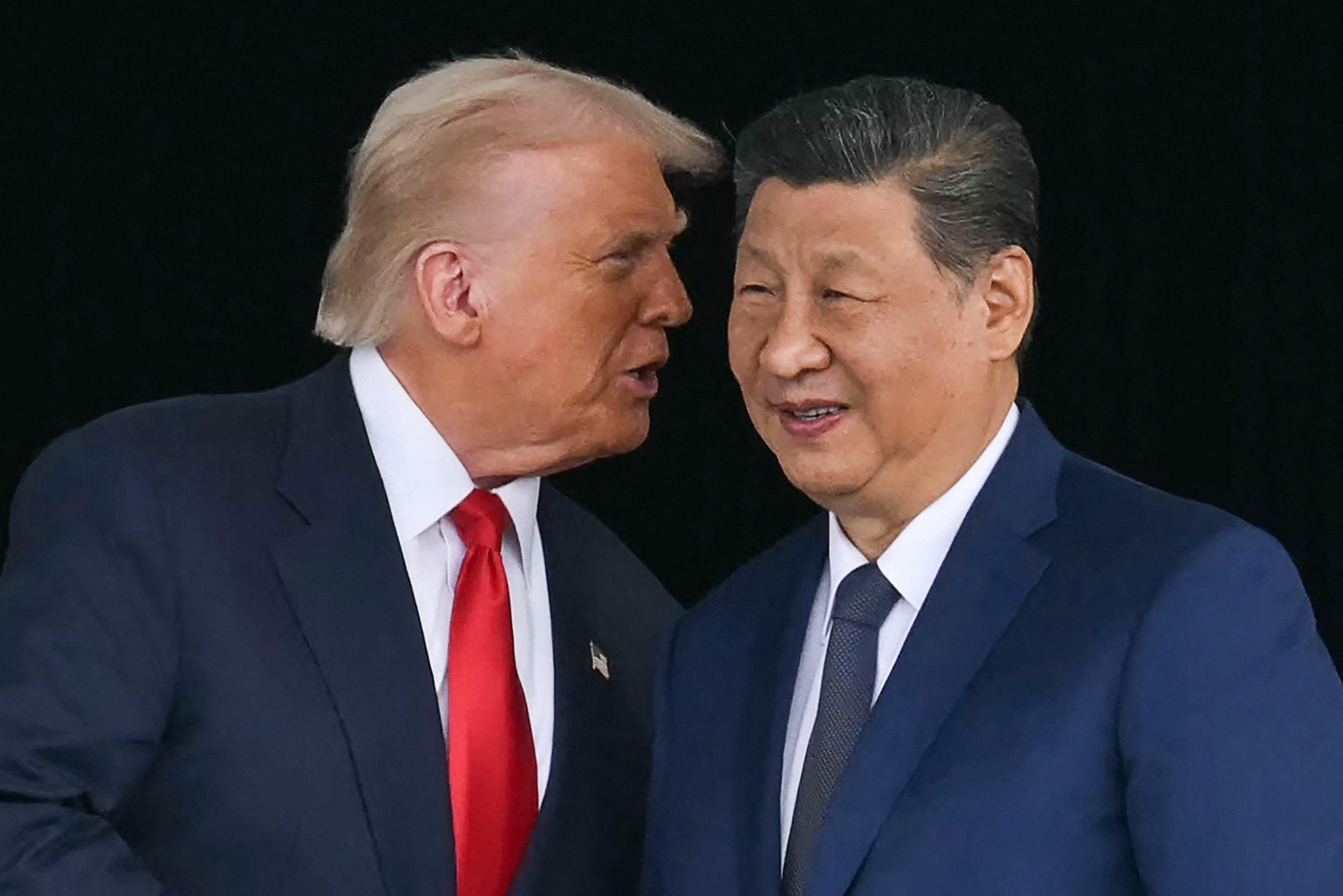 |
US President Donald Trump (left) and Chinese President Xi Jinping during their meeting in Korea on 30/10. Photo: AFP |
US President Donald Trump (left) and Chinese President Xi Jinping during their meeting in Korea on 30/10. Photo: AFP
Wang Dong, executive director of the Institute for Global Cooperation and Understanding at Peking University, believes that President Trump's current endorsement of the G2 concept signals US recognition of China's new status. He added that if the MAGA (Make America Great Again) movement prevails and the Trump administration genuinely abandons the idea of strategic competition with China, it would mark the most fundamental shift in US thinking since the Cold War.
Wang stated, "The MAGA ideology is a farewell to liberal internationalism, breaking the liberal order, promoting US withdrawal from excessive global commitments, and refocusing attention on the Western Hemisphere. That is a new concept and will be the new normal for many years to come."
Many Chinese officials believe that in this new environment, President Trump appears more interested in selling US soybeans to China than in intervening in the Taiwan issue.
During a phone call with President Trump on 24/11, President Xi declared that "Taiwan's return to China is an indispensable part of the post-war international order." In a Truth Social post after the conversation, President Trump did not mention the island, writing instead that "our relationship with China is extremely strong."
The perception that Taiwan is no longer a critical issue for the US may explain China's strong reaction to comments made by Japanese Prime Minister Sanae Takaichi in early november. Prime Minister Takaichi stated before parliament that a scenario where Taiwan is attacked could trigger a military response from Tokyo.
China immediately condemned the remarks, imposing a series of economic and diplomatic sanctions on Japan and demanding that its leadership retract the comments.
Prime Minister Takaichi moved to de-escalate tensions on 3/12, stating that Japan maintains its stance on China's sovereignty over Taiwan as outlined in the 1972 Japan-China Joint Statement. In the joint statement, Beijing "reaffirms that Taiwan is an inseparable part of China's territory," and the Japanese government "fully understands and respects that position."
China's newfound confidence emerges amid significant shifts in US foreign policy during President Trump's term. His friendly stance towards Russia disappointed European allies, while his trade and tariff policies concerned some allies in asia.
In a 10/11 interview with Fox News, when asked about the recent China-Japan tensions, President Trump stated, "many of our allies are not friends. Allies take advantage of us on trade even more than China."
Wu Xinbo, head of the Institute of International Studies at Fudan University in Shanghai, noted that the US's assertive policy towards other countries, particularly on trade, creates new economic and political opportunities for China globally.
Wu explained, "Previously, technology mainly came from the West, but now more technology comes from China, especially in clean energy. This facilitates China's trade and investment relations. Political influence will follow."
China's strength in recent years has been evident across various future-shaping technologies, from artificial intelligence and high-speed rail to clean energy.
The success of DeepSeek, a Chinese artificial intelligence (AI) model, demonstrates the country's technological capabilities despite restrictions on advanced chip imports.
China's achievement in restoring blue skies to Beijing and many other major cities, once plagued by severe air pollution, is also considered a success for its electric vehicle policy and strict emission standards.
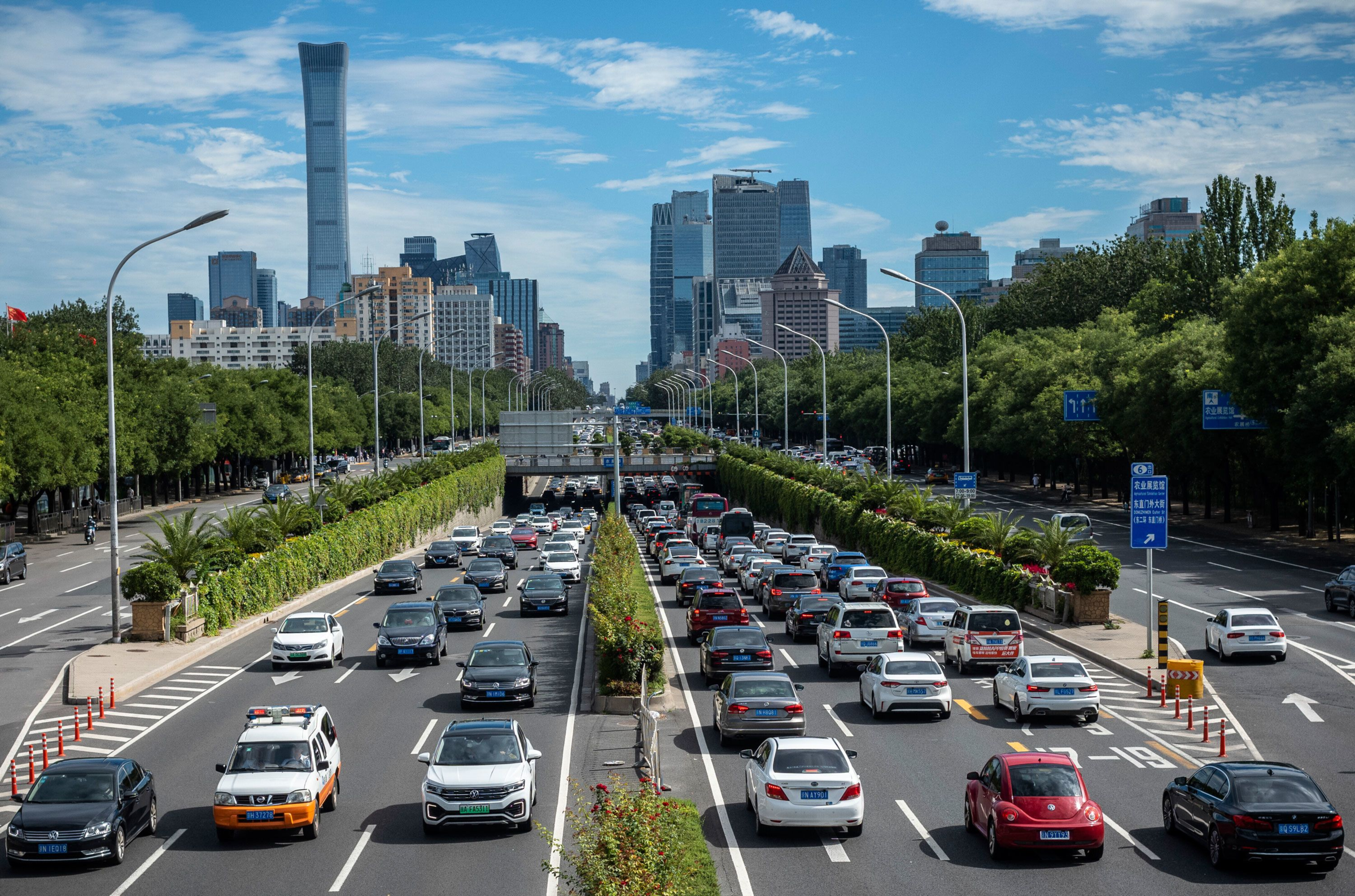 |
Blue sky in Beijing on 30/7/2021. Photo: AP |
Blue sky in Beijing on 30/7/2021. Photo: AP
Ma Jun, director of the Institute of Public and Environmental Affairs in Beijing, commented, "Beijing was once known as the smog capital. But now I am surprised when I smell diesel exhaust in a US or European city, because you no longer encounter that smell in China. I hope that can be a sufficiently convincing demonstration to the world."
However, some Chinese scholars remain more cautious in assessing the US's position and China's opportunities for further ascent.
Wang Huiyao, founder and chairman of the Center for China and Globalization in Beijing, said, "President Trump is pragmatic, and he sees China rising in both hard and soft power. By focusing on the Americas instead of pivoting to asia and spreading thin across multiple fronts, as well as maintaining conciliatory relations with China, the Americans can still maintain global dominance for another 20-30 years."
Thanh Tam (According to WSJ, SCMP)