


Guo Jiakun, spokesperson for China's Ministry of Foreign Affairs, announced today that Beijing and Ottawa are working towards establishing a new strategic partnership. They have reached specific agreements to properly address bilateral economic and trade issues, based on equality, openness, harmony, cooperation, and mutual benefit.
"These agreements are not aimed at any third party; rather, they serve the common interests of the people of both nations and contribute to promoting peace, stability, and prosperous development worldwide," Guo said at a press conference in Beijing.
According to Guo, China's stance is that countries should manage their relationships through mutually beneficial cooperation instead of confrontation and a "winner-loser" mentality.
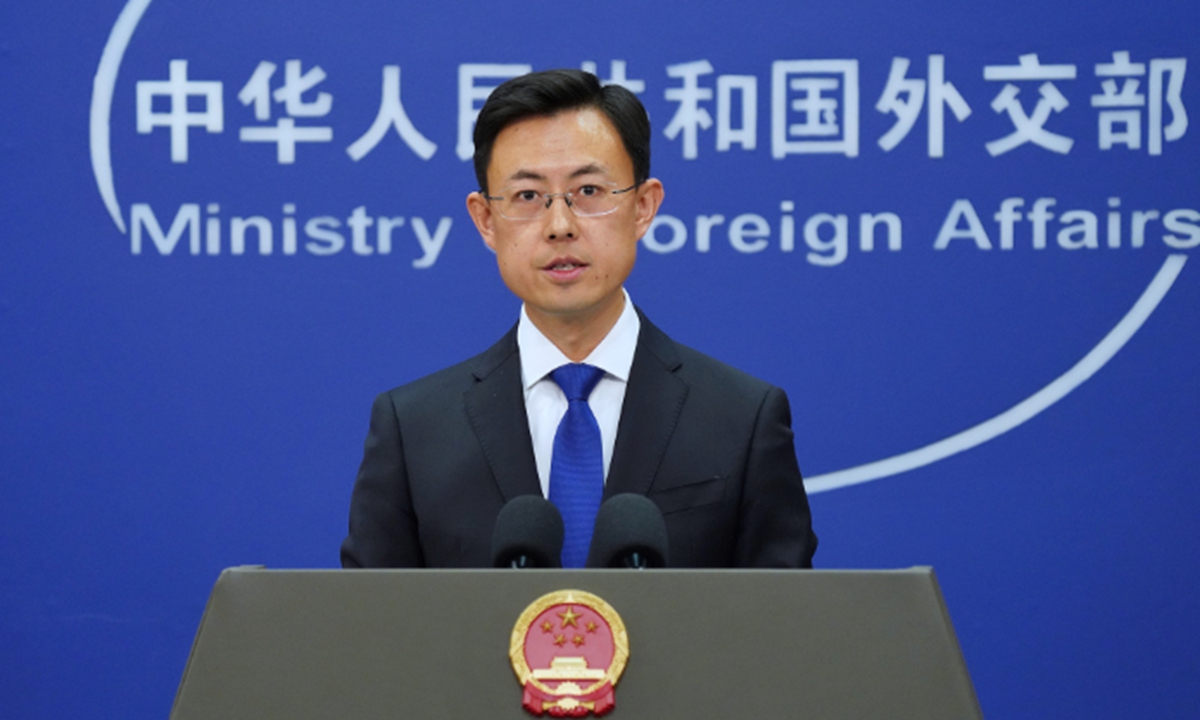 |
Guo Jiakun, spokesperson for China's Ministry of Foreign Affairs. Photo: China's Ministry of Foreign Affairs |
Guo's comments responded to a question regarding US Treasury Secretary Scott Bessent's warning that Washington would impose 100% tariffs on imports from Canada if Ottawa reached a free trade agreement with China. President Donald Trump had previously issued a similar threat.
"If Carney thinks he can turn Canada into a 'transshipment port' for China to bring goods and products into the US, he is gravely mistaken," Trump posted on social media. Bessent also declared, "We cannot allow Canada to become a gateway for China to flood cheap goods into the US."
Canadian Prime Minister Mark Carney stated on 25/1 that the agreement he reached with China during his mid-month visit to Beijing aimed to resolve disagreements between the two countries over the past few years.
"We do not intend to pursue a free trade agreement with China or any other non-market economy," he said, adding that in the free trade agreement between Canada, the US, and Mexico, the parties committed not to negotiate or sign free trade agreements with "non-market economies" without prior notification.
In 2024, Canada followed the US by imposing 100% tariffs on electric vehicles and 25% on aluminum and steel imported from China. Beijing retaliated by imposing 100% import tariffs on Canadian oil and canola meal, and 25% on Canadian pork and seafood.
During his visit to China mid-month, Prime Minister Carney diverged from the US stance by agreeing to reduce the 100% tariff on electric vehicles imported from China. In return, Beijing lowered tariffs on the aforementioned Canadian exports.
Carney stated that Canada would apply an initial annual quota of 49,000 Chinese electric vehicles at a 6,1% tariff, with this figure gradually increasing to approximately 70,000 over five years. He noted that before 2024, Canada did not impose any quotas on Chinese electric vehicles.
According to Carney, this initial quota represents only about 3% of the 1,8 million vehicles sold annually in Canada. He emphasized that, in exchange, China is expected to begin investing in Canada's automotive industry within the next three years.
Huyen Le (According to AFP, Global Times)


