


China consistently features Huaiyang cuisine at its state banquets, a culinary style known for its delicate flavors and meticulous preparation, designed to appeal to international guests. Luo Chenglin, head chef of Yangzhou Yan restaurant in Beijing, emphasized this approach on 14/5.
"State banquets provide an opportunity to showcase China's abundant produce and finest ingredients," Luo stated. "Dishes must also cater to international tastes, so we avoid overly large portions or excessive spice. Our cuisine features delicate flavors and uses ingredients that appeal to all guests."
Luo, 31, began his culinary training at 17. He has previously served numerous Japanese and Australian diplomatic guests. Several of his former colleagues were among the chefs who prepared the 2017 state banquet hosted by Xi Jinping for Donald Trump.
Huaiyang cuisine originates from the regions surrounding the Huai and Yangtze rivers, primarily Huai'an and Yangzhou. This culinary style gained prominence during the Sui (581-618) and Tang (618-907) dynasties.
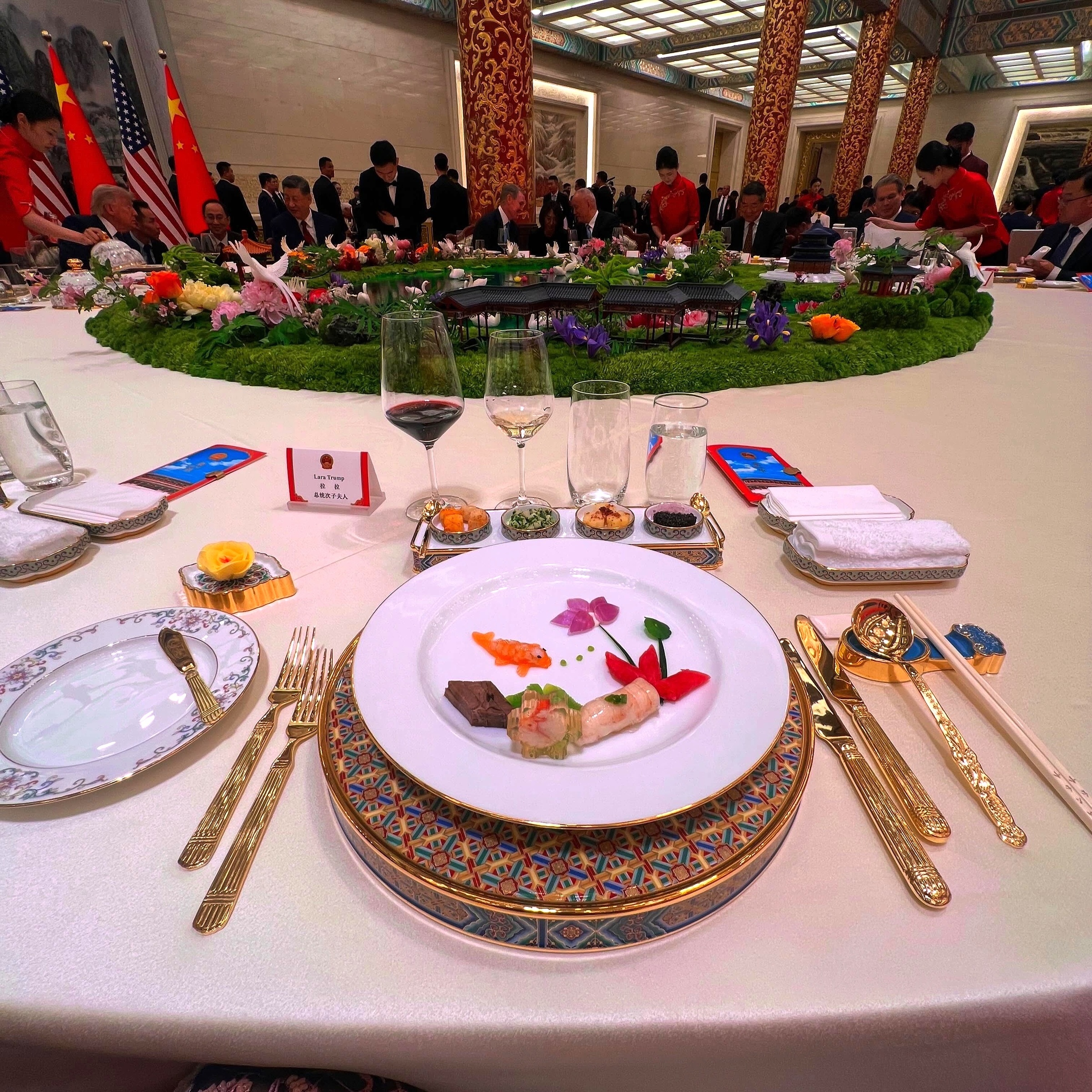 |
Lara Trump, daughter-in-law of US President Donald Trump, shared a photo of a cold dish served at the state banquet in Beijing on 14/5. Photo: Facebook/Lara Trump |
Emperors Kangxi (1654-1722) and Qianlong (1711-1799) frequently visited Huai'an and Yangzhou during their imperial tours to the Jiangnan region (south of the Yangtze River) via the Grand Canal. These visits significantly contributed to the cuisine's nationwide popularity.
Huaiyang has been recognized as one of China's four major culinary traditions since the reign of Emperor Qianlong. In contrast to Sichuan cuisine's spicy and numbing profiles, Huaiyang emphasizes meticulous knife skills, seasonal ingredients, and balanced, delicate flavors.
Common ingredients include fresh seafood and seasonal vegetables from Jiangsu's fertile waterways. The cuisine's precision cutting is exemplified by the Wensi Tofu dish, where a square block of tofu is meticulously sliced into over 5,000 hair-thin strands.
"Huaiyang cuisine is a showcase for our culinary mastery," Luo explained. "Every bone, fin, and thorn is meticulously removed. This allows us to present dishes to international guests that perfectly demonstrate the art of 'eating fish without encountering a single bone'."
Hong Hanh (Source: Reuters, AFP)


