The South Korean Ministry of Unification released its white paper on 18/5, establishing three guiding principles for President Lee Jae Myung's administration: affirming the country "respects North Korea's system, does not pursue unification by absorption, and does not engage in hostile activities."
Based on these principles, the South Korean government frames its overarching policy as "peaceful coexistence and co-development on the Korean Peninsula."
The administration also outlined measures, including stopping anti-North Korea leaflet dissemination and halting loudspeaker broadcasts along the border to reduce tensions and rebuild trust.
Previously, the conservative administration of Yoon Suk-yeol sought to promote change in North Korea through pressure and increasing the flow of outside information into the country.
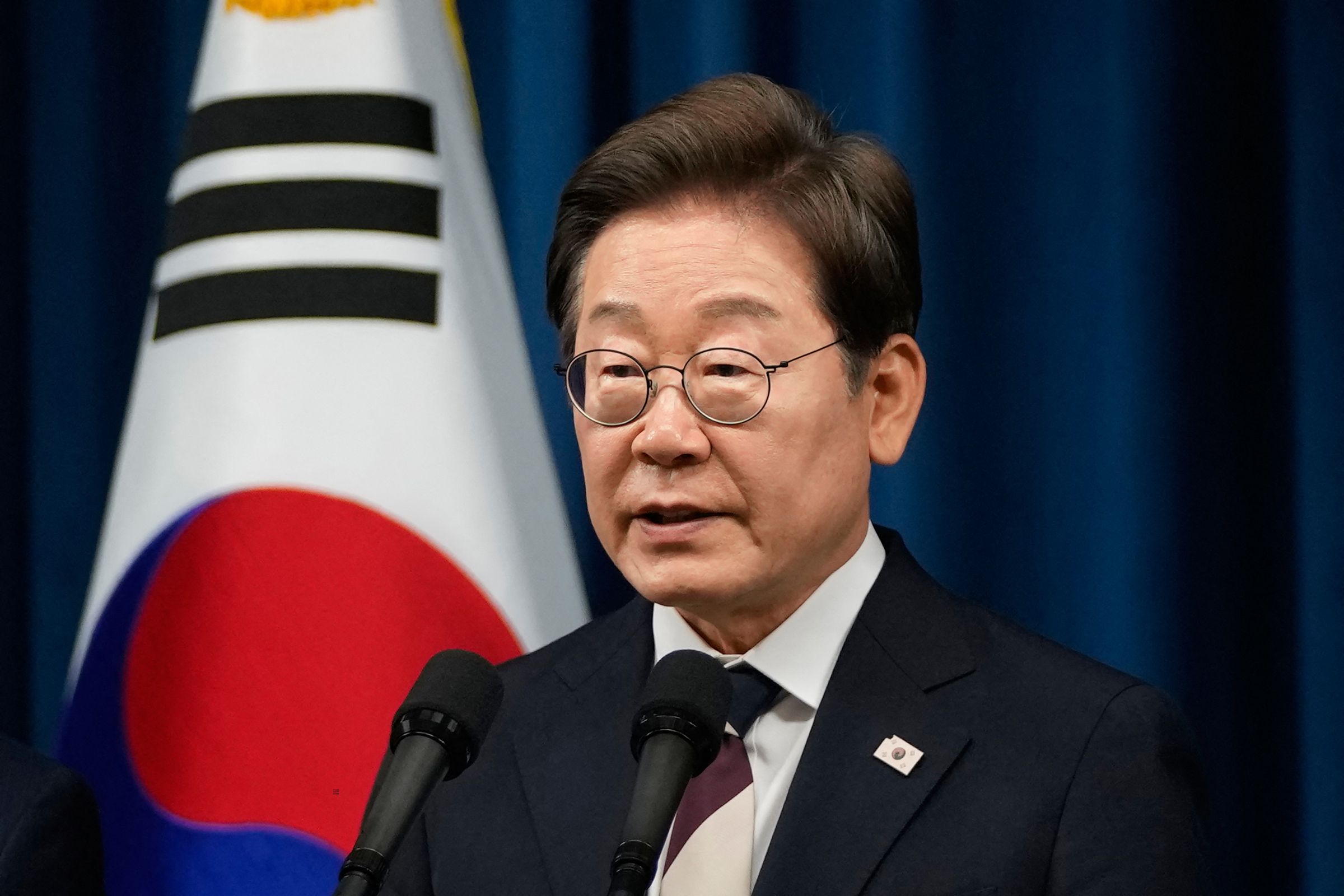 |
South Korean President Lee Jae Myung in Seoul in 6/2025. Photo: AFP |
The white paper details plans to restore the inter-Korean military agreement, signed by former South Korean President Moon Jae-in and North Korean leader Kim Jong-un in 2018. It also aims to pursue a bilateral agreement to establish a systematic foundation for peaceful coexistence.
The shift in President Lee's administration's policy priorities is evident in the white paper's language. Mentions of "peace" and "peaceful coexistence" increased from 29 to 196, while "meeting" or "dialogue" rose from 16 to 58.
References to "North Korean human rights" decreased from 156 to 26, and "freedom" dropped from 43 to 3. Mentions of "North Korean defectors" sharply declined from 203 to just 10.
Despite South Korea's conciliatory gestures, inter-Korean relations remain largely frozen. According to Yonhap, the past five years have seen no civilian or economic exchange between the two Koreas.
North Korean parliamentary documents, accessed by Reuters and Yonhap on 6/5, show the country removed all content related to peninsula unification from its revised constitution. While Pyongyang still incorporates the view of the two Koreas as "two hostile states" into its constitution, it does not call Seoul its "main enemy."
Ngoc Anh (According to Yonhap, Reuters)