China's Ministry of Emergency Management activated a Level IV disaster relief mechanism in the Guangxi Zhuang Autonomous Region on 24/8, after typhoon Narra caused severe flooding in the area, Global Times reported.
The China Meteorological Administration also raised its emergency response level for hazardous weather phenomena like typhoons, heavy rainfall, and strong convective weather to Level III. Both systems have four levels, with Level I being the most severe.
According to China's state broadcaster CCTV, floods forced approximately 54,000 people in Guangxi province to evacuate, with over 8,000 relocating to emergency shelters.
Water levels in 15 rivers surpassed warning thresholds at monitoring stations. Many areas in Chongzuo city were submerged by floodwaters. Fangchenggang city recorded a maximum rainfall of 404,9 mm. Rescue forces used rubber boats to evacuate residents from flooded areas, including Ningming county.
Many passenger train services were suspended until 27/8 due to increased risks of landslides and flooding.
 |
Flooding in Ningming county, Guangxi Zhuang Autonomous Region, on 23/8. *Photo: Xinhua*
 |
Flooding in Ningming county, Guangxi Zhuang Autonomous Region, on 23/8. *Photo: Xinhua*
 |
Flooding in Ningming county, Guangxi Zhuang Autonomous Region, on 23/8. *Photo: Xinhua*
 |
Rescue forces evacuating residents in Fangchenggang city, Guangxi province, on 23/8. *Photo: VCG*
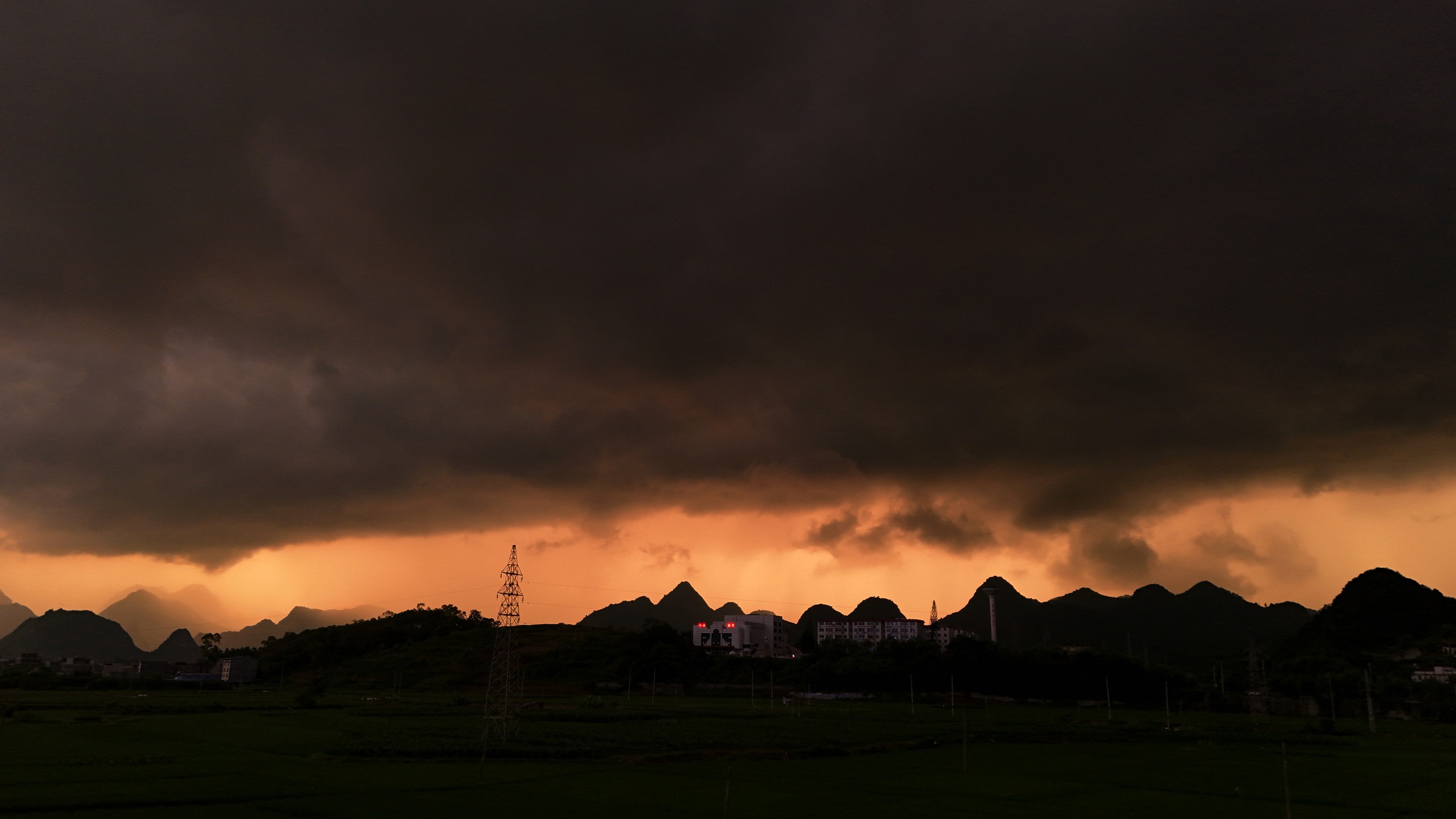 |
Dark clouds cover Chengguan town, Xincheng county, Laibin city, Guangxi province, on the evening of 24/8. *Photo: AFP*
According to Zhang Ling, a senior weather forecaster at China's National Meteorological Center, typhoon Narra remained almost stationary over the Beibu Gulf. The typhoon was influenced by various surrounding weather systems, but none were strong enough to dictate its direction of movement.
The typhoon is forecast to continue moving over the Beibu Gulf and intensify. From the evening of 24/8, it will shift northward at 5-10 km/h towards the coastal areas from Guangxi to the western Leizhou Peninsula in Guangdong province, southern China.
CCTV reported that heavy rainfall is expected to continue in Guangxi, Guangdong, Hainan, and Fujian provinces until 26/8.
China postponed the launch of its Chang'e-7 uncrewed lunar probe, originally scheduled for 24/8, from the Wenchang Spacecraft Launch Site in Hainan, stating it had not yet "met launch conditions".
Nhu Tam (According to Reuters, Global Times)