The US Department of Homeland Security (DHS) proposed a 103,265 USD fee for all H-1B visa petitions subject to numerical limits, including those for advanced degree holders who typically receive separate priority. DHS announced this in a document published in the Federal Register on 24/8.
According to DHS, applicants must pay this amount upon filing their petitions, which does not include other statutory fees. The fee aims to help the federal government partially offset the operating costs of the legal immigration system.
The document was scheduled for official publication on 25/8, initiating a 30-day period for public comment on the proposal.
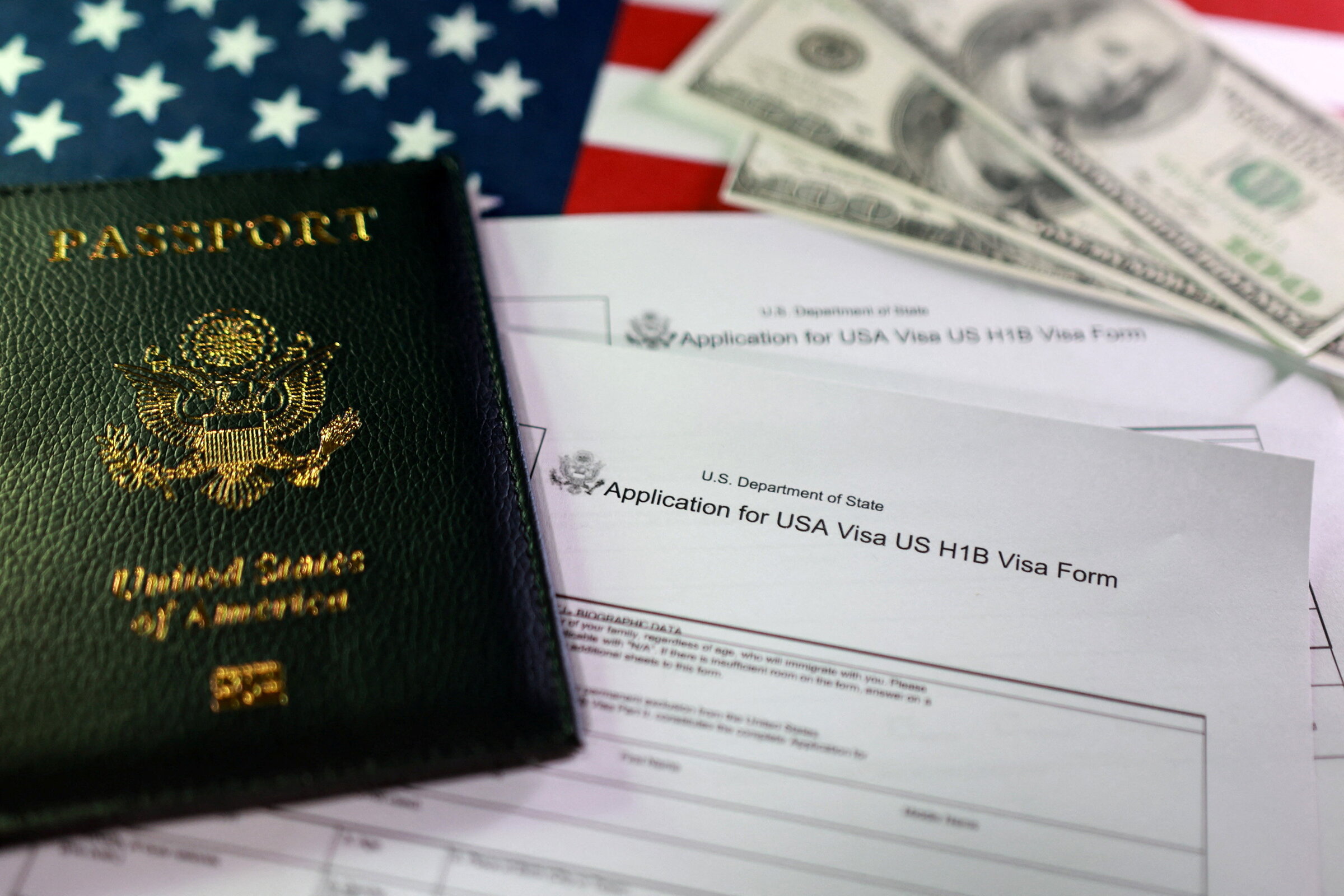 |
An H-1B visa application form alongside a US passport, pictured in 9/2025. Photo: Reuters |
An H-1B visa application form alongside a US passport, pictured in 9/2025. Photo: Reuters
The H-1B is a non-immigrant visa issued by the US government, enabling companies to employ highly skilled foreign workers in the US for a specific duration. H-1B visas typically have a three-year validity, with holders eligible to apply for extensions or green cards. The H-1B program issues 65,000 visas annually, with an additional 20,000 visas allocated for advanced degree workers.
The Trump administration contended that the H-1B system had been abused, allowing foreign workers willing to accept lower wages to replace US laborers. Conversely, US businesses asserted that the H-1B program is essential to address domestic shortages of skilled workers for certain positions.
Among measures aimed at reforming the H-1B program, Mr. Trump signed an executive order mandating businesses to pay an additional 100,000 USD for each visa, effective 27/2. Prior to this order, businesses sponsoring foreign workers typically paid fees ranging from 2,000 to 5,000 USD.
In early 6, federal judge Leo Sorokin in Boston, Massachusetts, ruled that the 100,000 USD payment was "essentially a tax". He cited a US Supreme Court ruling from 2 that had rejected broad tariffs President Trump imposed under a national emergency law, thereby blocking the fee increase order.
By Nhu Tam (According to Reuters, AFP)