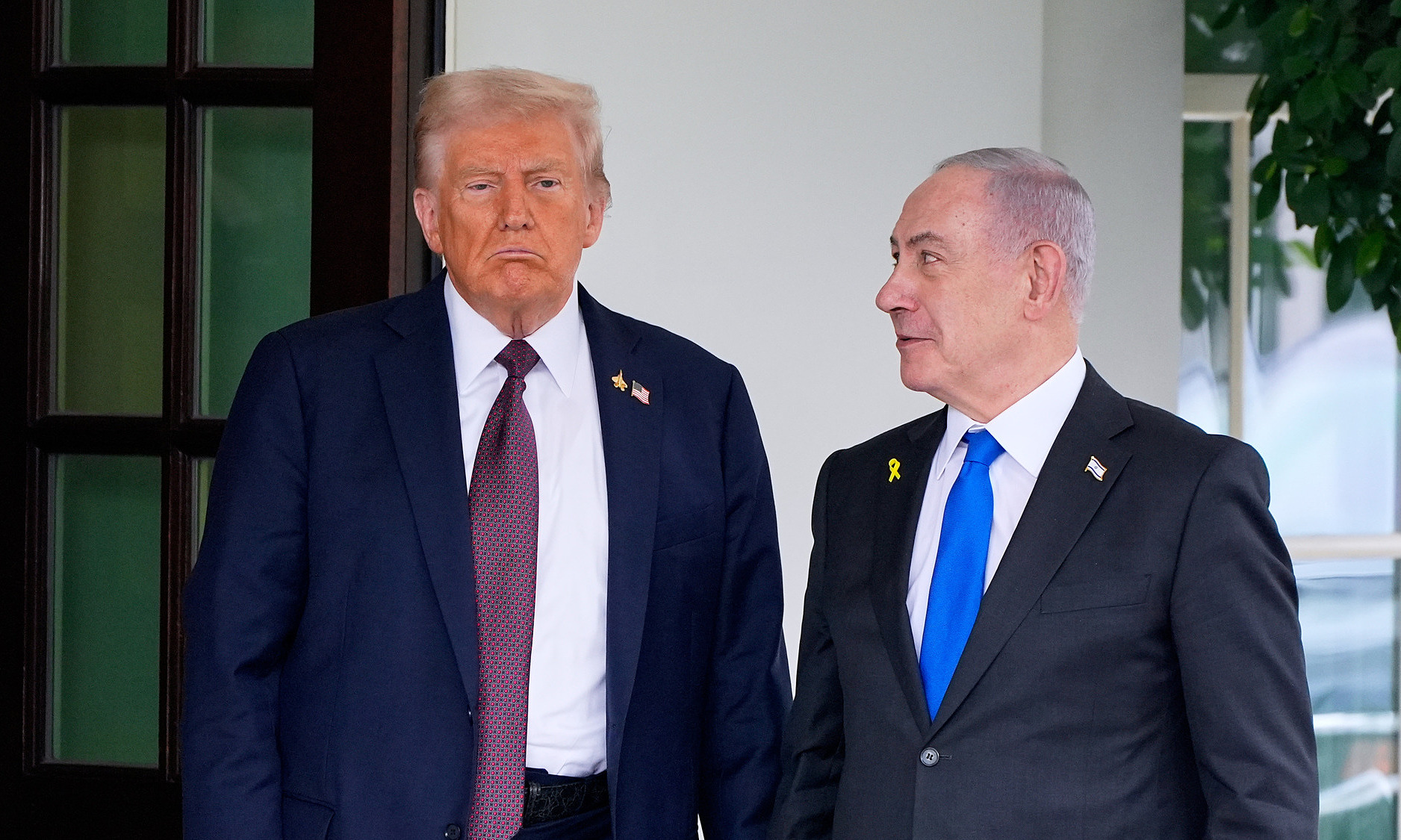
On 5/5, 30 Democratic lawmakers, led by Representative Joaquin Castro, sent a letter to US Secretary of State Marco Rubio. They argued that President Donald Trump's cooperation with Israeli Prime Minister Benjamin Netanyahu in a military campaign against Iran, aimed at preventing Iran from acquiring nuclear weapons, while not openly acknowledging Tel Aviv's own possession of such weapons, is untenable.
"We are fighting alongside Israel, a nation whose potential nuclear weapons program the US government officially refuses to acknowledge," the letter stated. "The risks of miscalculation, escalation, and nuclear use in the current environment are no longer theoretical." The lawmakers emphasized that Congress has a right to be fully informed about the nuclear balance in the Middle East, the risk of escalation from any party in the conflict, and the administration's plans and contingencies for such scenarios. "We have not received such information," the lawmakers wrote.
 |
Iron Dome launchers deployed in Sderot, Israel, in 2023. *Photo: AFP*
Israel is believed to have secretly developed its nuclear weapons program since the late 1950s but has never publicly acknowledged it. Some officials within the Trump administration also expressed concern about the risk of nuclear escalation in the Iran conflict, suggesting Israel's red lines might not be fully understood. In 10/2023, lawmaker Revital Gotliv from Prime Minister Netanyahu's ruling Likud party publicly called for Israel to use Jericho nuclear missiles against Hamas in Gaza to "restore national security."
This marked the first time an Israeli lawmaker openly acknowledged the country's possession of Jericho, Israel's intercontinental ballistic missile (ICBM) capable of carrying nuclear warheads. Tel Aviv has consistently maintained a policy of "strategic ambiguity," neither confirming nor denying its nuclear arsenal.
Israel has not released any doctrine on how it might use nuclear weapons. In the late 1960s, the Israeli government declared it "will not be the first nation to introduce nuclear weapons into the Middle East." However, it interpreted "introduce" as only applying to overt actions or testing of nuclear weapons in the region.
This interpretation caused disagreement between Israel and the US, according to declassified US State Department documents from 1969. Henry Kissinger, former US Secretary of State and National Security Advisor, resolved the tension by proposing to President Richard Nixon that the US adopt a policy of "nuclear ambiguity" with Israel. This meant Israel would keep its nuclear program secret and limit nuclear tests, while the US would "turn a blind eye" and not pressure Israel to sign the Nuclear Non-Proliferation Treaty (NPT).
 |
Israeli Prime Minister Benjamin Netanyahu inspects a Gabriel V anti-ship missile in 2018. *Photo: 19fortyfive*
This approach allowed the US to maintain cooperation without publicly acknowledging Israel's nuclear program, ensuring the strategic interests of both sides without compromising international commitments, according to Avner Cohen, an Israeli-American historian known for his research on nuclear history.
In the 5/5 letter, the Democratic lawmakers noted that US government officials have implicitly acknowledged the existence of Israel's nuclear program. During a 2006 confirmation hearing, after being nominated by George W. Bush as Secretary of Defense, Robert Gates stated regarding Iran: "They are surrounded by nuclear powers, Pakistan to the east, Russia to the north, Israel to the west, and us in the Persian Gulf."
The letter from the Democratic lawmakers is the latest indication of a shift in the party's approach to Israel, as increasing dissent emerges regarding Israel's military actions in the Gaza Strip, West Bank, and Lebanon. Historian Cohen said the letter broke a taboo that had existed for over half a century. "This is something people didn't dare to do before. Even raising these questions publicly is a departure from the bipartisan norm," he assessed.
The Trump administration and Israel have not responded to the Democratic lawmakers' letter.
Ngoc Anh (Washington Post, Hill)