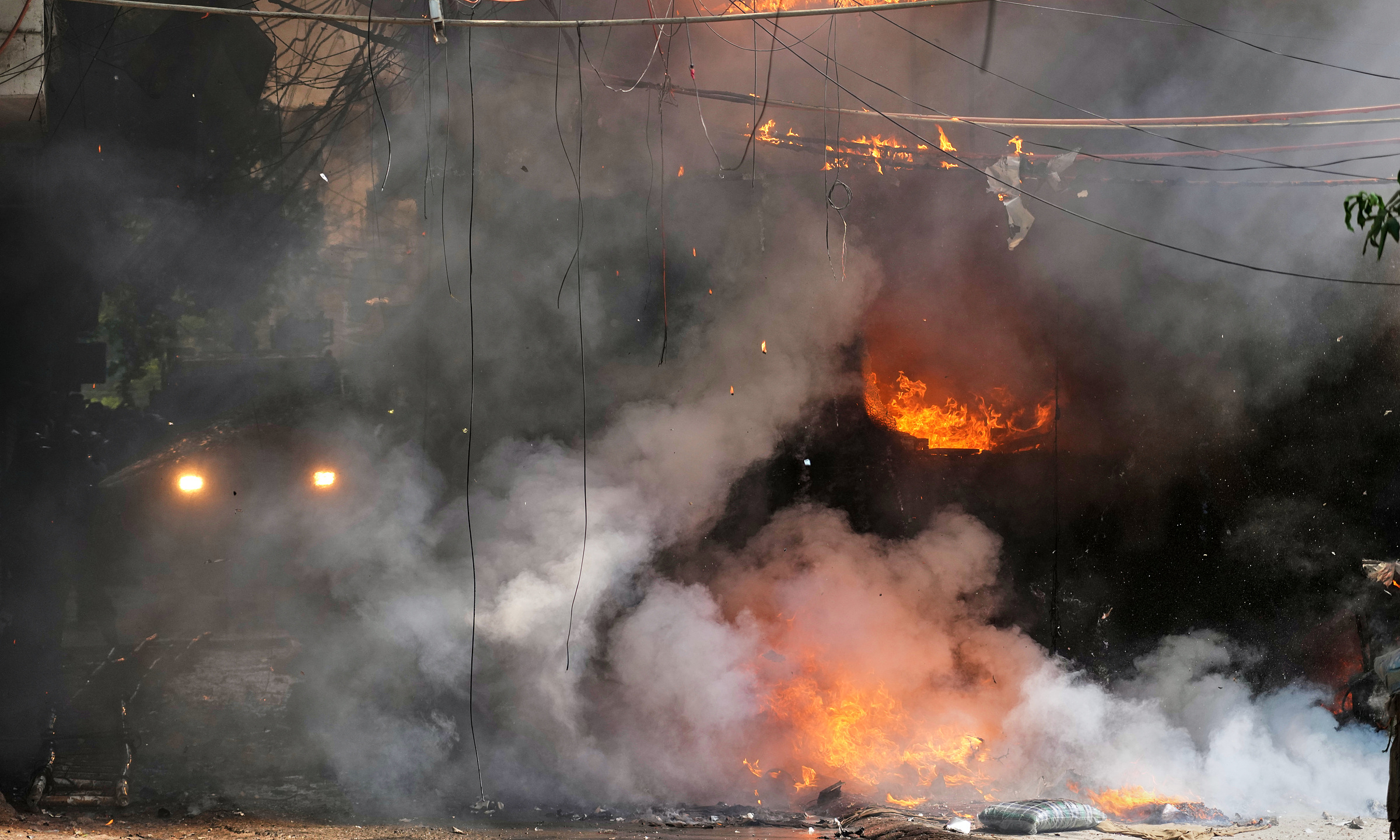
Iran's Islamic Revolutionary Guard Corps (IRGC) announced on 31/5 that it shot down a US MQ-1 Predator unmanned aerial vehicle, accusing it of violating its airspace. US Central Command (CENTCOM), responsible for US military operations in the Middle East, later confirmed an MQ-1 was shot down but maintained the aircraft was operating over international waters.
"This raises the question of whether the US is reactivating the MQ-1 Predator unmanned aerial vehicle (UAV) after retiring them 8 years ago," Joseph Trevithick and Howard Altman, editors for the US military news site War Zone, stated on 1/6.
Iran shot down what it claimed was a US MQ-1 UAV in a video released on 1/6. *Video: Tasnim*
The two US editors believe the downed UAV could be an MQ-1C Gray Eagle. Although still designated MQ-1, the C variant was developed specifically for the US Army's requirements, including lower logistical costs and pilot training needs compared to the Air Force's MQ-1A/B variants. The US Army previously deployed MQ-1C-equipped units to the Middle East. The US Air Force also posted photos of an MQ-1C Gray Eagle in April, but captioned it as an MQ-1 Predator.
However, there is still a possibility that the US Air Force has reactivated its Predator fleet. "They might be privately owned and operated, or drawn from military storage," the two US experts suggested.
According to Trevithick, reactivating MQ-1 UAV operations is an appealing option for the US military, especially as they need to fill capability gaps after at least 50 MQ-9 Reaper drones were shot down by Iran and Houthi forces in Yemen. Losses to the MQ-9 fleet and the demand for reconnaissance UAVs point to the possibility of the MQ-1 series returning to service. "They can perform tasks similar to the MQ-9 to some extent," Altman said.
Reports indicate significant MQ-9 losses in recent conflicts. Bloomberg News and Air&Space Forces magazine reported late last month, citing sources familiar with the matter, that Iran destroyed 30 MQ-9 aircraft during 6 weeks of conflict, equivalent to 20% of the total Reaper UAVs the US military possessed before the conflict erupted, causing nearly one billion USD in damages. Al-Masirah television, operated by Houthi forces, announced on 29/5 that the Yemeni armed group had shot down its 25th Reaper since the regional conflict escalated in 10/2023.
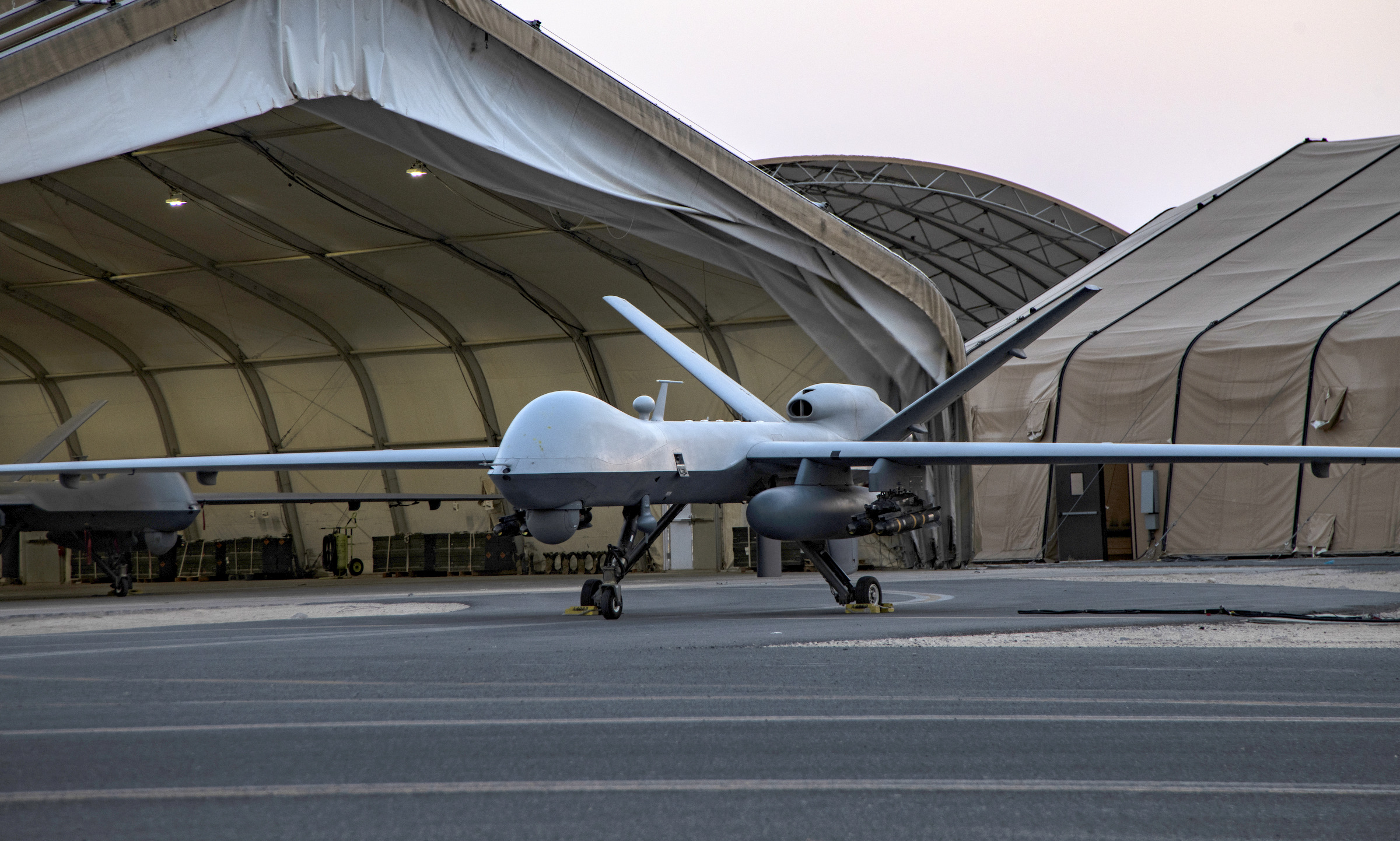 |
A US MQ-9 UAV deployed at Ali Al-Salem Air Base, Kuwait, in 2020. *Photo: USAF*
The MQ-1 Predator offers a more cost-effective alternative compared to the MQ-9 Reaper. The US Congressional Research Service reported that an MQ-9 aircraft costs about 30 million USD, while each MQ-1 costs 4-5 million USD depending on configuration. While the MQ-1 Predator is smaller, has a shorter range, and lower overall performance than the MQ-9 Reaper, these limitations could be offset by the operational terrain in the Middle East, where US bases are relatively close to Iran and potential operating areas like the Strait of Hormuz. "The US Air Force might be more willing to sacrifice MQ-1s than MQ-9s. Deploying this UAV model for missions in high-risk areas is a suitable option," Trevithick and Altman stated.
Washington previously used MQ-1s to monitor Tehran's activities in the Persian Gulf, including one Predator shot down by an Iranian Su-25 attack aircraft in 2012. In the late 2010s, the US Air Force discussed transferring retired MQ-1s to the Navy and Marine Corps. However, there was no indication that these two branches accepted the MQ-1 fleet. Instead, the US Navy helped the Marine Corps lay the groundwork for its MQ-9 Reaper fleet.
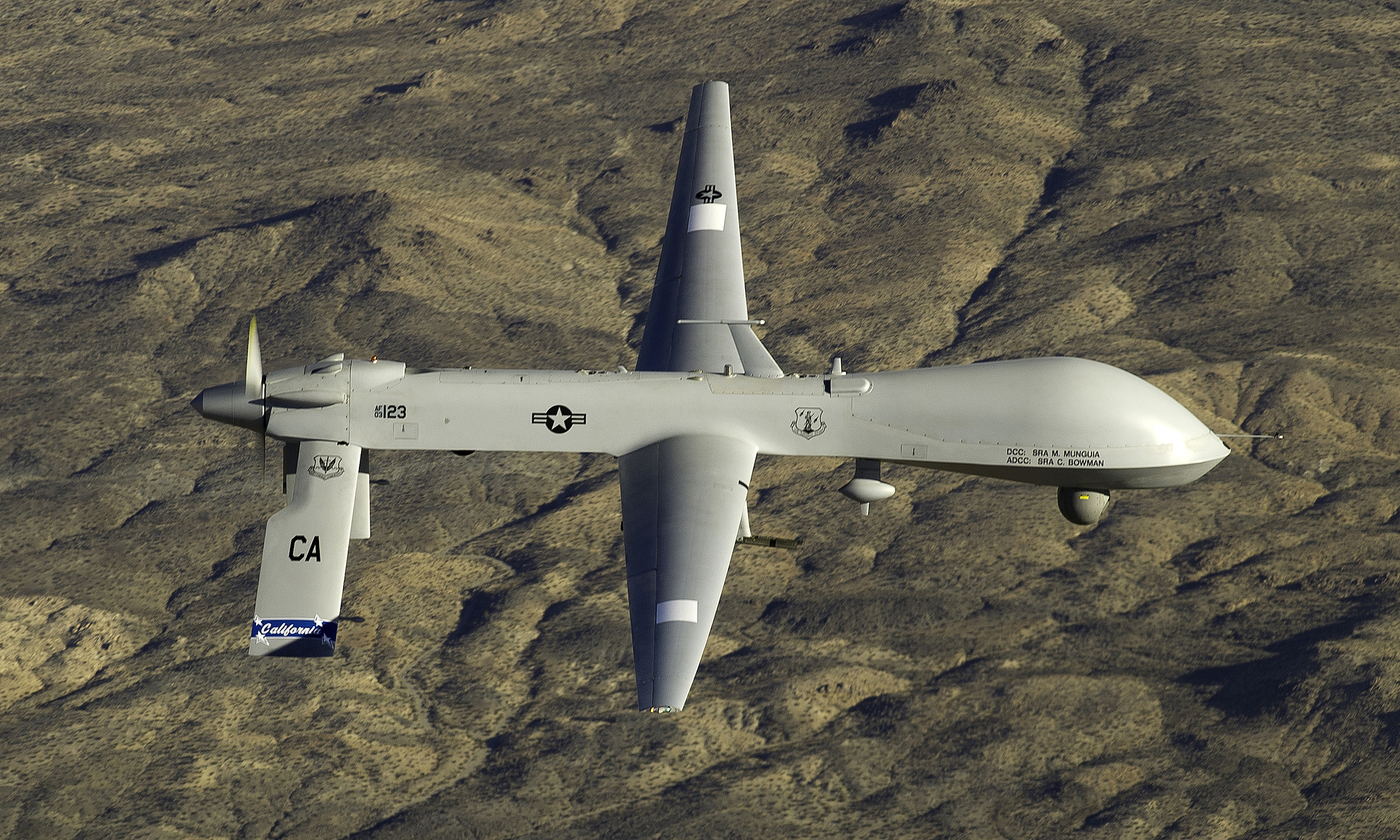 |
An MQ-1 UAV flying over California, US, in 1/2012. *Photo: USAF*
The fate of many retired MQ-1s remains uncertain. "If only 15 MQ-1B aircraft remain in inventory as of 2024, another question is what happened to the tens of MQ-1s the US Air Force operated until retirement. They could have been used as targets for live-fire training, research, development, testing, or converted into kamikaze UAVs," Trevithick and Altman stated. The Pentagon currently needs MQ-9s in the Middle East, but losses have been alarmingly high in recent years. It is unclear how many MQ-9s are available for the US military to repurchase or when a more advanced aircraft model will be produced to replace the Reaper fleet. "The US military does not appear to have brought any MQ-1B aircraft back into service. Reactivating them on a small scale remains a temporary solution to meet operational needs and reduce pressure on the heavily impacted MQ-9 fleet," Trevithick and Altman commented.
Nguyen Tien (According to AP, AFP, War Zone)