The US Centers for Disease Control and Prevention (CDC) reported on 14/7 that the number of intestinal infections caused by Cyclospora has been unusually increasing nationwide over the past two months, with nearly 7,000 cases reported across 34 states.
Confirmed cases are more than six times higher than the 249 cases reported during the same period last year. The CDC anticipates further increases, as cases are typically reported approximately six weeks after onset. The actual scale could be larger, as some individuals recover without seeking medical attention or testing.
 |
Global headquarters of the US Centers for Disease Control and Prevention (CDC) on 9/8/2025. Photo: AFP
Cyclospora is a single-celled parasite that causes illness in the small intestine. The primary sources of infection are contaminated food or water. The illness rarely spreads directly from person to person.
Common symptoms include diarrhea, loss of appetite, abdominal cramps, bloating, nausea, and fatigue. Symptoms typically begin about one week after exposure, but the incubation period can range from two days to more than two weeks. Without treatment, symptoms may subside and then recur for several weeks.
141 people have been hospitalized, with no fatalities reported. Gwen Biggerstaff, deputy director of the CDC's Division of Foodborne, Waterborne, and Environmental Diseases, stated that this year's diarrhea cases are significantly higher than the two most recent outbreak seasons.
The CDC and the US Food and Drug Administration (FDA) are investigating several distinct clusters of cases. Most notably, over 400 cases in Michigan, Ohio, West Virginia, and Kentucky share epidemiological links, suggesting a common source of infection. Individuals in this cluster began developing symptoms from 22/6.
Michigan is a hotspot, with 3,309 cases reported as of 14/7, including at least 44 hospitalizations, whereas the state typically records 40 to 50 Cyclospora infections annually. The FDA is tracing the origin of various agricultural products but lacks sufficient evidence to advise the public to avoid a specific food item.
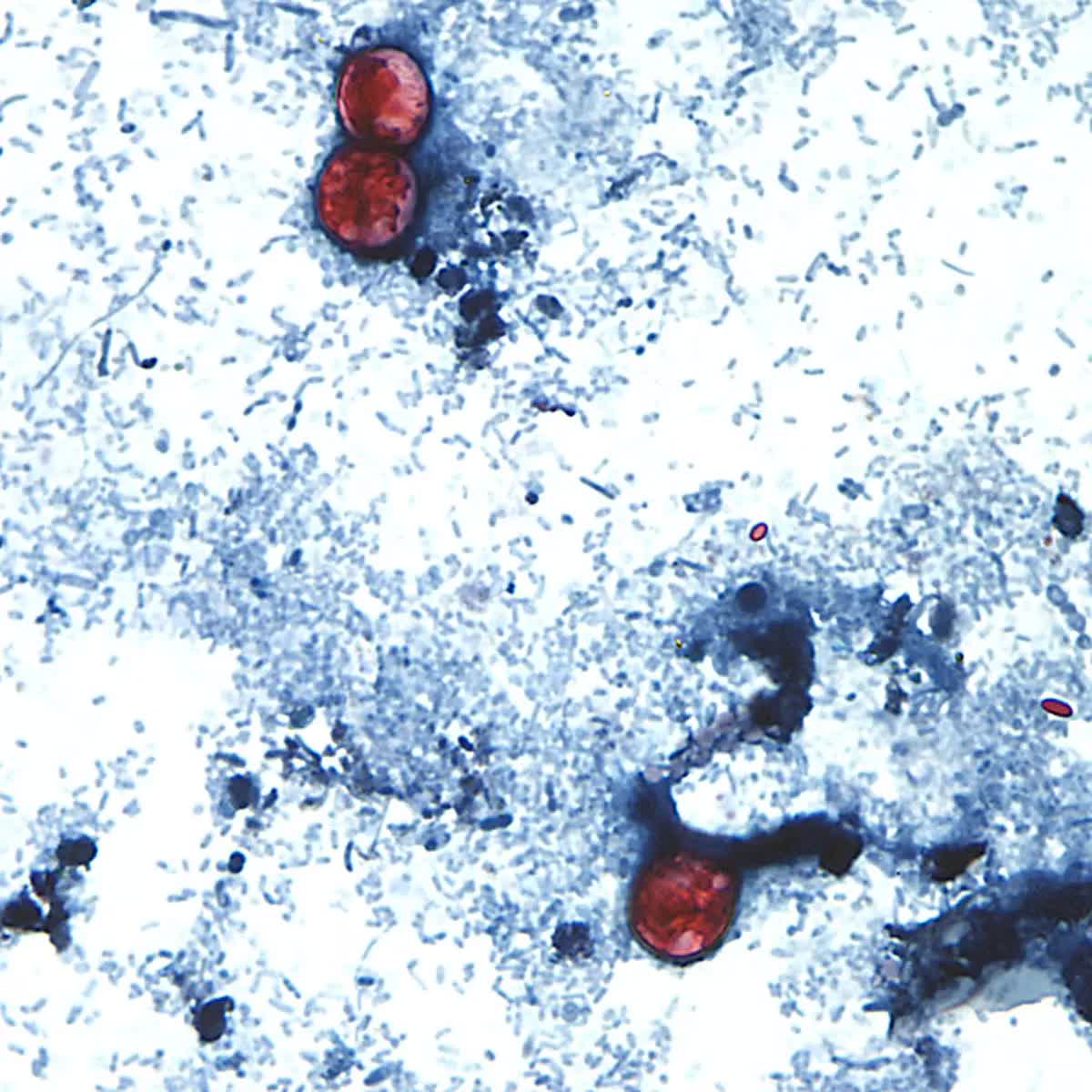 |
Cyclospora parasite under a microscope. Photo: CDC
As the outbreak's origin and spread remain unidentified, the CDC advises Americans to thoroughly wash fresh produce under clean running water, even products labeled "pre-washed". Additionally, cooking food to a temperature of 70 degrees Celsius can kill Cyclospora, whereas conventional washing or using chemical disinfectants does not guarantee complete elimination of the parasite.
Previous outbreaks in the United States have been linked to bagged salads, fresh herbs, lettuce, and raspberries. In 1996, an outbreak across 20 US states, Washington D.C., and two Canadian provinces affected 1,465 people, with the primary source identified as raspberries imported from Guatemala.
Ha Linh (According to CNN, Washington Post, NPR)