"Israelis have purchased hundreds of thousands of airline tickets to enjoy their summer holidays. We are committed to allowing commercial flights to proceed and will not cancel any tickets due to US refueling aircraft," Israeli Minister of Transport and Road Safety Miri Regev stated on 14/7.
Regev declared that Israel would permit no more than 20 US refueling aircraft at Ben Gurion Airport in Tel Aviv, in accordance with a prior agreement. The remaining aircraft would need to relocate to Israeli air force bases.
Ben Gurion Airport is Israel's primary and busiest aviation facility, capable of handling 25 million passengers annually. During the peak summer season, the airport processes approximately 70,000 to 90,000 passengers daily.
US refueling aircraft at Ben Gurion Airport, Israel on 19/5. Video: Reuters
The US refueling fleet, comprising 9 KC-46 Pegasus and 5 KC-135 aircraft, landed at Ben Gurion Airport days before the Middle East conflict erupted in February. The number of US refueling and transport aircraft present there has significantly increased since then.
The Times of Israel reported that 75 US refueling and transport aircraft were stationed at Ben Gurion Airport for several months. Many refueling aircraft have since departed, but approximately 30 of these planes remain at the airport, hindering civilian aircraft operations and causing a shortage of parking spaces.
Some sources indicated that US and Israeli officials were angered by Minister Regev's decision. Three experts stated on 15/7 that limiting the number of refueling aircraft at Ben Gurion Airport would create significant issues for US forces.
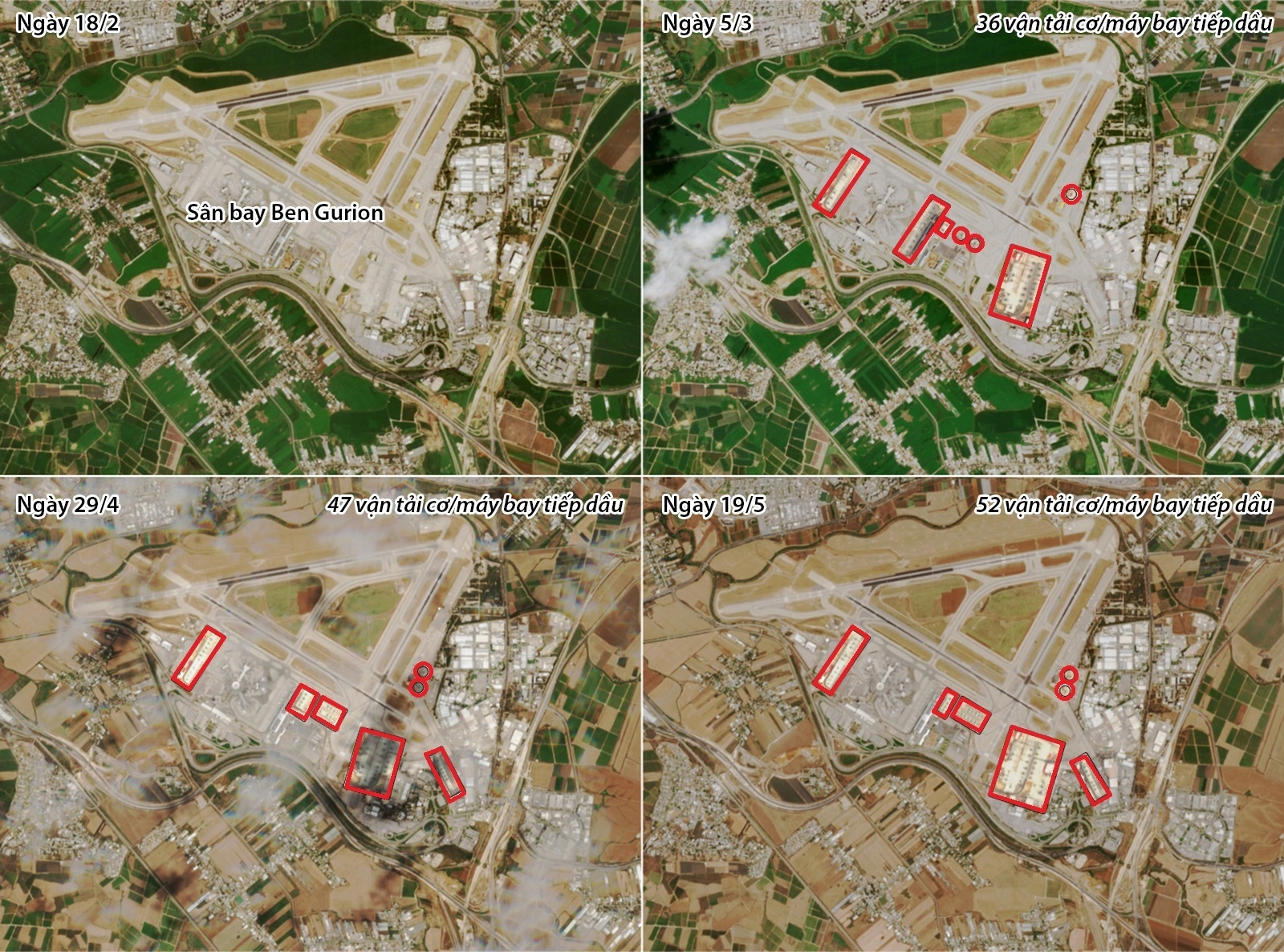 |
Positions of military aircraft at Ben Gurion Airport on 28/2, 3/5, 29/4, and 19/5. Photo: FT, ESA
The US Air Force could deploy dozens of KC-135 and KC-46 aircraft to various bases in Israel and the Middle East. However, facilities near Iran were heavily attacked during six weeks of conflict, with at least 5 US refueling aircraft damaged in a March attack on Prince Sultan Air Base in Saudi Arabia.
Operations from the Al Udeid logistics hub in Qatar have also become unfeasible due to the risk of long-range Iranian weapon attacks. Meanwhile, bases like Muwaffaq Salti in Jordan are too crowded and lack sufficient space for dozens of US refueling aircraft.
Colonel Tim Hawkins, a spokesperson for US Central Command (CENTCOM), which oversees US military operations in the Middle East, stated that the command "will continue to work with Israeli partners to best position military aircraft to support operations." Hawkins praised Israel but declined to provide further details.
A former US Air Force official acknowledged that operating military aircraft from a civilian airport during operations creates significant tension. However, Ben Gurion is considered one of the most important airports in the region, both geographically and for its integrated air defense systems.
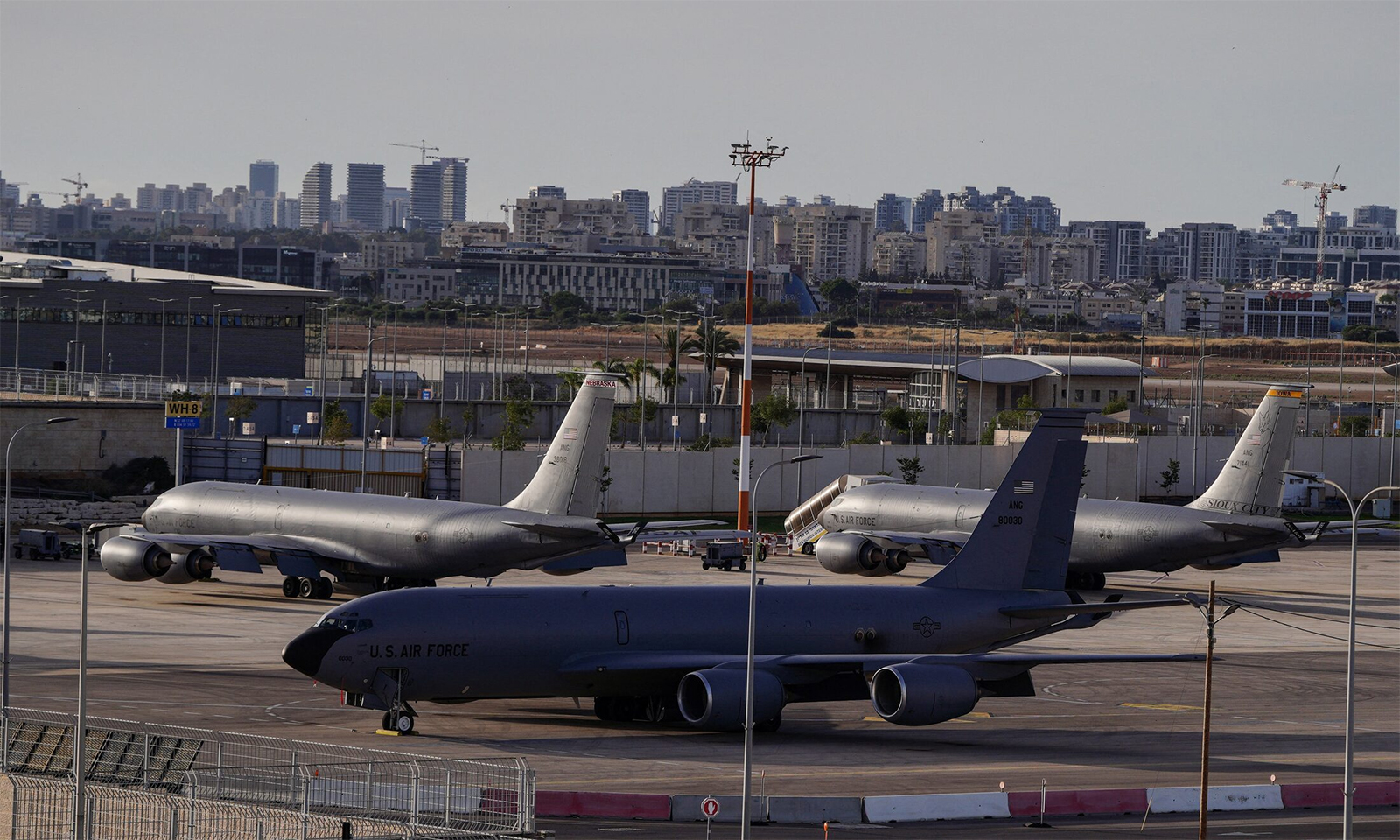 |
US refueling aircraft at Ben Gurion Airport, Israel on 19/5. Photo: Reuters
The former official noted that the new limitations at Ben Gurion Airport do not automatically restrict operations against Iran or US support for regional partners. CENTCOM and the US Air Force will assess runways, parking, and equipment supply capabilities at other facilities to address the issue.
A senior official with the Israel Defense Forces (IDF) stated that Ben Gurion is Israel's sole large-scale international airport, and the safest facility in the region for US military aircraft.
"Haifa and Ramon airports handle only a small fraction of Israel's civilian air traffic," the official said. "Ben Gurion can accommodate about 20 US refueling aircraft. Exceeding this number would significantly impact Israel's civilian aviation."
Nguyen Tien (According to AFP, AP, Reuters, War Zone)