A report released by the Kiel Institute for the World Economy, a German-based research institute, on 11/2 indicates a significant shift in international support for Ukraine. Military aid from European countries to Ukraine increased by 67% in 2025 compared to the annual average between 2022 and 2024. Financial and humanitarian aid from Europe also saw a 59% rise during the same period.
In stark contrast, total U.S. aid to Ukraine, encompassing military, financial, and humanitarian support, decreased by 99% over the same timeframe.
The increased support from Europe helped stabilize the overall flow of aid to Ukraine, despite the sharp decline in U.S. contributions. Nevertheless, the total military aid Kyiv received in 2025 was still 13% lower than the annual average from 2022 to 2024.
Officials from the U.S. and Ukraine have not yet commented on this information.
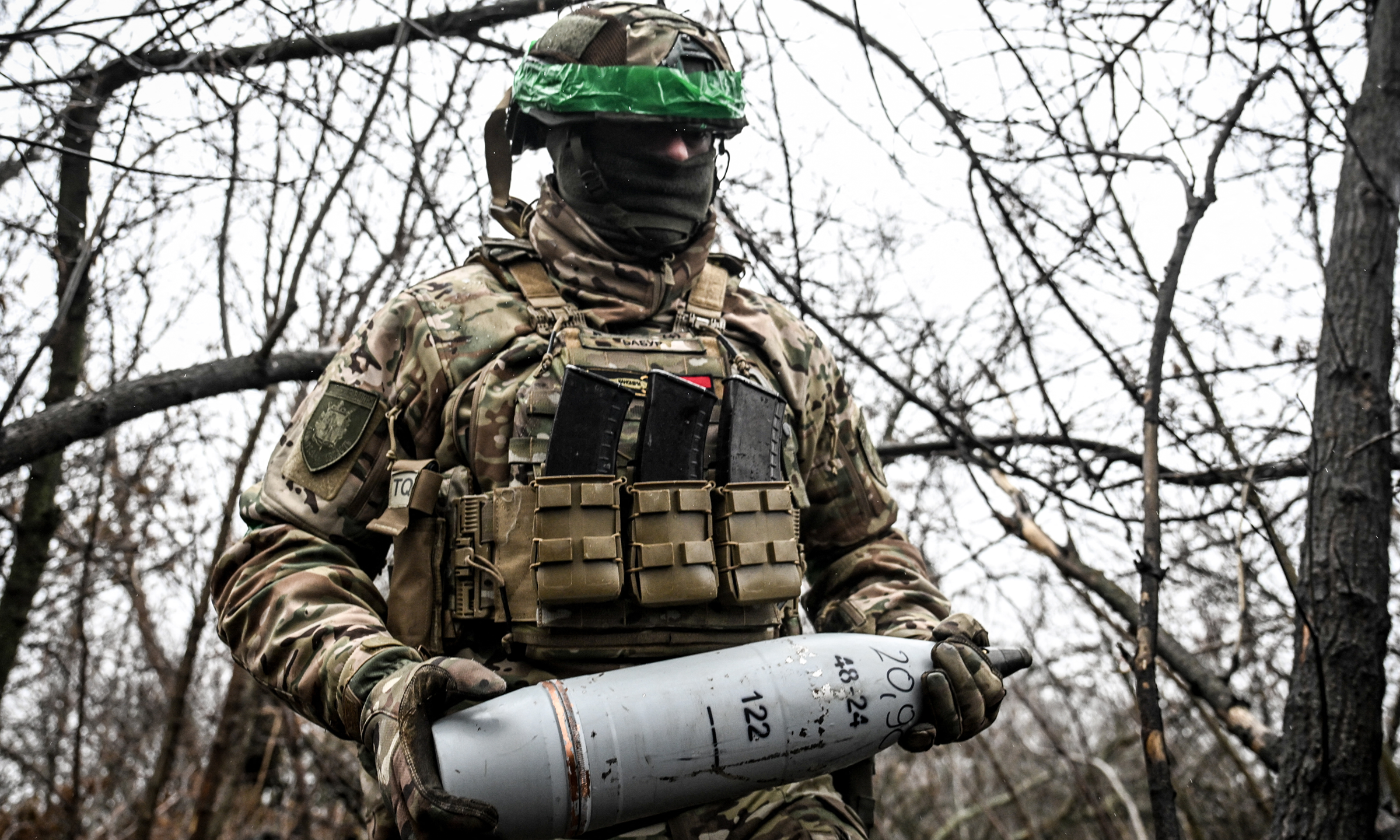 |
Ukrainian soldiers hold artillery shells near Pokrovsk city in Donetsk province in 11/2025. *AFP* |
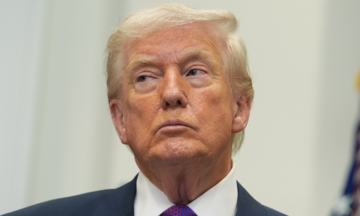
U.S. military aid to Ukraine has sharply declined since President Donald Trump returned to power in 1/2025. Unlike the approach taken by former President Joe Biden, President Trump has not allocated any new defense aid packages under the Presidential Drawdown Authority (PDA), a mechanism frequently used by the U.S. for direct military assistance.
Instead, the Trump administration sells weapons to NATO allies, who then transfer these arms to Kyiv through Ukraine’s Priority Requirements List (PURL) mechanism.
The Kiel Institute reports that NATO countries participating in PURL purchased a total of 4,39 billion USD in U.S. weapons for Ukraine in 2025. These acquisitions included multiple HIMARS rocket artillery systems and Patriot air defense systems. While the European Union (EU) provides most of the humanitarian and financial aid to Kyiv, a small group of European nations contributes the majority of military assistance.
"Ukraine’s increasing budget needs are primarily met through loans and non-repayable aid from the EU", said Christoph Trebesch, head of the Kiel Institute’s Ukraine Aid Tracker. He noted that support for Ukraine is fairly distributed among EU member states, specifically in proportion to each nation’s GDP. However, this trend is only evident in financial aid; military assistance still requires bilateral contributions from individual member states, with a significantly lower degree of burden-sharing.
Western Europe was the region that provided the most military aid to Ukraine in 2025, followed by Northern Europe. The United Kingdom and Germany alone contributed two-thirds of Western Europe’s total military aid between 2022 and 2025.
Military support from Eastern Europe to Ukraine decreased from 17% in 2022 to 2% in 2025. Southern Europe’s contribution also saw a decline, falling from 7% to 3% during the same period.
Pham Giang (According to Kyiv Independent)