From 8/2 to 19/2, 21 tigers at Mae Rim Tiger Garden in Chiang Mai and 51 at another facility in Mae Taeng died unexpectedly. The Department of Livestock Development attributes these deaths to the canine distemper virus, which can also affect large felines. However, veterinarians in Chiang Mai are calling for a more thorough investigation before a final conclusion, recommending comprehensive testing to rule out other diseases such as feline panleukopenia or avian influenza.
 |
A tiger at the Mae Rim facility, Chiang Mai, Thailand. Photo: Bangkok Post |
Provincial officials are awaiting test results on the food supplied to both facilities. Relevant agencies have also intensified disease control measures. All 72 tiger carcasses were cremated and buried under supervision. Tigers are a protected species in Thailand, with each individual microchipped and registered. Officials stressed that no tiger parts should be kept for any purpose, due to infection risks.
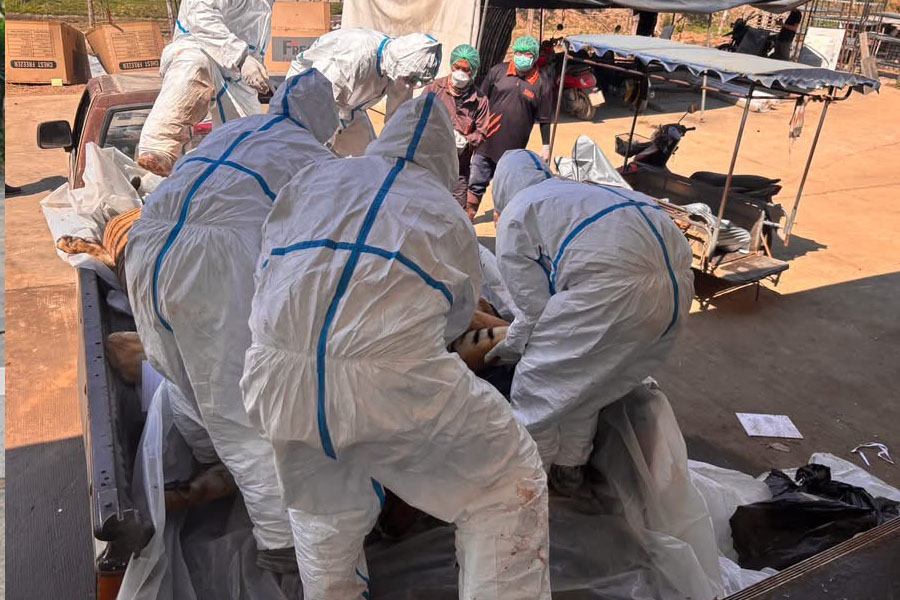 |
Officials move a tiger carcass at a facility in Chiang Mai, Thailand. Photo: Khaosod |
Thai officials warn that some wildlife diseases can transmit to humans. The Mae Taeng facility has restricted entry and exit. Personnel and vehicles entering or leaving the premises must be disinfected. The Department of Disease Control is monitoring 108 people who had close contact with tigers from 8/2 to 19/2. While no illnesses or unusual symptoms have been recorded, monitoring will continue for at least 21 days.
Currently, 124 tigers remain at the Mae Rim and Mae Taeng facilities. This incident marks one of the largest mass tiger deaths ever recorded in Thailand.
In 2004, an avian influenza outbreak at Sriracha Tiger Zoo in Chonburi province, eastern Thailand, led to the deaths or euthanasia of 147 out of 441 tigers to prevent further spread. Fresh chicken used as food was then considered the source of infection.
Duc Trung (According to Khaosod, Bangkok Post, Guardian)