Hungarian Foreign Minister Peter Szijjarto announced that Hungary would block the European Union's (EU) 20th sanctions package, which is slated for approval at the Foreign Affairs Council on 23/2. "We will not allow important decisions concerning Ukraine until the country resumes oil transit via the Druzhba pipeline to Hungary and Slovakia", Szijjarto stated.
The latest EU sanctions package aims to target Russia's energy, financial services, and trade sectors. Key measures include a complete ban on maritime transport services for Russian crude oil, adding 43 vessels to the "shadow fleet" to bring the total to 640, and prohibiting the provision of services such as maintenance for Russian liquefied natural gas carriers.
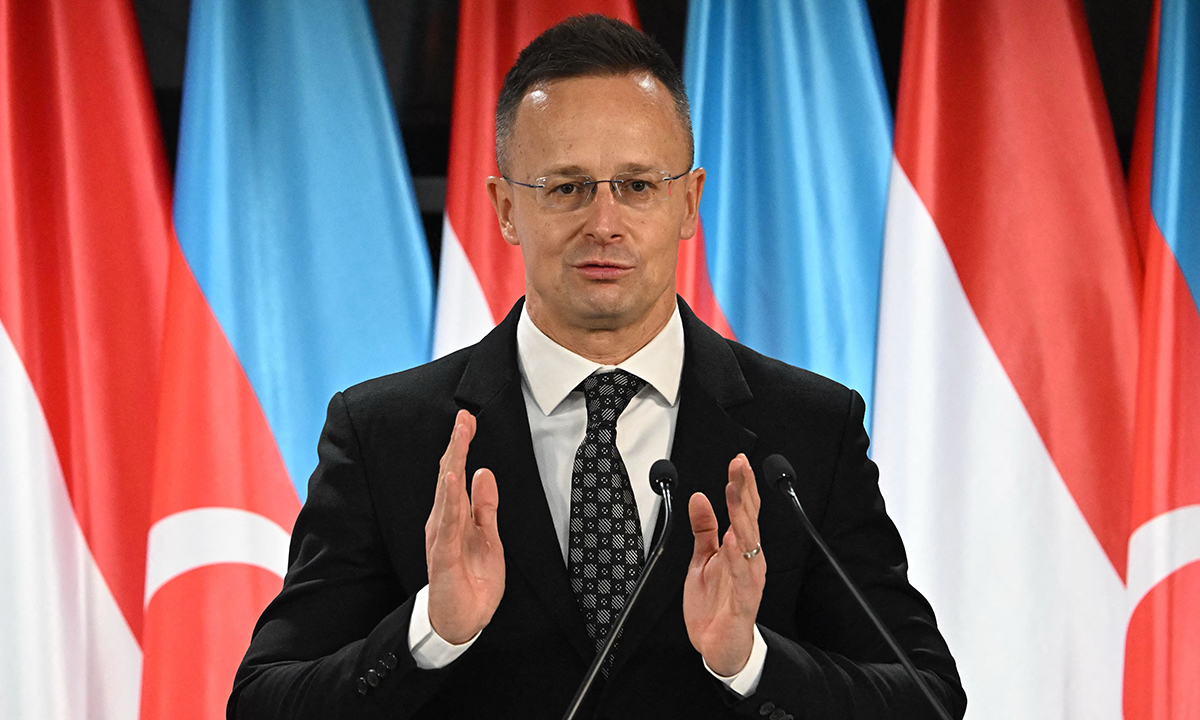 |
Hungarian Foreign Minister Peter Szijjarto at a press conference in Budapest in 12/2025. Photo: AFP |
The bloc also plans to restrict the Russian banking system and its ability to create alternative payment channels. This involves adding 20 more regional banks to the sanctions list, implementing anti-crypto measures, and targeting several banks in involved third countries.
Furthermore, the EU intends to tighten export restrictions to Russia, totaling over 424 million USD, covering items such as rubber, tractors, and cybersecurity services. The union will also prohibit the import of more than 670 million USD worth of previously unsanctioned goods, including metals, chemicals, and critical minerals.
As negotiations proceed, many EU members are pushing to finalize the agreement so that this series of sanctions can take effect on 24/2, marking the four-year anniversary of the conflict's outbreak.
A fierce dispute erupted between Budapest, Bratislava, and Kiev after Ukraine announced on 27/1 that it would suspend the transit of Russian oil to Hungary and Slovakia via the Druzhba pipeline. Ukraine cited infrastructure damage from a drone attack as the reason for the halt.
Hungary and Slovakia accuse Ukraine of deliberately delaying the resumption of oil transit through the Druzhba pipeline for political motives. On 18/2, officials from both Eastern European nations announced a suspension of diesel exports to Ukraine and warned of a potential halt to electricity supplies for their neighbor.
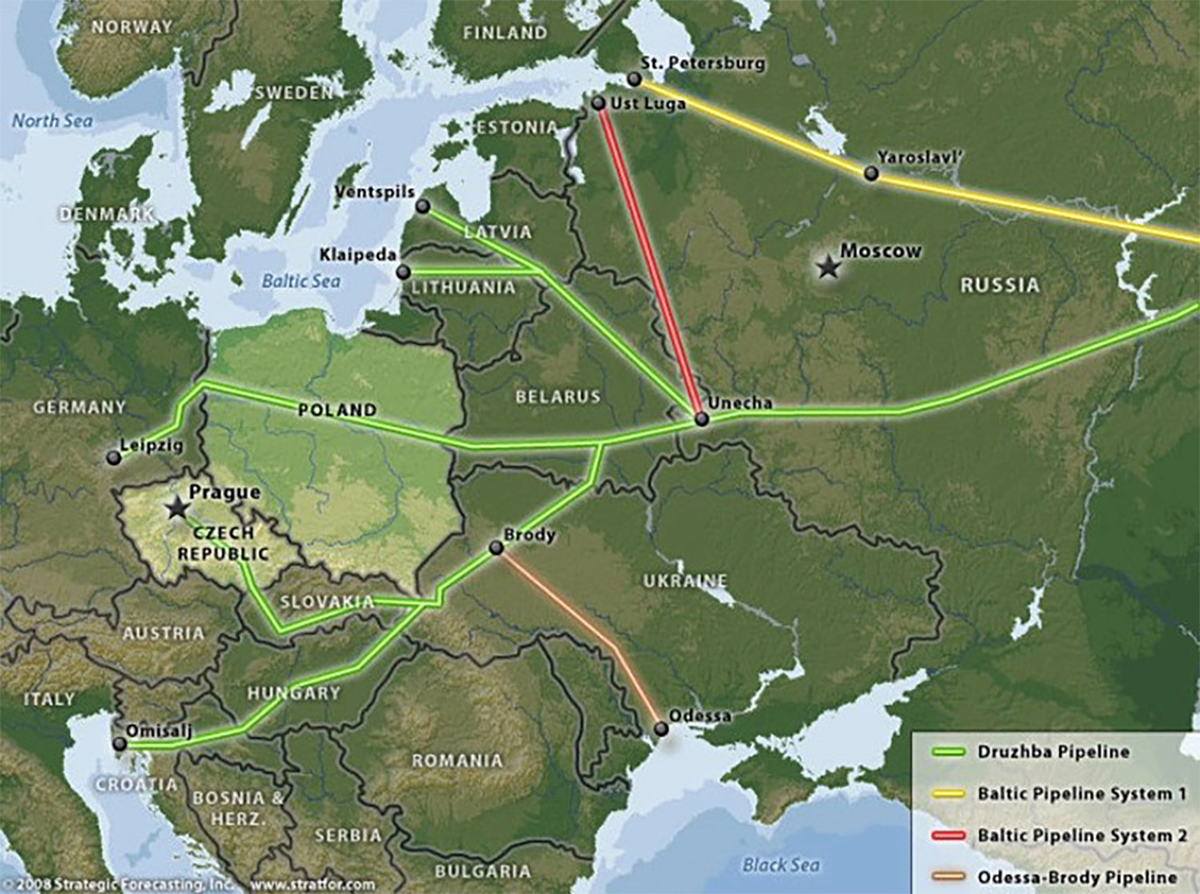 |
The Druzhba pipeline (blue). Graphic: Aspenia Online |
On 20/2, Hungary declared its intention to block a 106 billion USD loan from the EU intended for Ukraine, which aims to cover military aid and other expenditures for the fiscal year 2026-2027.
The Ukrainian Foreign Ministry subsequently criticized Hungary and Slovakia, labeling their threat to cut electricity as "blackmail". It suggested that the two nations should direct their ultimatums at the Kremlin instead of Kiev. Ukraine further accused Hungary and Slovakia of "provocation, irresponsibility, and threatening the energy security of the entire region".
Hungary and Slovakia have maintained good relations with Russia since the conflict in Ukraine erupted in 2/2022. Hungarian Prime Minister Viktor Orban has also repeatedly and strongly opposed Ukraine's potential membership in the EU.
Nguyen Tien (According to AFP, AP, Reuters)