The new mechanism is part of the 21st sanctions package targeting Russia, announced by the Council of the European Union (EU) on 23/7. It allows competent authorities in member states to implement "safe handling measures" for seized Russian oil shipments, including import, transfer, storage, management, and sale.
The document also specifies that the asset handling process must not result in "payments or the provision of money or economic resources for the benefit of Russian individuals or entities."
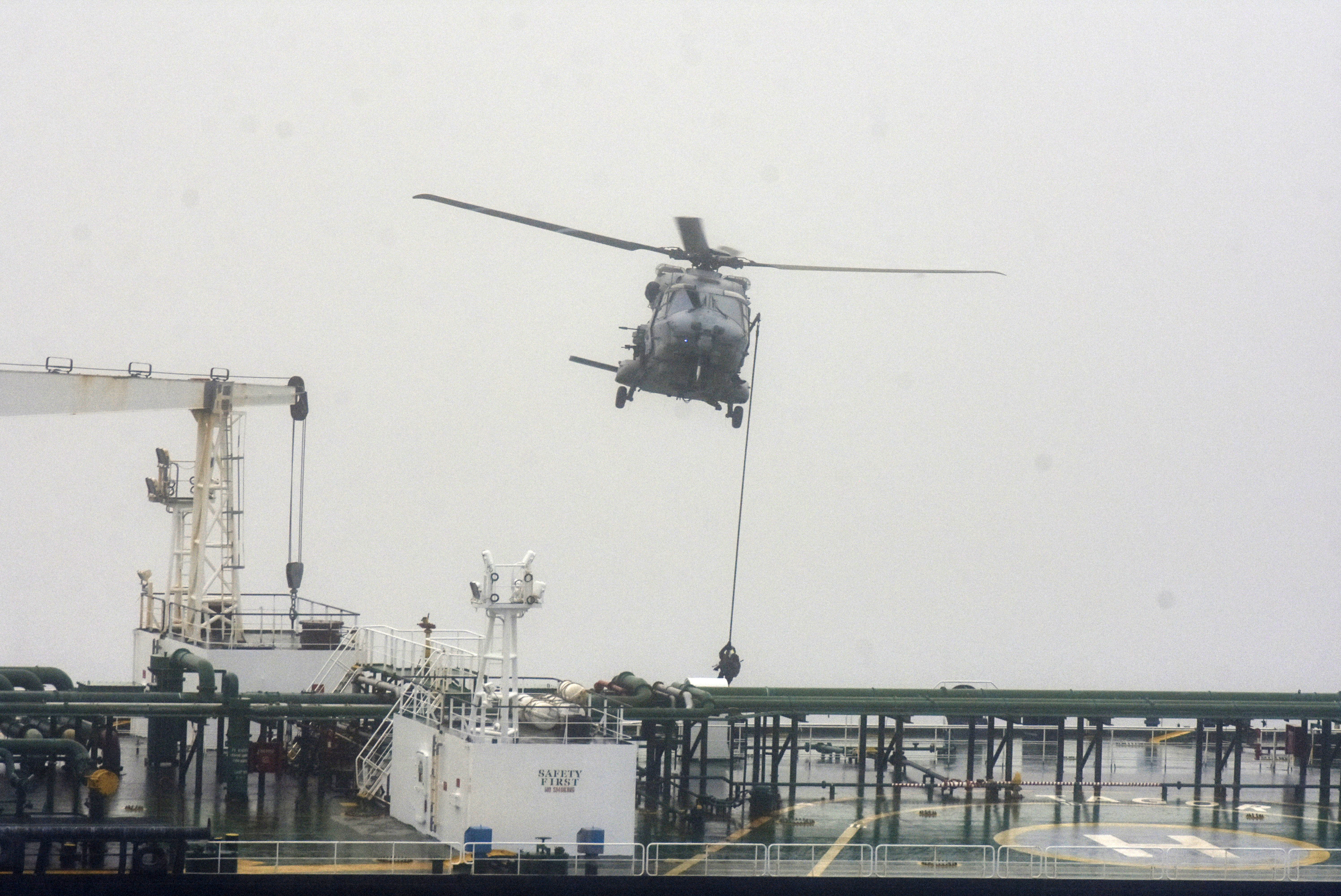 |
The French Navy intercepted the oil tanker Tagor in the Atlantic Ocean on the morning of 31/5. Photo: AP
An EU official stated this provision is of significant importance, allowing member states to seize cargo from "shadow fleet" vessels intercepted and searched by EU authorities.
The official confirmed that vessel seizures are occurring with increasing frequency, but previously there was no clear legal basis to handle valuable cargo on these ships. Beyond oil, the new mechanism may also apply to other commodities such as grain.
The new sanctions package also extends the price cap mechanism on Russian oil for another 12 months. EU businesses remain prohibited from providing services, such as insurance, to Russian vessels selling oil above the Western-mandated price cap.
The EU estimates this mechanism alone could cause Russia to lose approximately 3,5 billion USD in oil export revenue next year.
French special forces boarded an oil tanker suspected of sanctions violations on 31/5. Video: French Navy
The EU has added over 670 foreign-flagged oil tankers to its sanctions list, accusing them of transporting Russian oil to circumvent the Western price cap mechanism. Member states previously could only detain these vessels for inspection.
"Every illegal shipment helps sustain Russia's military machine. We are enforcing sanctions with action at sea," stated Kaja Kallas, EU High Representative for Foreign Affairs and Security Policy.
In recent months, European nations have stepped up maritime sanctions enforcement. In March, Belgium seized an oil tanker suspected of belonging to Russia's "shadow fleet" in the North Sea. The vessel had a capacity of approximately 330,000 barrels of oil, with an estimated value of about 26 million USD.
Last month, France intercepted an oil tanker violating sanctions after it had previously loaded cargo at Russia's Murmansk port. This vessel had a capacity of about 600,000 barrels of oil, with an estimated value of about 48 million USD.
Russia has condemned vessel seizures involving its ships as an act of "piracy," vowing to retaliate "with all necessary measures."
Thanh Danh
(According to
TASS, Euractiv, Brussel Signal