The incident occurred on the afternoon of 9/7 while an F-16C fighter jet was on a training flight in western Greece, forcing the pilot to make an emergency landing at Zakynthos airport. Some local media, citing informed sources, reported that a fire warning activated before the aircraft touched down, but the Hellenic Air Force has not confirmed this.
Video from the scene shows the F-16C approaching the runway at high speed, without deploying its landing gear. Witnesses described the aircraft sliding on its belly before stopping, with flames erupting from the underside of the fuselage and engulfing part of the tail.
Firefighters quickly sprayed water and foam to control the blaze. The pilot opened the cockpit canopy and exited without needing to use the ejection seat. Hellenic Air Force spokesperson Konstantinos Gravalos stated the pilot is in "good health".
The extent of the F-16C's damage after the incident remains unclear.
The incident forced authorities to close Zakynthos airport's only runway, located on the popular tourist island. According to a notice to airmen (NOTAM), only military, government, and medical helicopter flights are permitted during the runway closure.
Many flights bound for Zakynthos were diverted to other airports, including Athens, Corfu, and Thessaloniki.
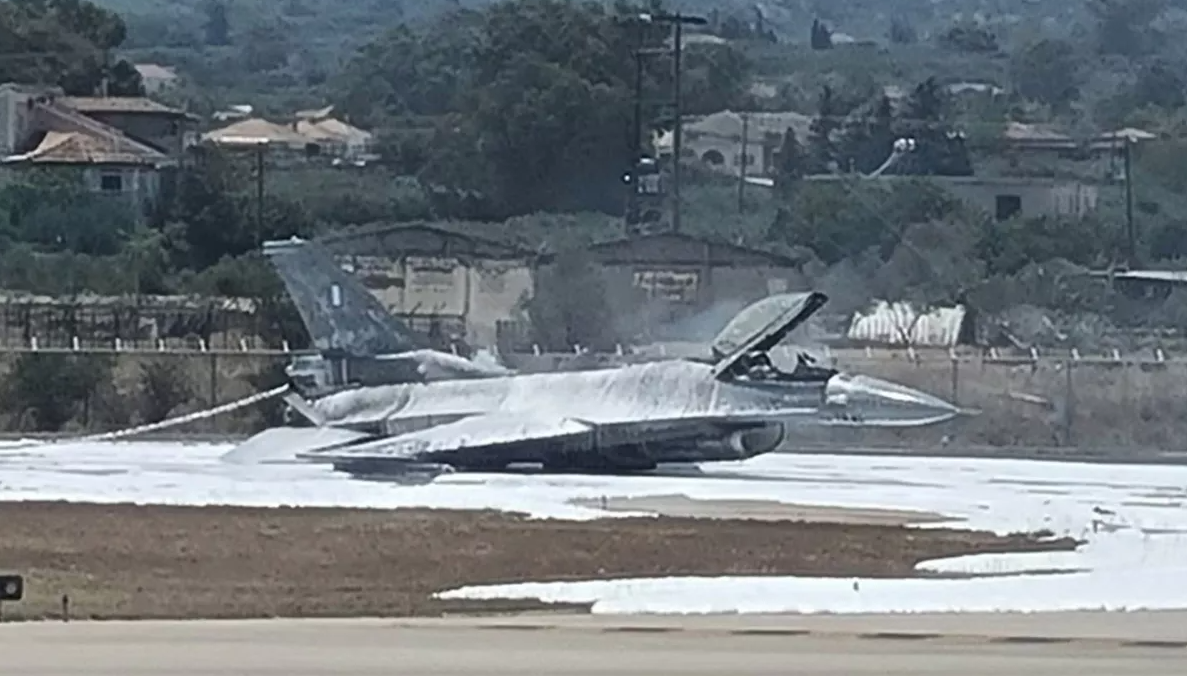 |
The Greek F-16 after the fire was brought under control on 9/7. Photo: Caliber. |
A specialized technical team is expected to arrive in Zakynthos to remove the F-16 from the runway and assist in restoring normal airport operations. The Hellenic Air Force has opened an investigation to determine the cause of the incident.
The crashed F-16C belongs to the 335 Squadron, based at Araxos military airport in western Greece. The Hellenic Air Force operates approximately 151 F-16 fighter jets, comprising 112 single-seat F-16C aircraft and 39 two-seat F-16D aircraft used for training.
Thanh Danh (According to BBC, Aviationist, Caliber, Air Data News)