Since the Middle East conflict erupted on 28/2, authorities in Gulf nations have regularly posted information on social media regarding daily attacks from Iran. This continued until the afternoon of 8/4, more than half a day after the US and Iran announced a two-week ceasefire agreement.
Since then, accounts that typically provide updates on air raid alerts have fallen silent, signaling that, at least for now, Iranian forces have ceased launching missiles and unmanned aerial vehicles (UAVs).
The latest post on the X social media account of Bahrain's Ministry of Interior was published on the morning of 8/4, reporting damage to several homes on Sitra island from debris of intercepted UAVs.
The United Arab Emirates (UAE) has not recorded any attacks since the afternoon of 8/4. Before that, the country's Ministry of Defense stated it had intercepted 17 ballistic missiles and 35 UAVs launched from Iran.
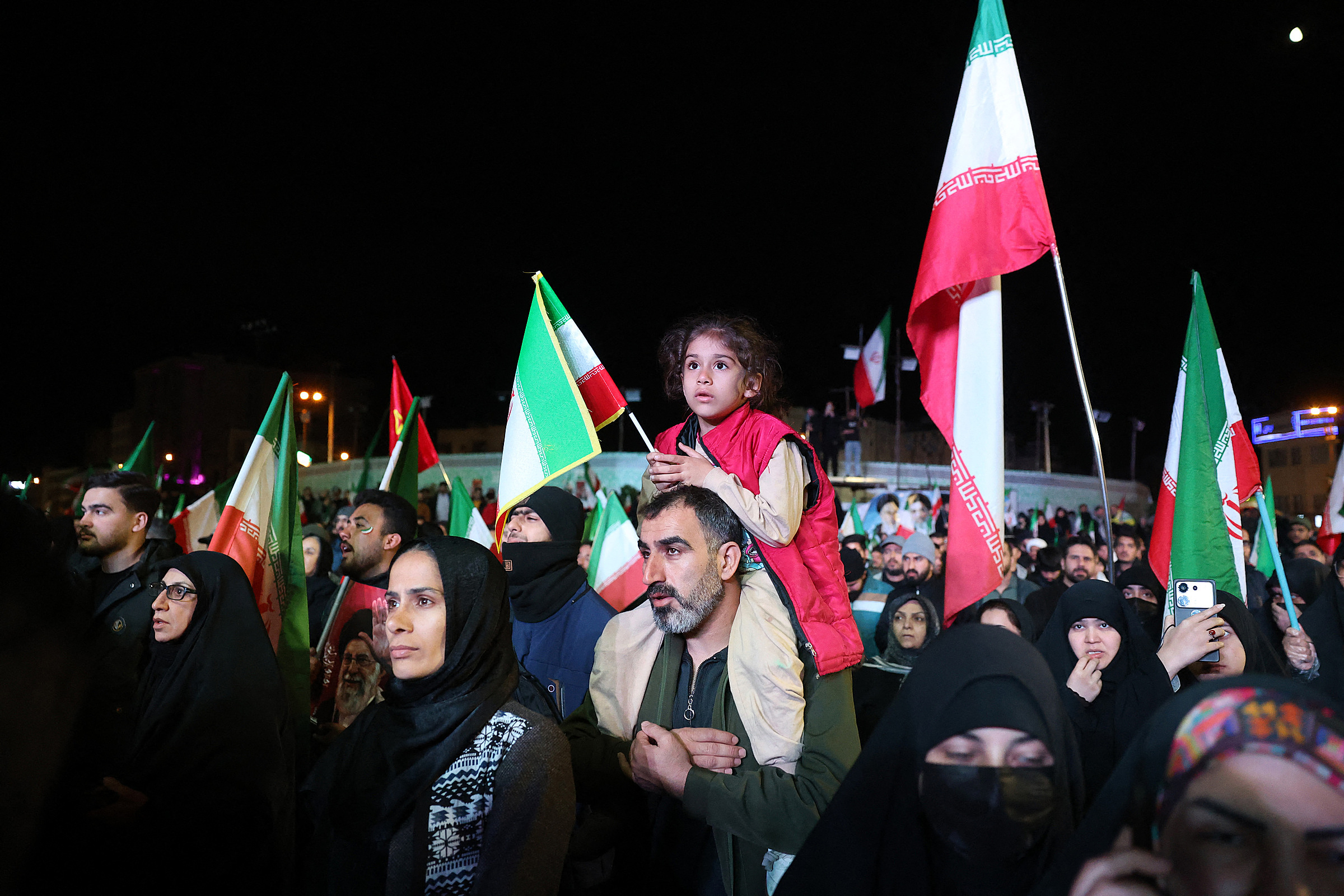 |
People in Iran gathered in the capital Tehran on 8/4 after the ceasefire was announced. *Photo: AFP*
Saudi Arabia also experienced a peaceful night, with no missile or UAV attacks occurring in the past 15 hours.
According to Qatar's Ministry of Defense, no attacks have occurred against the country since Qatari armed forces intercepted seven ballistic missiles and several UAVs from Iran on the afternoon of 8/4.
Kuwait's state news agency KUNA reported no missiles or UAVs targeted the country in the past 14 hours. Oman also enjoyed 24 quiet hours.
Pakistan is preparing for discussions with representatives from the US and Iran to resolve the Middle East conflict. The White House announced that Vice President JD Vance will lead the US negotiation delegation to Islamabad, Pakistan's capital.
Iran's ambassador to Pakistan, Reza Amiri Moghadam, confirmed that his country's delegation will also arrive in Islamabad on 9/4 to "conduct serious negotiations based on a 10-point plan proposed by Tehran."
Under the agreement, effective 8/4, Tehran permits commercial vessels to transit the Strait of Hormuz, provided they coordinate with Iranian armed forces.
Israel supported Trump's decision to halt attacks on Iran but declared the agreement does not apply to Lebanon. On 8/4, the Israeli military launched its most intense offensive against Lebanon since late February, resulting in at least 182 deaths.
Israel's operation prompted Iran to resume its blockade of the Strait of Hormuz and issue a warning that continuing negotiations for a long-term peace agreement with the US "is not reasonable."
France's Foreign Minister condemned Israel's "unacceptable" attacks on Lebanon, cautioning that they could undermine the fragile US-Iran ceasefire agreement. Foreign Minister Yvette Cooper also expressed the UK's strong desire for Lebanon to be included in the Middle East ceasefire agreement.