General Secretary and President To Lam attended the Vietnam-China Forum on Higher Education, Science, Technology, and Innovation Cooperation at Tsinghua University on 14/4. In his policy speech to the university's faculty and students, the General Secretary and President emphasized that Vietnam and China are neighboring countries sharing many cultural similarities and ethical traditions. Vietnam and China, with their shared mountains and rivers, have been closely linked through several thousand years of historical relations.
Vietnam consistently considers developing relations with China an objective requirement, a strategic choice, and a top priority in its independent, self-reliant, multilateral, and diversified foreign policy. This consistent understanding and choice stems from the fundamental, long-term interests of both nations, aligns with the aspirations of their peoples, and holds significant meaning for peace, stability, cooperation, and development in the region and globally.
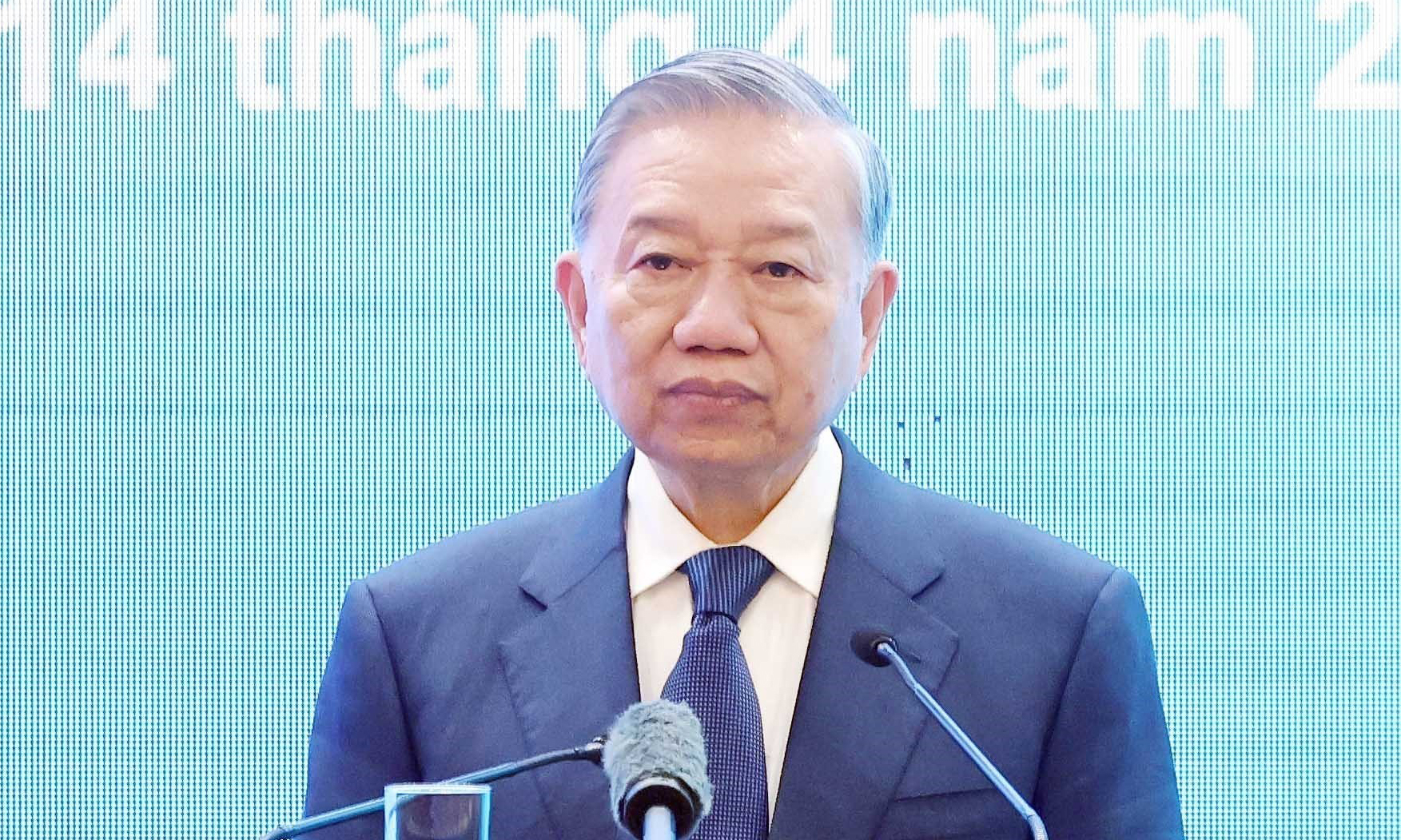 |
General Secretary and President To Lam delivers a policy speech at Tsinghua University on 14/4. Photo: VNA |
The General Secretary and President expressed a desire to further strengthen the political and social foundations of Vietnam-China relations. For the relationship between the two countries to develop stably, healthily, and sustainably in the long term, it must first be built upon political trust, mutual respect, understanding between their peoples, and the shared determination of generations of leaders from both Parties and nations. Lasting friendship must be passed from one generation to the next, nurtured among the people, especially the youth.
The presence of 25,000 Vietnamese students studying in China highlights the increasing depth of educational exchange between the two countries. The General Secretary and President expressed confidence that each Vietnamese student in China represents the eagerness to learn, openness to new ideas, and aspiration for progress of Vietnamese youth. Similarly, every Chinese student coming to Vietnam to study, research, and gain practical experience will contribute to deepening mutual understanding between the two peoples.
The General Secretary and President proposed a stronger shift towards substantive cooperation, making science, technology, innovation, and digital transformation new highlights and pillars of Vietnam-China relations in the new phase. Vietnam is entering a new development period where science, technology, innovation, and digital transformation are identified as key driving forces to achieve strategic goals by 2030 and 2045.
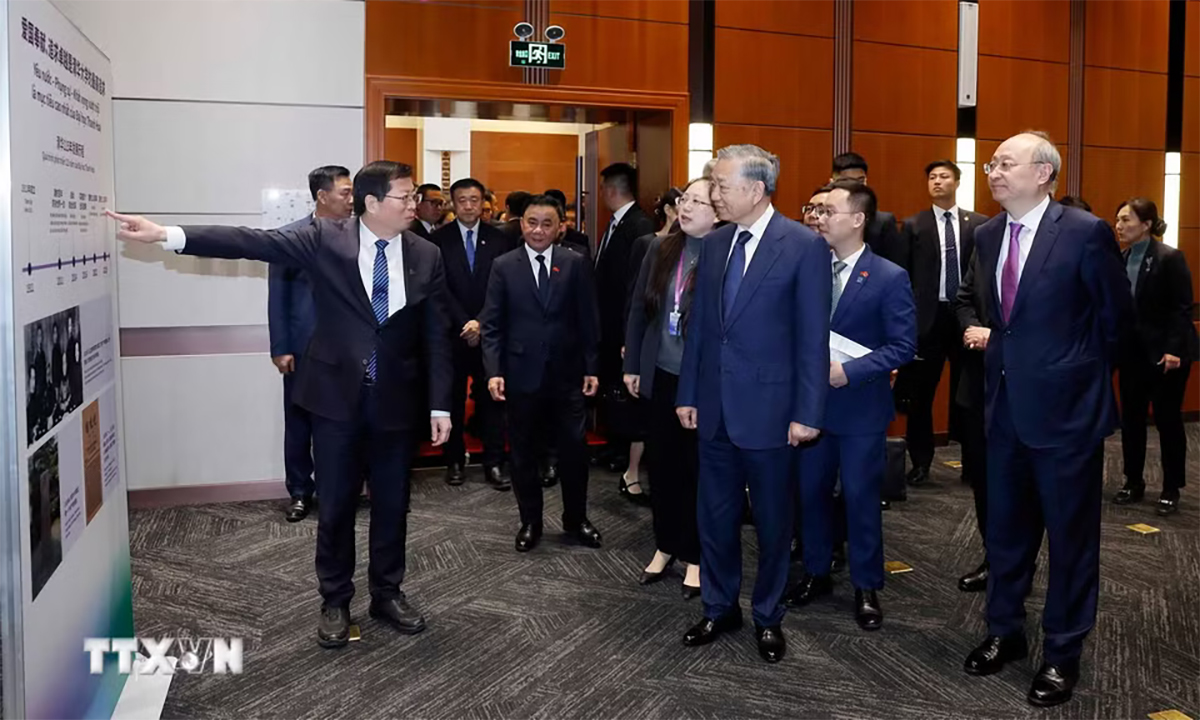 |
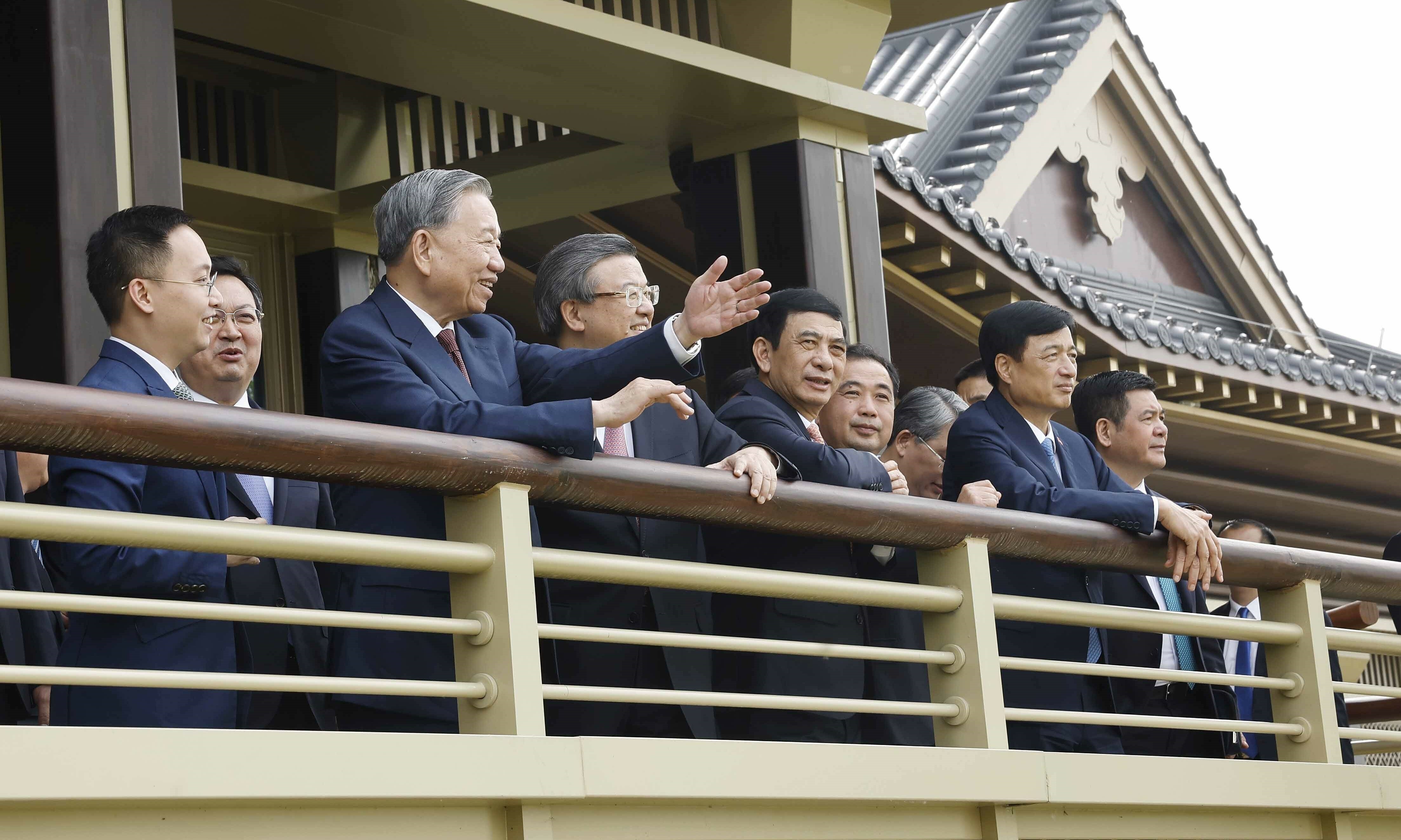
General Secretary and President To Lam and delegates listen to a presentation about Tsinghua University on 14/4. Photo: VNA |
The General Secretary and President affirmed the high importance of cooperation with China in areas where both sides can complement each other and develop together, especially artificial intelligence, big data, cloud computing, semiconductors, automation, robotics, green technology, biotechnology, new materials, clean energy, and other strategic technologies. Vietnamese leaders expressed hope that in the coming time, bilateral cooperation would strengthen not only in trade and investment but also in knowledge, technology, innovation, and future-building capabilities.
Within this orientation, education, training, and high-quality human resource development must be the priority of priorities. To advance rapidly in the 21st century, Vietnam needs a new generation with a solid scientific foundation, capable of mastering modern technology, possessing innovative thinking, and having the courage for international integration. Vietnam hopes for an increasing number of its students, doctoral candidates, and young scientists to study and conduct research at leading Chinese training and research centers, including Tsinghua University.
The General Secretary and President expressed a desire for Tsinghua University to continue expanding cooperation with Vietnamese universities and research institutes, strengthening student and scholar exchanges, joint training programs, research cooperation, and establishing co-supervised programs, joint research groups, and joint laboratories in key areas. Vietnamese leaders hope that the youth of both countries will not only learn from each other but also innovate together, start businesses together, and collectively solve major development challenges, ranging from education, healthcare, environment, energy, and smart cities to green agriculture and the digital economy.
Alongside expanding cooperation, both sides need to continue preserving a peaceful and stable environment, strengthen strategic coordination, and properly address remaining differences.
Nguyen Tien