Aviation Week magazine reported on 13/4 that this information was revealed by Jimmy Arter, an official responsible for transformation and lessons learned at the US Army's Fires Center of Excellence at Fort Sill. "We depleted our Precision Strike Missile (PrSM) inventory in the early phase of the war, with more being delivered," he stated.
The US Army deployed the PrSM missile in combat before completing its initial testing and evaluation phase. However, combat results suggest this process was unnecessary. "Testing was conducted in actual combat. We do not need to perform any further tests," Arter said.
The Pentagon has not commented on the information.
The US Central Command (CENTCOM), responsible for US military operations in the Middle East, previously confirmed that the PrSM ballistic missile saw its first combat use in the conflict with Iran. The 121st Field Artillery Regiment, part of the Wisconsin National Guard, was the first unit to fire this munition in combat.
The US Army ordered 240 PrSM missiles before fiscal year 2024 and an additional 250 in fiscal year 2025. It remains unclear how many munitions Lockheed Martin delivered before the conflict erupted on 28/2.
"To date, only 100 PrSM missiles were scheduled for delivery, with many already used for training and testing, meaning the initial inventory was not large," said Colby Badhwar, a security researcher at the Center for European Policy Analysis.
The PrSM is a short-range ballistic missile developed by defense contractor Lockheed Martin to replace the older Army Tactical Missile System (ATACMS).
The PrSM missile boasts superior features compared to ATACMS, including a 90 kg high-explosive warhead and a range exceeding 500 km. It can be fired from HIMARS and M270 rocket artillery systems, carrying two and four missiles, respectively. The next version of the PrSM is expected to achieve a range of approximately 1,000 km, double that of the original.
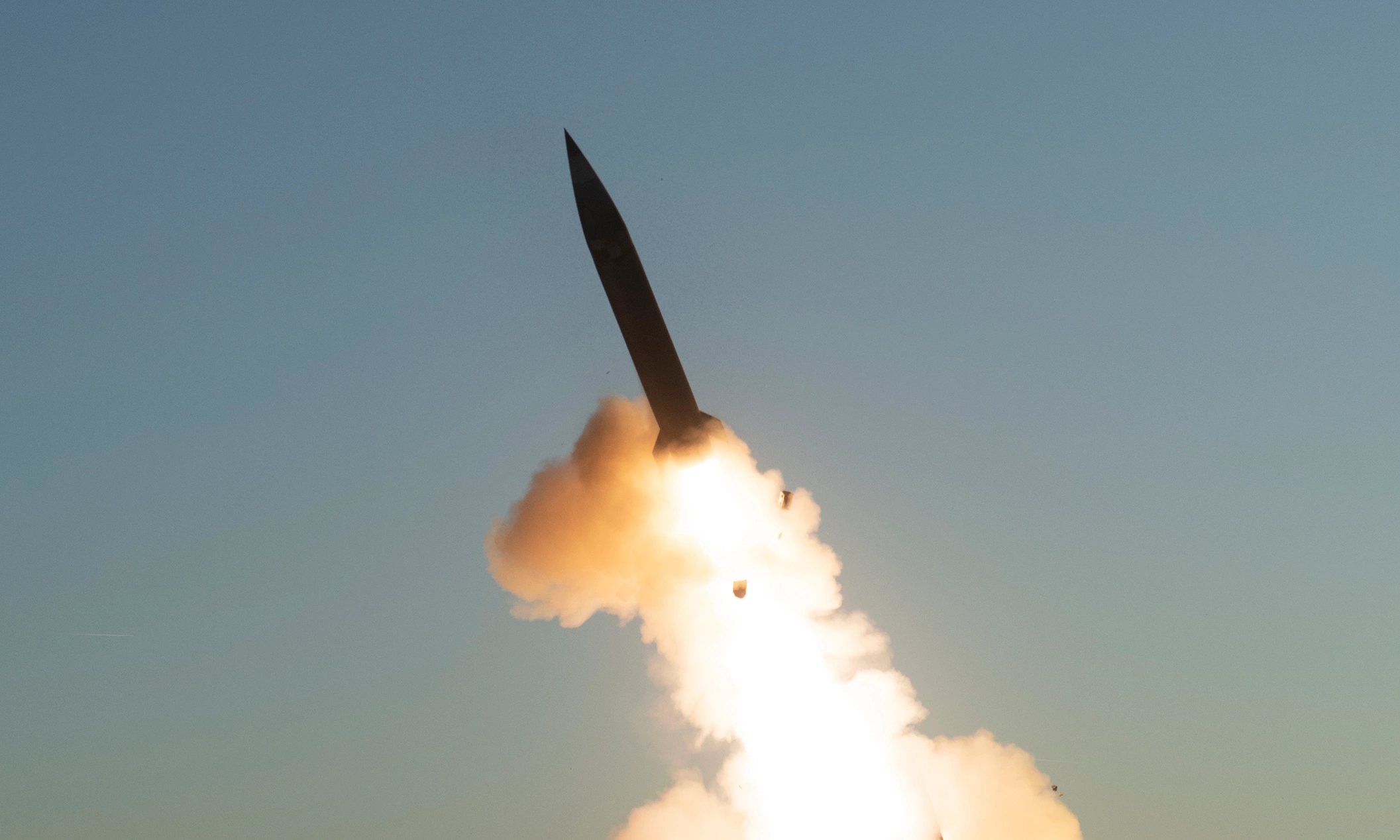 |
A PrSM missile launches during a test in California, US in 3/2025. Photo: US Army |
This information comes amid concerns that the US military has expended too many weapons in Middle East conflicts. This depletion of stockpiles could disadvantage Washington in future efforts to counter peer adversaries.
In the Pentagon's budget proposal for fiscal year 2027, the US Navy requested approximately 3 billion USD to purchase 785 Tomahawk missiles, a more than 14-fold increase from the previous year.
By Pham Giang (Sources: Aviation Week, USNI News, New York Times)