President Xi Jinping emphasized China's principled stance on promoting peace and called for negotiations during a meeting with Khaled bin Mohamed, Crown Prince of Abu Dhabi, United Arab Emirates (UAE), in Beijing today. Xinhua quoted Xi as saying.
During the discussions, Xi detailed his four-point proposal aimed at fostering stability in the Middle East. The proposal includes: adherence to the principle of peaceful coexistence; the principle of national sovereignty; the supremacy of international law; and coordination between development and security initiatives.
Xi stressed the importance of respecting the sovereignty, security, and territorial integrity of Gulf states. He cautioned against the selective application of international law, stating, "Upholding the authority of international law cannot mean 'using it when convenient, discarding it when not'."
He further advocated for safeguarding a world order based on the United Nations and enhancing coordination on security and development. Xi urged the global community to prevent a "return to the law of the jungle."
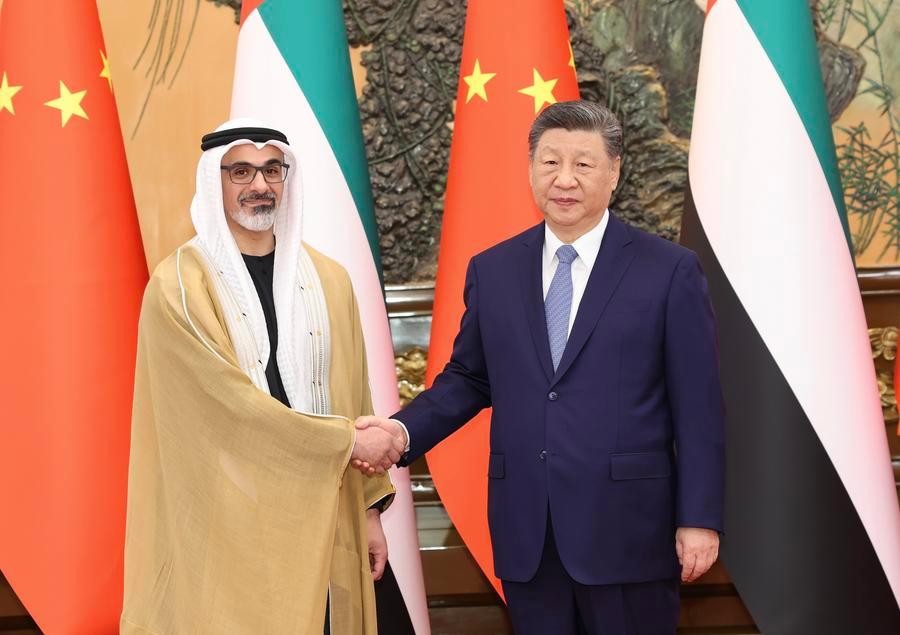 |
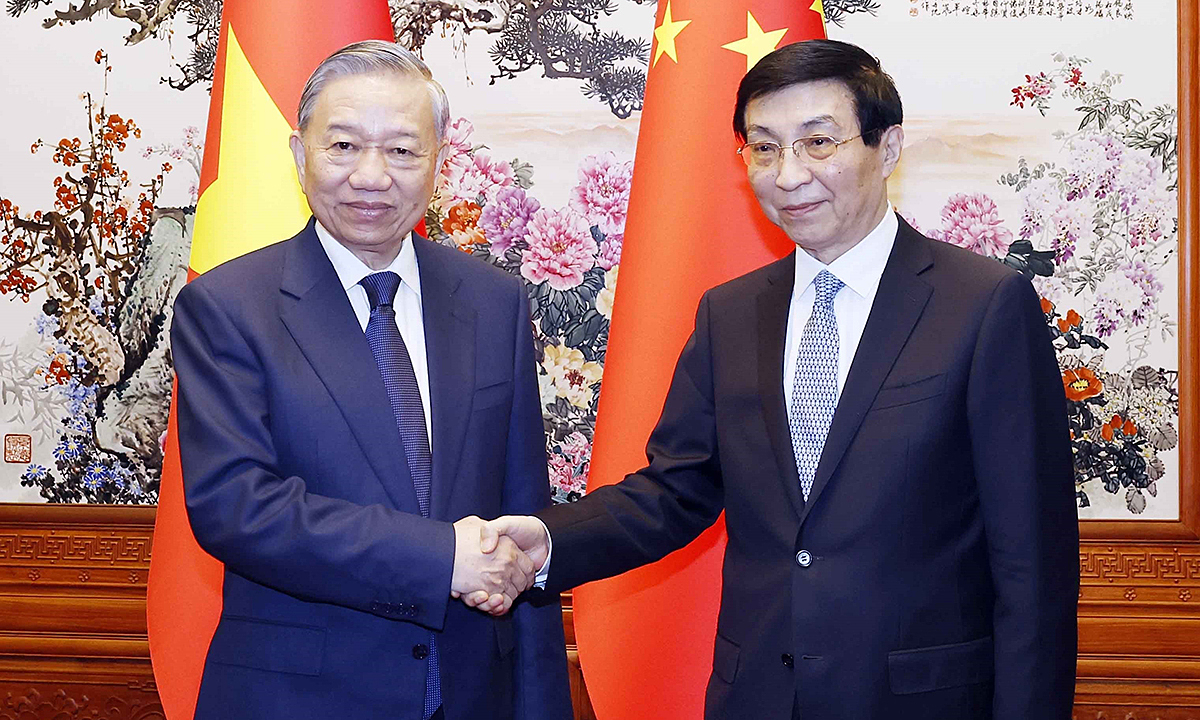
Chinese President Xi Jinping (right) and Abu Dhabi Crown Prince, Khaled bin Mohamed, in Beijing on 14/4. *Photo: Xinhua* |
Xi affirmed China's ongoing commitment to playing a constructive role in facilitating peace talks across the Middle East.
This call for peace comes amidst heightened tensions in the region. The first round of talks between Iran and the US, held in Pakistan last weekend, concluded without an agreement. Following this, US President Donald Trump ordered a naval blockade targeting vessels entering and exiting Iranian ports and coastal areas in the Persian Gulf.
Tehran swiftly criticized Trump's move as "ridiculous," with Iran's Ambassador to the United Nations calling the blockade order a "serious violation" of Iran's sovereignty.
At a press conference in Beijing on 14/4, Chinese Foreign Ministry spokesperson Quach Gia Con commented on the situation, stating that the US had increased military deployment and implemented a targeted blockade.
"This only exacerbates tensions and undermines the already fragile ceasefire agreement, further endangering the security of traffic through the Strait of Hormuz. This is dangerous and irresponsible behavior," Quach added.
China has consistently opposed the use of force in the Middle East, particularly after the US and Israel launched an offensive against Iran on 28/2. Beijing reportedly played a key role in persuading Tehran to engage in negotiations with Washington in Pakistan last weekend.