On 4/5, President Donald Trump unexpectedly adopted a firm stance against Iran, announcing the launch of "Operation Freedom" to escort merchant ships through the Strait of Hormuz. He warned that the US would "deal decisively" with any attempts to obstruct the operation.
The US Navy subsequently dispatched warships through the Strait of Hormuz, safely escorting two US-flagged merchant vessels out of the Persian Gulf. Concurrently, it announced the sinking of six Iranian speedboats and the downing of several of Iran's missiles and drones.
Iran retaliated by launching multiple missiles and drones at the United Arab Emirates’ (UAE) vital Fujairah oil facilities, causing significant fires. Tehran was also accused of attacking several commercial ships near the Strait of Hormuz.
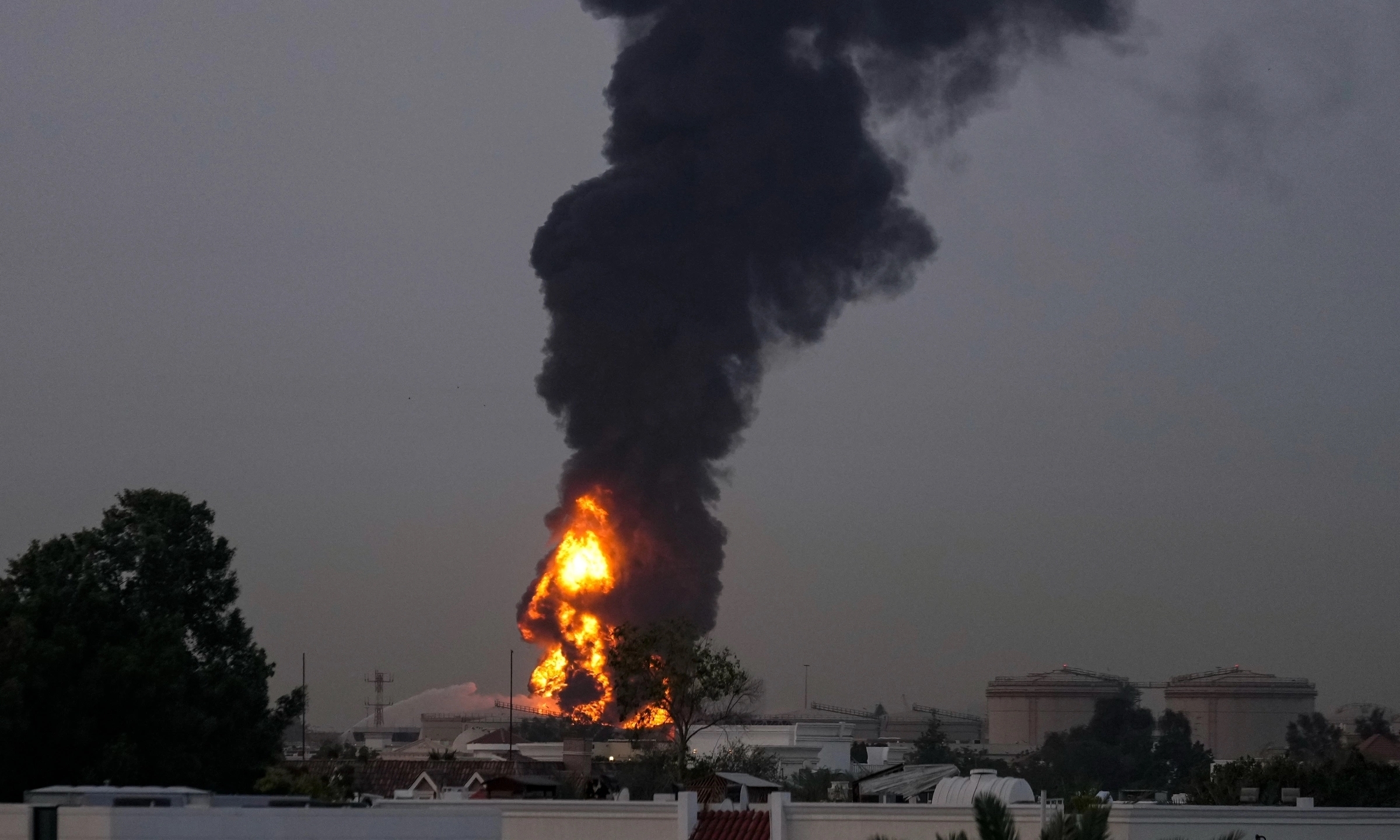 |
Black smoke rises after a drone struck a fuel tank near Dubai airport, UAE, on 16/3. Photo: AP
Two unnamed US officials told NBC News that President Trump's decision to launch "Operation Freedom" surprised allies in the Gulf.
While one White House official stated that "regional allies were informed in advance", a Middle Eastern diplomat reported that the US did not coordinate with Oman on "Operation Freedom" until after President Trump's announcement. "The US made the announcement, then coordinated with us," the diplomat shared.
Despite Iran launching three missile and drone salvos into the UAE, one of America's closest Middle Eastern allies, leading to school closures and flight disruptions, President Trump still considered it a minor attack and offered no criticism of Tehran.
Even after hostilities broke out, Defense Secretary Pete Hegseth stated on 5/5 that, from Washington's perspective, the ceasefire agreement reached with Iran on 8/4 "certainly remained in effect". Just hours later, according to the US Department of Defense, Iran launched another attack.
Saudi Arabia responded by informing Washington it would not permit the US military to continue using Prince Sultan air base or its airspace to support "Operation Freedom".
"The issue is that things are happening too quickly in real time," an unnamed Saudi official said, adding that Saudi Arabia "strongly supports the diplomatic efforts" by Pakistan to mediate an agreement between Iran and the US to end the conflict.
A phone call between President Trump and Saudi Crown Prince Mohammed bin Salman failed to resolve the disagreement. Faced with Riyadh's firm stance, the US President changed his mind, deciding to halt "Operation Freedom" after just one day, seemingly to restore the US military's access to the base in Saudi Arabia.
President Trump's sudden policy shift has made analysts question America's unified strategy regarding Iran. "Tehran appears ready to accept the possibility of the ceasefire breaking at any time, but the US is not," commented Mahdi Ghuloom, an expert at the Observer Research Foundation (ORF) Middle East, a Dubai-based think tank. "Therefore, the current ceasefire is essentially a unilateral decision."
According to WSJ commentator Yaroslav Trofimov, the US's hesitant approach to defending its allies has led Gulf nations to worry that Iran will believe escalating aggressive actions will benefit them. This is because President Trump appears so determined to withdraw from the conflict that he will disregard new attacks by Tehran on US allies in the region.
Since the conflict erupted on 28/2, Iranian leaders have frequently echoed former Egyptian President Hosni Mubarak's saying that "those who take America as their shield are, in fact, naked."
Diplomats suggest that after Tehran restarted missile and drone attacks early last week, the UAE and other Gulf nations may now find Mubarak's assessment partially accurate.
Dania Thafer, director of the Gulf International Forum think tank, believes the UAE, which has endured 2,838 missiles and drones since february, along with other Gulf countries, are becoming victims due to the US and Israeli decisions to attack Iran.
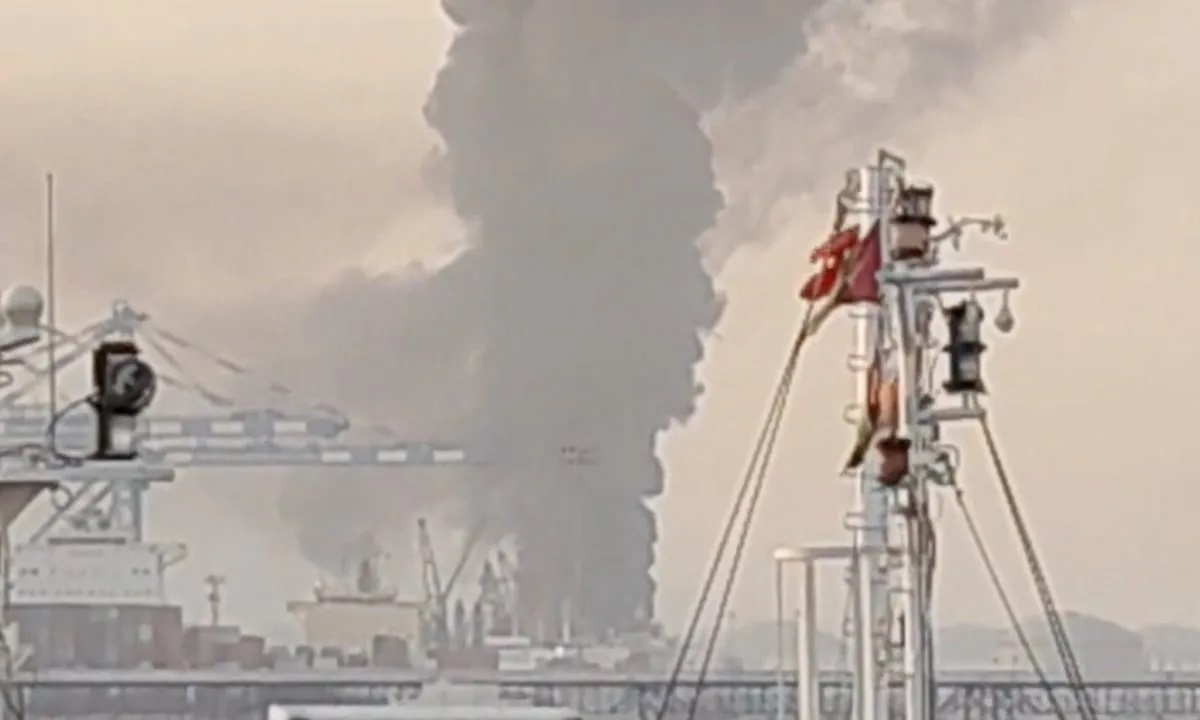 |
Smoke rises from the UAE's Fujairah oil industrial zone after an Iranian attack on 4/5. Photo: Reuters
"From the perspective of Gulf nations, it seems the US does not prioritize their security and has essentially abandoned them," Thafer said. "If the US does not respond, the Iranian side will conclude that America does not want to re-engage in conflict, and this will certainly weaken deterrence."
According to Jason Greenblatt, former White House special envoy to the Middle East, with negotiations between Iran and the US still deadlocked, it is unclear if President Trump's restraint will last.
"Iran's attacks indicate they are testing limits. The question is how far they will push before facing a US response," he stated. "This is a risky game when confronting a President who has clear expectations and is determined to enforce them."
In the long term, President Trump's concession to Iran's actions by halting "Operation Freedom" raises questions about whether US bases globally are security assets or burdens for host nations.
"If you previously thought you could buy US security guarantees with money, you will now find that US bases can put you in harm's way," said Edward Stringer, a former air force lieutenant general and director of operations at the UK Ministry of Defense.
To date, Iran appears confident that time is on its side as the Strait of Hormuz blockade continues, believing that the more pressure they exert on the Trump administration, the more concessions they will gain.
"We understand that the US cannot endure the current situation indefinitely, while we haven't even started," wrote Mohammad Bagher Ghalibaf, Iran's Parliament Speaker and chief negotiator, on X.
According to expert Ellie Geranmayeh from the European Council on Foreign Relations, hardline leaders, who emerged from Iran's Islamic Revolutionary Guard Corps (IRGC), now believe the cautious approach of previous generations was a mistake. Therefore, instead of enduring the US naval blockade, they have chosen to escalate tensions, but still below the threshold of an all-out war.
"The rules of the game have changed. The era of strategic patience has ended, and Tehran is no longer hesitant to strike first," Geranmayeh observed. "This appears to be a probing phase, where they want to see how far escalating tensions can help establish their own red lines, while also defining the limits of President Trump's assertiveness."
The UAE will not stand idly by. The nation possesses a powerful air force capable of striking deep into Iran and has previously stated its right to retaliate against any "unprovoked aggression from Tehran." However, diplomats suggest the UAE is unlikely to act unilaterally without US support, at least in the near future.
"Every action is carefully calculated for strategic effectiveness. A hot-headed reaction is merely an instinctive approach, and that is not the UAE's style," commented Mohammed Baharoon, director of the B'Huth Public Policy Research Center in Dubai.
Iran targeted the UAE due to its increasingly close cooperation with Israel. Additionally, according to Mehran Haghirian, research director at the UK-based Bourse & Bazaar Foundation think tank, Iran is also seeking to exploit rifts between the UAE and Saudi Arabia concerning conflicts in Yemen and Sudan.
"The alliance with Israel is the reason the UAE is the only Gulf Cooperation Council nation targeted by Iran," he said.
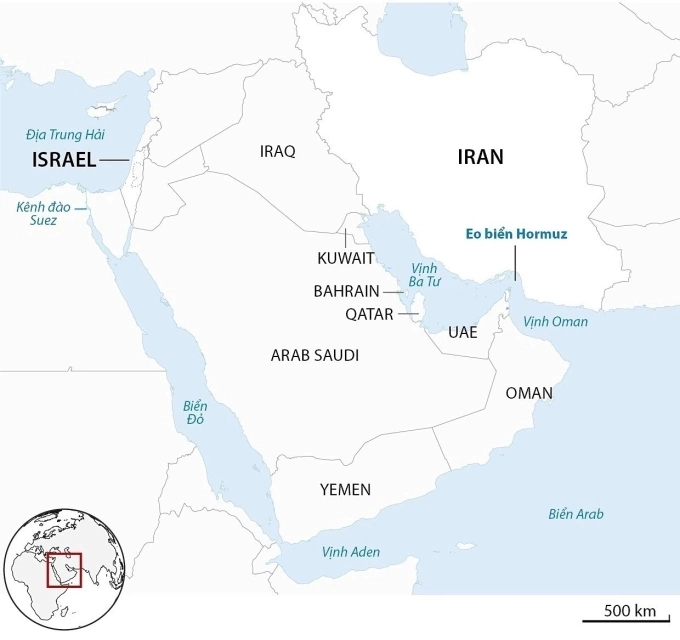 |
Location of the Strait of Hormuz and countries in the region. Graphic: Guardian
According to Hamad Althunayyan, a political science professor at Kuwait University, the strategic threat from Iran and skepticism about the Trump administration's future intentions may compel Gulf nations to temporarily set aside long-standing animosities, at least in the near future.
"Iran's actions are a test of the ceasefire, the solidarity of the Gulf Cooperation Council, and America's resolve," he assessed. "However, Gulf nations will not accept passively observing actions that Iran is deliberately trying to normalize."
Vu Hoang (According to WSJ, AFP, Reuters)