“We strongly reject and deny all accusations of Iranian armed forces’ involvement in the incident that damaged the South Korean ship in the Hormuz Strait”, the Iranian embassy in South Korea announced today.
The embassy added that Iran has "repeatedly emphasized that the Hormuz Strait is an inseparable part of its common defense space" since the US-Israel offensive at the end of February.
“Safe passage through the Hormuz Strait requires full compliance with existing regulations. In such situations, any disregard for announced requirements and operational realities can lead to unintended incidents. Responsibility lies with the party moving or operating in the area without fully considering the aforementioned factors”, the Iranian embassy stated.
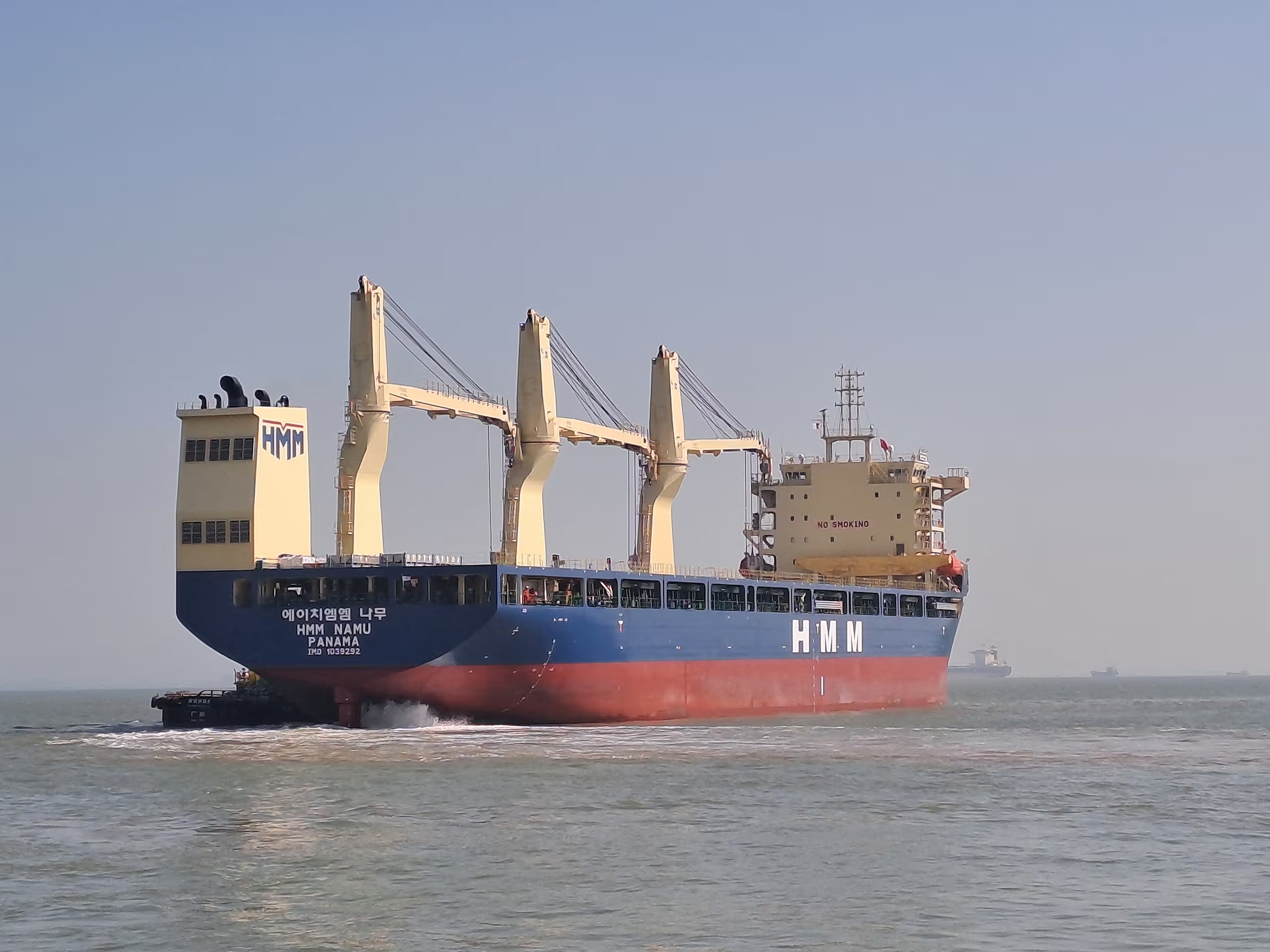 |
The HMM Namu cargo ship anchored before the attack on 4/5. Photo: Chosun |
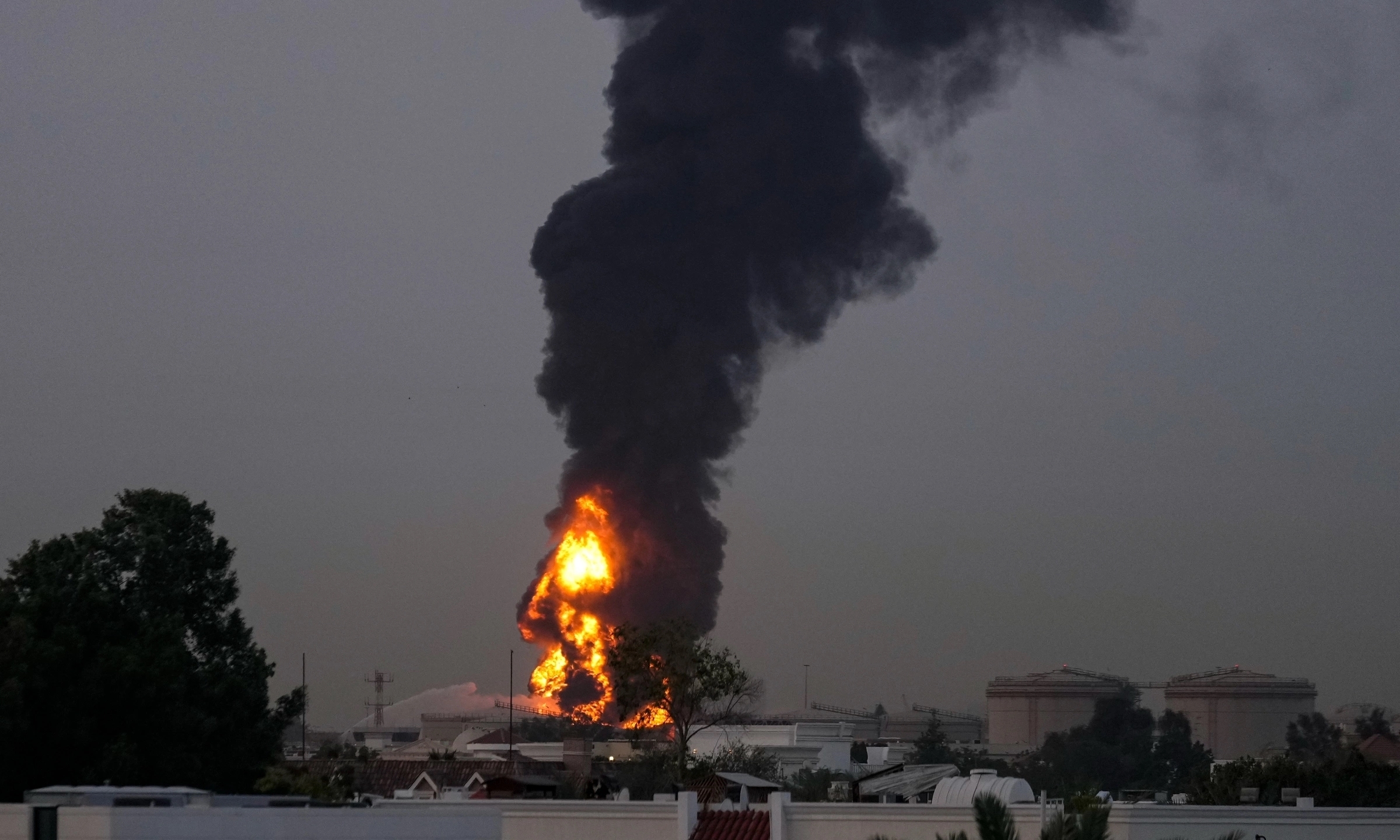
The explosion and fire occurred on the evening of 4/5 on the HMM Namu cargo ship, operated by a South Korean shipping company. The vessel was anchored off the port of Umm Al Quwain in the United Arab Emirates (UAE), within the Hormuz Strait. There were 24 crew members on board at the time, with no injuries reported.
President Donald Trump accused Iran of "firing" on the ship and urged South Korea to join the US "Operation Freedom" campaign to restore maritime activity through the Hormuz Strait.
The South Korean government stated it would "review its position" on joining the campaign. However, National Security Advisor Wi Sung-lac announced on 6/5 that "Operation Freedom" had been suspended, making the review no longer necessary.
On 6/5, the South Korean government dispatched a task force to the UAE to investigate the cause of the fire. The investigation is expected to begin after the ship is towed to a port in Dubai. An official from South Korea's Ministry of Oceans and Fisheries stated that results might take several days, adding that it was too early to determine the cause of the explosion and fire.
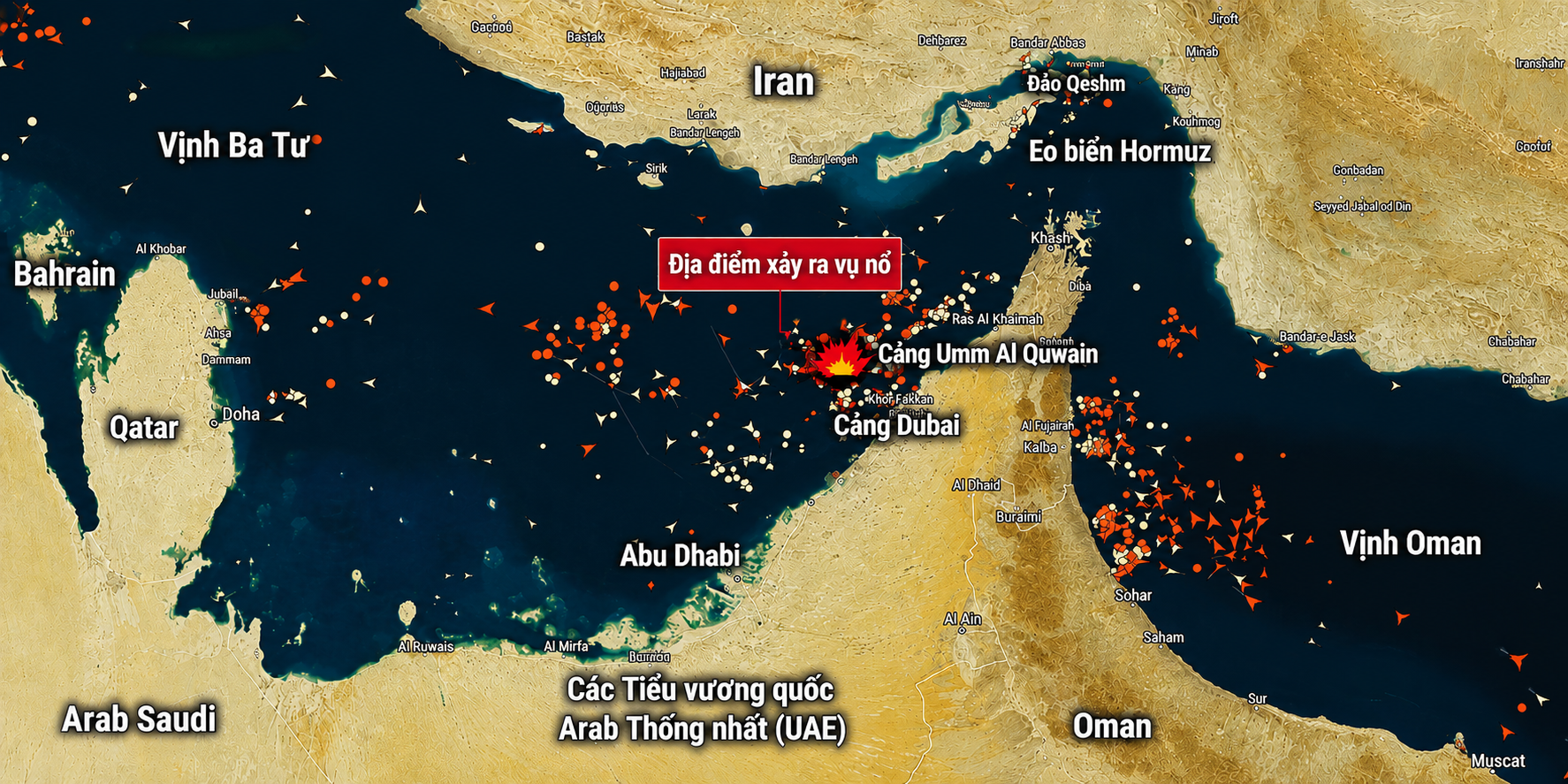 |
Location of the South Korean cargo ship explosion and fire on 4/5. Graphic: Marine Traffic |
Since the outbreak of hostilities, Iran has banned most vessels from passing through the Hormuz Strait, with the exception of its own ships and those of a few "friendly" nations. Meanwhile, the US imposed a blockade on all Iranian seaports from 13/4.
According to the International Maritime Organization, hundreds of ships and approximately 20,000 sailors have been unable to transit the strait throughout the conflict. Yonhap news agency reported that 26 South Korean-flagged vessels were among them.
South Korea heavily relies on imported fuel from the Middle East, with most shipments transiting the Hormuz Strait to meet its energy demands. Seoul announced last month that a South Korean oil tanker had safely passed through the waters.
Huyen Le (According to AFP, Yonhap)