The Iran conflict, escalating for over five weeks, is creating far-reaching impacts beyond military spheres, destabilizing the Gulf region. Experts warn that years of economic diversification, intended to lessen reliance on oil, are paradoxically exposing new strategic vulnerabilities in wartime. Shipping lanes and key commercial hubs face disruption, threatening growth and revealing weaknesses in this oil-rich region.
This situation highlights a paradox: efforts to diversify the Gulf's economy over many years, aimed at reducing oil dependence, are gradually becoming new "vulnerable points" in wartime, according to James Areddy, a commentator for the Wall Street Journal.
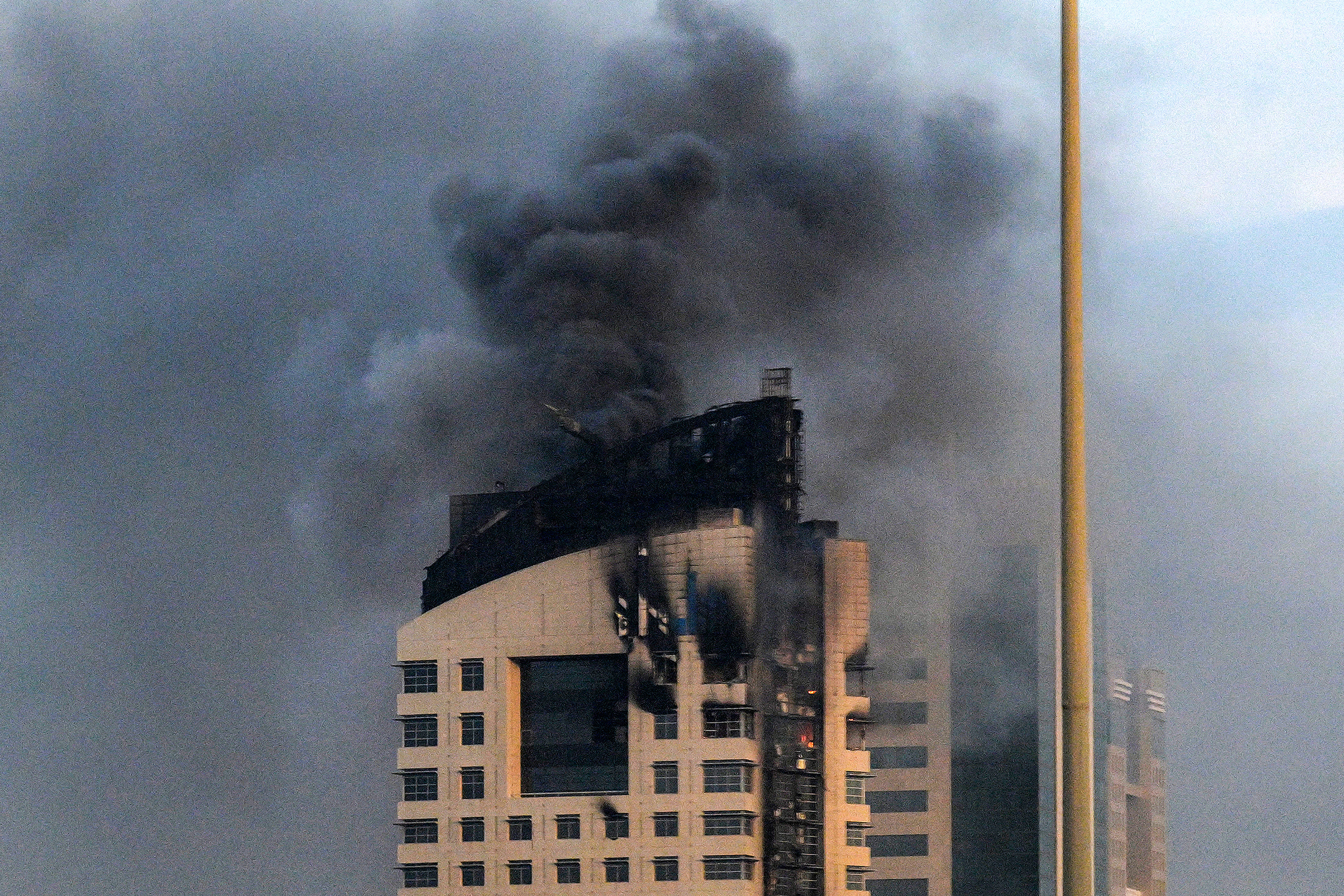 |
Smoke rises from a high-rise building hit by a drone in Kuwait City, Kuwait on 8/3. AFP
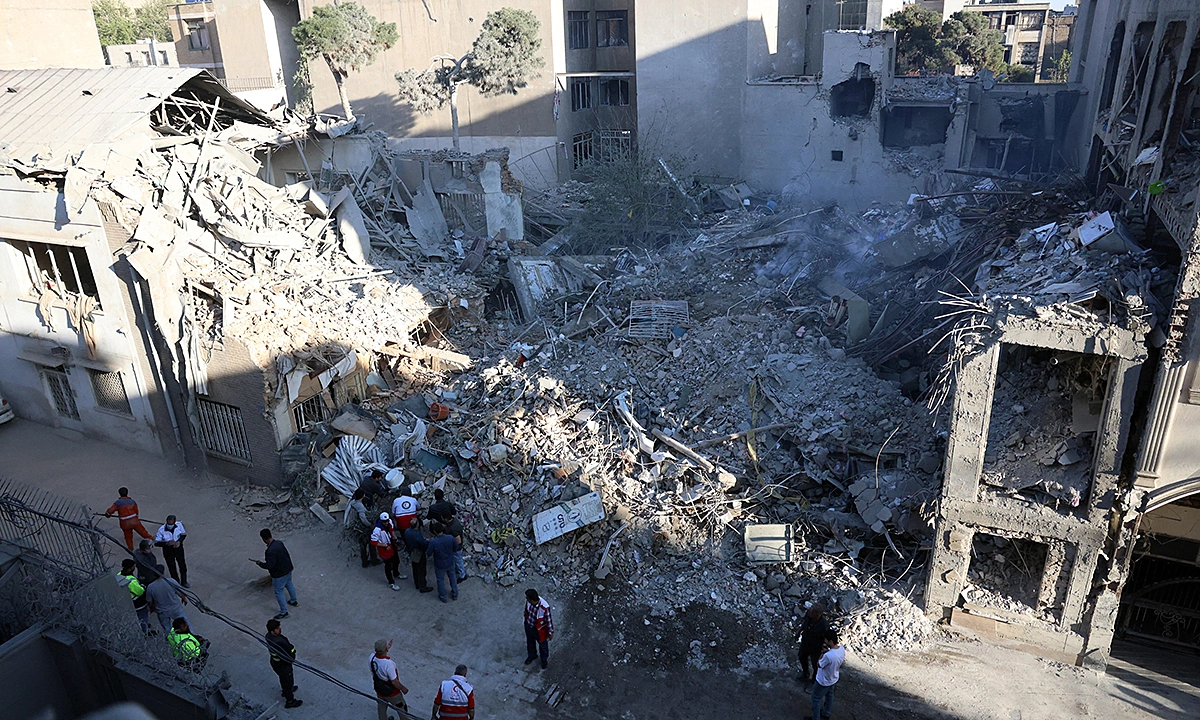
Iran is increasingly focusing attacks on high-value economic infrastructure belonging to US allies in the region. This strategy aims to increase the cost of a prolonged war. Recent incidents include drone attacks damaging major aluminum smelters in the United Arab Emirates and Bahrain, as well as assaults on several ports in Oman. Sensitive targets, such as data centers, banks, and airports—pillars of the service economy—are also now in Iran's crosshairs.
The Islamic Revolutionary Guard Corps (IRGC) on 29/3 even threatened educational facilities, including US university dorms in the region, marking a new escalation as both sides target civilian and symbolic assets. On 2/4, US forces carried out an airstrike on the B1 bridge, the Middle East's highest bridge, under construction in Karaj, Alborz province, about 35 km from Tehran. Part of the bridge collapsed, killing at least eight people.
Iran has launched several retaliatory attacks, but its most significant blow to date has been a near-total blockade of the Strait of Hormuz. This vital waterway, through which 20% of the world's oil supply from the Gulf passes, created "the largest supply disruption in global oil market history," according to the International Energy Agency.
The conflict's impact quickly spread, forcing an early halt to operations at the Ras Laffan industrial area, the world's largest liquefied natural gas (LNG) production facility in Qatar. This disrupted QatarEnergy, a leading global LNG exporter, affecting helium supply and various ancillary industries.
"When people talk about the Middle East, most only think of oil and don't realize how many steel plants and other industries in the Middle East serve the US market," said Landrum Hughes, a metal trader in Houston, US. He noted that steel pipe prices have surged 12-15%, a substantial increase for a basic commodity, which will ultimately pressure all steel prices.
Middle Eastern steel producers have canceled contracts for hundreds of containers of steel and aluminum destined for Canada-based Cascadia Metals, a supplier for US data center construction projects. Jim Ritchie, the company's chief executive officer, stated that this will significantly raise costs for US data center projects. "Oil, gas, steel, aluminum - these four things are everything," Ritchie emphasized.
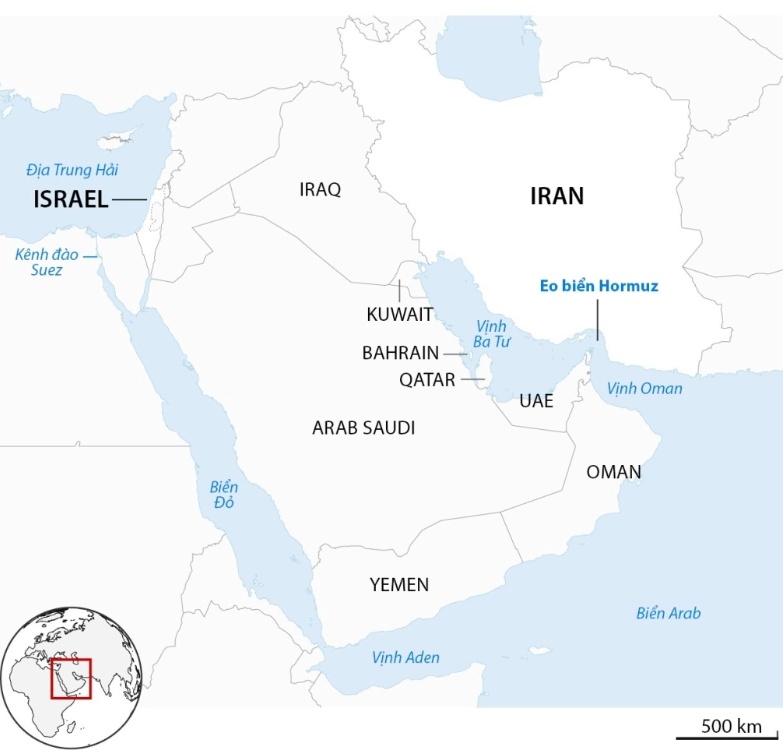 |
Location of the Strait of Hormuz. Guardian
For decades, oil and natural gas were considered the backbone of the Gulf region. Leveraging cheap energy, countries here developed energy-intensive industries like metallurgy, fertilizers, and chemicals, becoming major global suppliers. This trend was further bolstered by national strategies, such as Saudi Arabia's Vision 2030, which utilized oil revenues to build new economic pillars, from finance to tourism.
Consequently, the six countries of the Gulf Cooperation Council (GCC)—Saudi Arabia, the United Arab Emirates (UAE), Qatar, Kuwait, Bahrain, and Oman—now generate over 70% of their gross domestic product (GDP) from non-oil sectors. Chris Lawson, an analyst at CRU, observed, "Gulf countries have made great efforts to diversify income. They no longer rely only on oil and gas."
A United Nations Development Programme (UNDP) report on 31/3 estimated that the Iran conflict caused the Gulf's GDP to contract by 3,7-6% after one month, representing a loss of 120-194 billion USD. Abdallah Al Dardari, director of the UNDP's Regional Bureau for Arab States, stated that 3,7 million jobs would be lost and approximately 4 million people in the region would fall below the poverty line, highlighting "the fragility of the Arab economy." "This crisis is sounding an alarm bell for countries in the region," al-Dardari warned.