Costco has long been known for having one of the most generous return policies in the US retail industry, thanks to its "100% satisfaction" guarantee. Members of the warehouse club can return most items – from home goods, mattresses, and apparel to even partially used food – with no time limit.
However, the company does have some exceptions, such as a 90-day limit on electronics and refusal to accept returns on items like alcohol or gift cards.
Returned items are screened by the company's Returns Processing department. Unopened, non-perishable goods, and some opened items like clothing, may be returned to shelves if the reason for the return is simply a change of mind or incorrect size.
Meanwhile, opened or used products are sent to a large-scale Costco returns processing warehouse for sorting and condition inspection. For example, an 80,000 square meter returns processing facility in Monroe Township, New Jersey, handles returns from over 60 Costco warehouses as well as online orders.
Employees inspect each returned item. However, these items are not tested for functionality but are only categorized based on external observation.
Items in their original packaging are classified as A-grade, while damaged items or those with missing components are classified as D-grade.
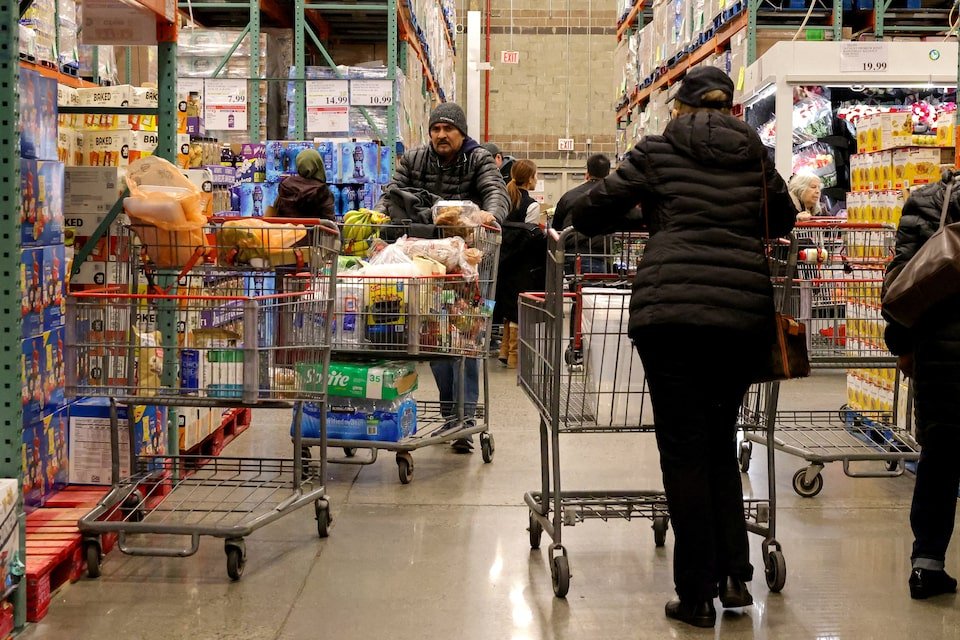 |
Shoppers at a Costco store in New York, US, on 16/1. Photo: Reuters |
Costco collaborates with B-Stock, a company that also assists major brands like Target and Walmart in liquidating unwanted inventory.
Through B-Stock, Costco conducts wholesale auctions. Items are packed onto large pallets or loaded into full container trucks. Each auction lot might contain 50 vacuum cleaners, or a mixed pallet with everything from clothing and opened microwaves to children's toys. Costco sells these lots "as is," primarily catering to liquidation stores, thrift shops, or online resellers.
Not only opened items appear at B-Stock auctions; excess inventory is also sold.
However, strict rules apply to those wishing to purchase these goods. To participate, US buyers must provide a valid state-issued resale certificate, while international buyers must provide proof of business operations. In short, this program is not for regular consumers. Goods purchased from Costco liquidations are not permitted for resale within an 8 km radius of the original selling location.
Some unsellable items may be donated, such as those with minor cosmetic flaws like slight stains. Other items, for example, toothbrushes, are sent for recycling.
According to Food Republic, a food news website, if you return a food item, it will likely be discarded. US Food and Drug Administration (FDA) regulations state that returned and opened food is not permitted for resale to consumers.
Once food leaves the store, Costco cannot guarantee its quality as it cannot control how customers store it at home – such as inadequate refrigeration or frozen goods thawing and refreezing. Reselling perishable food items poses significant legal risks.
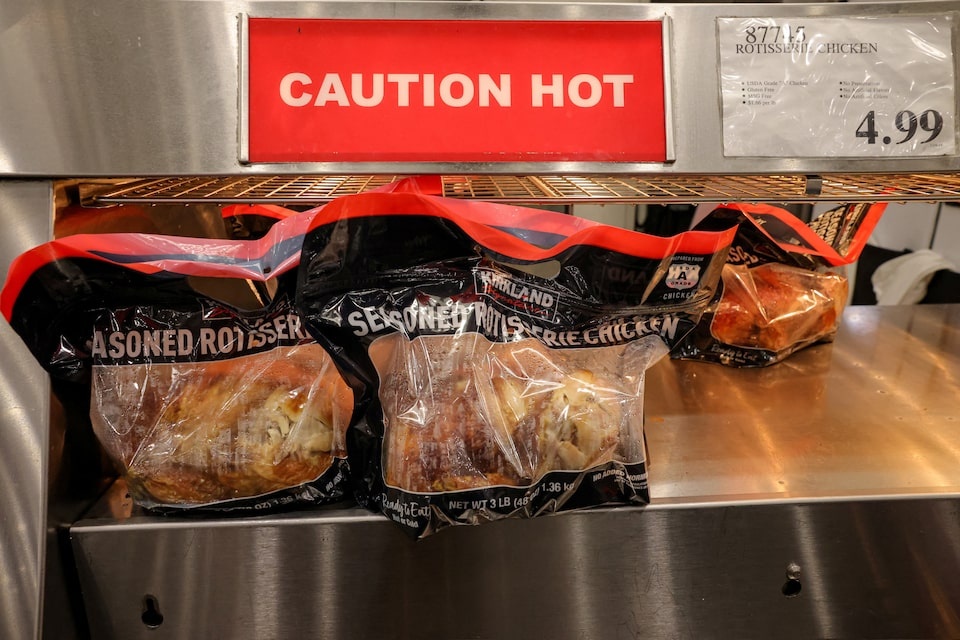 |
Rotisserie chicken at a Costco store in New York City, US, on 16/1. Photo: Reuters |
However, if the packaging remains intact, the item may be donated. The humanitarian organization World Vision reports that since 2014, it has received 480,000 pallets of food donated for charity.
According to the company's website, stores regularly donate protein products, produce, and dairy items to Feeding America.
Recently, to prevent customers from abusing the return policy, Costco has begun tracking return histories and may "blacklist" customers suspected of policy abuse.
Costco reserves the right to cancel memberships of customers who abuse returns, though it does not disclose the specific threshold that leads to membership revocation.
Hoang Lan (According to New Yorker, Food Republic, Reuters, SlashGear)