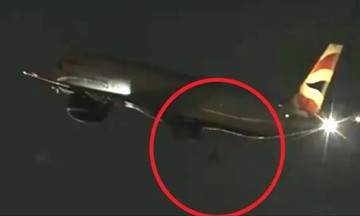
A video released by Ukrainian media on 26/1 showed Russian unmanned aerial vehicles (UAVs) flying low and circling extensively over the capital, Kyiv. No air raid alerts were issued at the time, nor were there any indications that the Ukrainian military attempted to shoot down the targets.
The initial images were published at 14h. Air raid alerts in Kyiv and its surrounding province were reportedly activated about 8 minutes later, with Ukrainian officials announcing at least three Russian UAVs operating over the city.
UAVs flying over Ukraine's capital Kyiv on 26/1. Video: Kyiv Info, RBC Ukraine
Social media accounts supporting the Ukrainian military indicated that Russian UAVs appeared in central Kyiv, on the Dnieper River's east bank, and in several inner districts. One aircraft was also present near Kyiv's key CHP-5 thermal power plant around 15h.
Air raid alerts in Kyiv ceased after approximately 4,5 hours, with the fate of the Russian aircraft unknown. Ukrainian media suggested these UAVs were not Geran models, but appeared to be on reconnaissance missions targeting critical infrastructure.
The Russian military news site RusVesna stated that Russian forces used BM-35 aircraft equipped with Starlink satellite internet transceivers, boasting an operational range of up to 500 km and high anti-jamming capabilities. "The reason Ukrainian air defense did not shoot them down is unclear," the news site reported.
Anatoliy Khrapchinsky, a reserve officer of the Ukrainian air force, also suggested that the Russian UAVs were equipped with Starlink technology and cameras for intelligence gathering.
Taras Shamaida, a Ukrainian activist, admitted he had "never seen Russian UAVs fly into Kyiv unchallenged," noting a complete absence of warnings in Kyiv and the neighboring Chernihiv province. Shamaida stated, "It is understandable that some Russian UAVs were not shot down en route to Kyiv, as no air defense system is perfect. However, the terrible part is that they were not detected. Let's hope this is a rare exception."
Nikolai Melnyk, former commander of a Bradley armored company in Ukraine's 47th Separate Mechanized Brigade, explained that the Russian aircraft flew very low, visible to the naked eye but below the surveillance range of early warning radars. "They did not exceed 100 m above ground throughout their journey. Air defense forces were caught by surprise," Melnyk said.
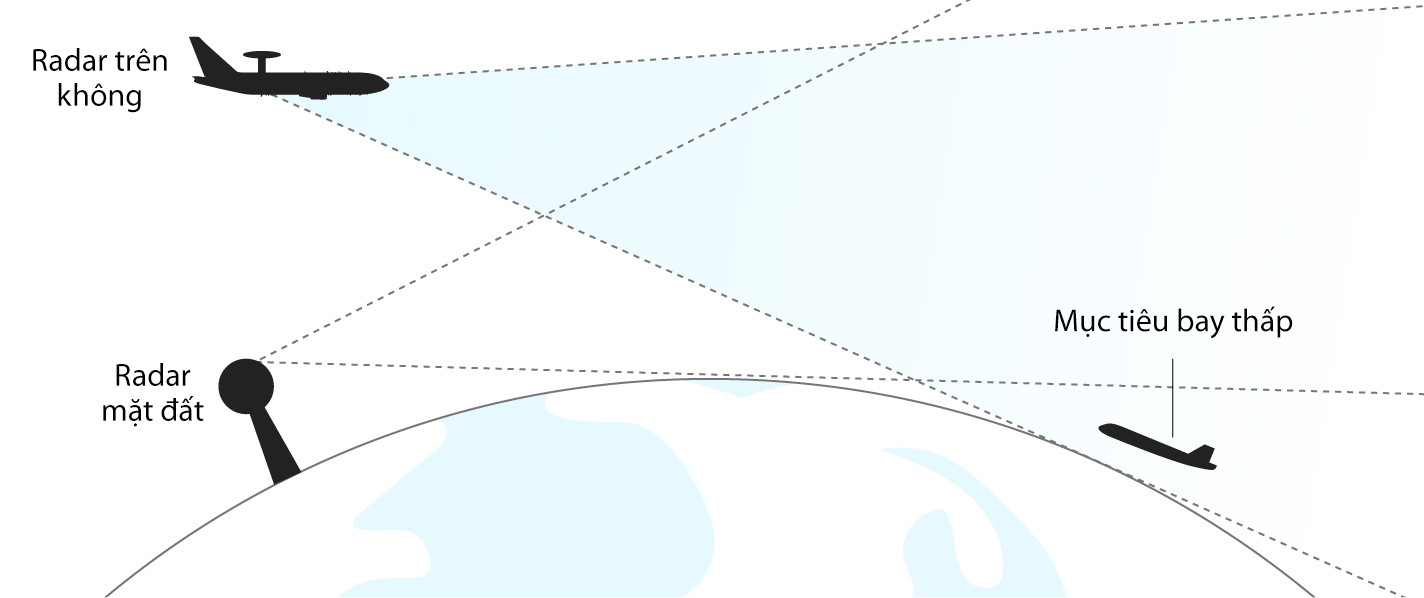 |
Ground radar visibility for low-flying targets. Graphic: Telegraph
Melnyk assessed that the Russian UAVs also evaded fixed radar and missile air defense positions, as well as numerous mobile fire teams using machine guns, which are typically responsible for intercepting low-flying aircraft and missiles. Melnyk warned, "If no one detected UAVs approaching and circling over Kyiv, it is likely that Russian intelligence had information about our defensive positions. This would be extremely bad news."
The fact that Russian UAVs circled over Kyiv for hours without being shot down remains a contentious issue. According to Ukrainian military expert Oleg Zhdanov, countering UAVs is not a simple task; it demands the deployment of substantial forces, ranging from mobile fire teams and anti-aircraft artillery to advanced missile systems, while the area needing defense is vast.
Zhdanov noted that low-flying UAVs can evade surveillance radars, but air defense crews can visually locate them, then activate fire control radars and direct them towards the targets for tracking. The best option is to deploy interceptor aircraft, as airborne radars have a better observation range than ground-based radars. However, this expert acknowledged that air defense missiles are expensive compared to UAVs, and Ukraine has limited ammunition. "These aircraft could be shot down, but not as quickly as we desire. This represents a systemic issue for Ukraine's air defense forces," he stated.
The challenge intensifies when Russia employs UAVs equipped with Starlink transceivers. Ukrainian military expert Andriy Kramarov emphasized that Ukraine has virtually no means to jam or block Starlink signals. Furthermore, any attempts to interfere with this system could backfire, as Starlink is considered the backbone of Ukraine's military communication network.
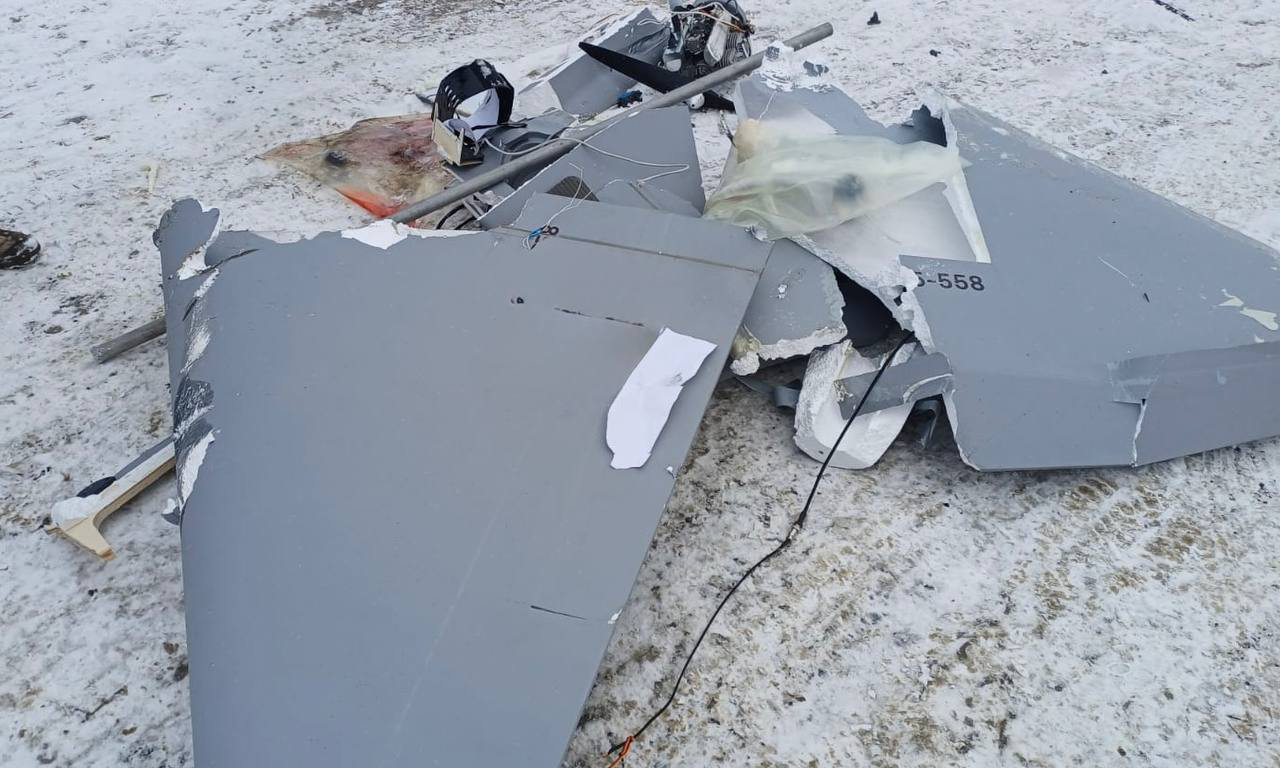 |
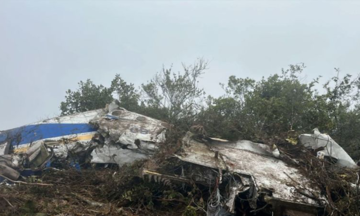
Wreckage of a Russian BM-35 UAV in a photo posted on 15/1. Photo: Militarnyi
Before the appearance of the BM-35 model, Russia had integrated Starlink transceivers into its cheaper Molniya suicide UAVs, though these aircraft had a much shorter flight range. Ukrainian Defense Minister Mykhailo Fedorov warned on 26/1 about Russian UAVs fitted with Starlink devices, stressing that Kyiv needs to "react swiftly" to this issue. Nevertheless, Kramarov also noted that Russia is unlikely to equip a large number of UAVs with Starlink transceivers, as this process is costly and technologically complex.
Pham Giang (According to UA Wire, RusVesna, Euromaidan Press)