Indian Water Resources Minister C.R. Patil stated on 9/6 that "certainly, in the coming years, not a single drop of water will flow to Pakistan," adding that New Delhi is "accelerating the implementation" of this plan under the direction of Prime Minister Narendra Modi.
Pakistan had previously warned that any attempts to alter the flow of cross-border rivers would be considered an "act of war." It also affirmed that the 1960 Indus Waters Treaty (IWT) remains in effect, as no mechanism exists for unilateral withdrawal by either party.
The Indus is one of Asia's longest rivers, flowing through China, India, and Pakistan before emptying into the Arabian Sea. Its five tributaries are the Ravi, Sutlej, Beas, Chenab, and Jhelum. All these rivers share a common characteristic: their headwaters are in China or India, but their lower reaches are entirely within Pakistan.
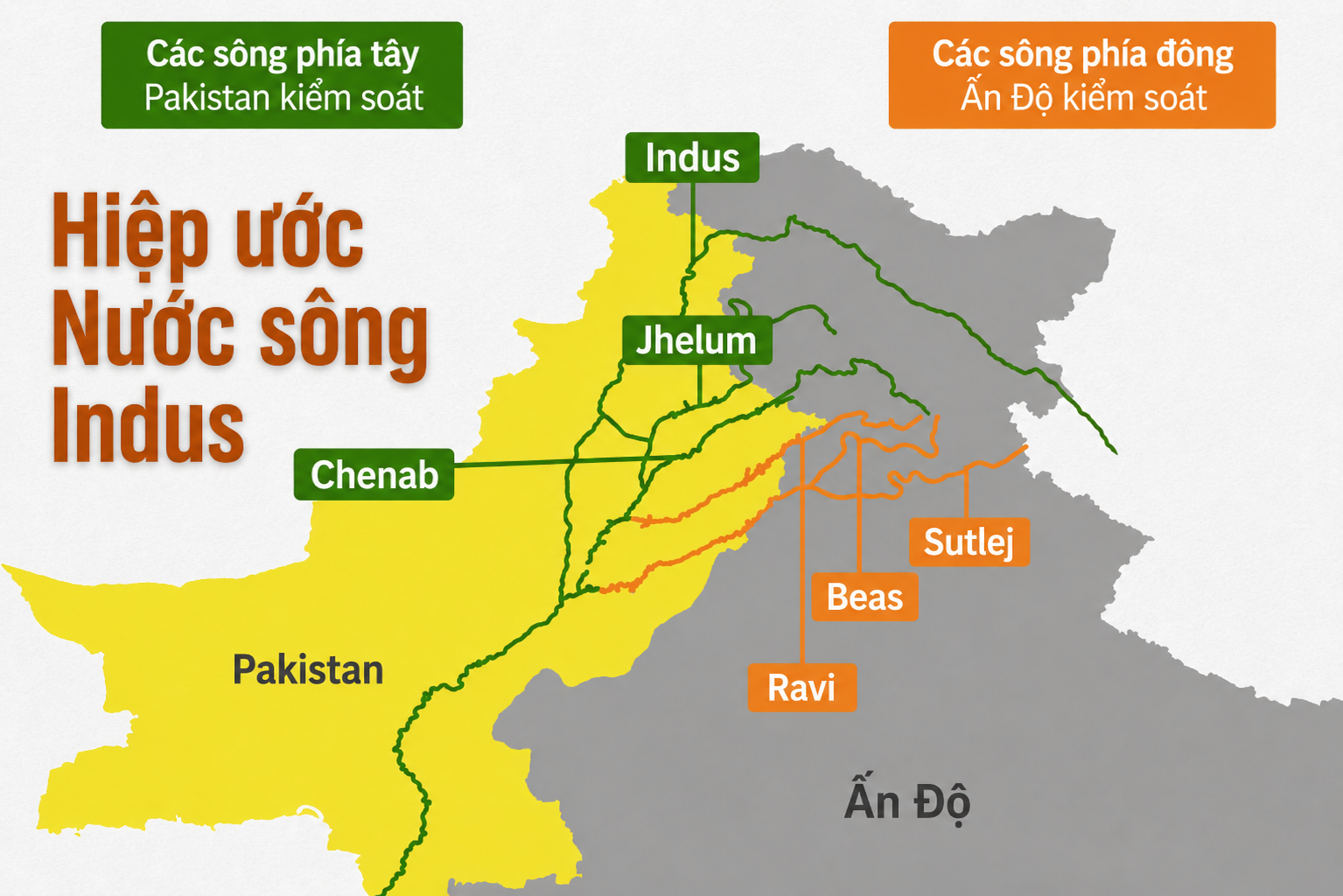 |
The Indus River and its five tributaries. Graphic: Insight UK
These rivers contribute to forming the fertile Indus River plain, situated among Afghanistan, China, India, and Pakistan. The Indus also flows through particularly sensitive border areas between India and Pakistan in the Muslim-majority Kashmir region. This Himalayan territory is claimed in its entirety by both nations.
Under the IWT, India has unrestricted use of water from the eastern tributaries: the Ravi, Sutlej, and Beas. Two of these three rivers converge before flowing into Pakistan.
Pakistan controls the Indus, Chenab, and Jhelum, known as the western rivers. These flow through India-controlled territory but are primarily located within Pakistan. India is obligated to allow these three rivers to flow freely into Pakistan, and Islamabad has unrestricted use of their water.
In 5/2025, India announced the suspension of the IWT after accusing Islamabad of being behind a deadly attack on tourists in the New Delhi-controlled Kashmir region. Pakistan denied the accusation.
The two countries subsequently engaged in 4 days of fighting, involving intense attacks with unmanned aerial vehicles (UAVs), missiles, and artillery. Nearly 70 people were killed on both sides.
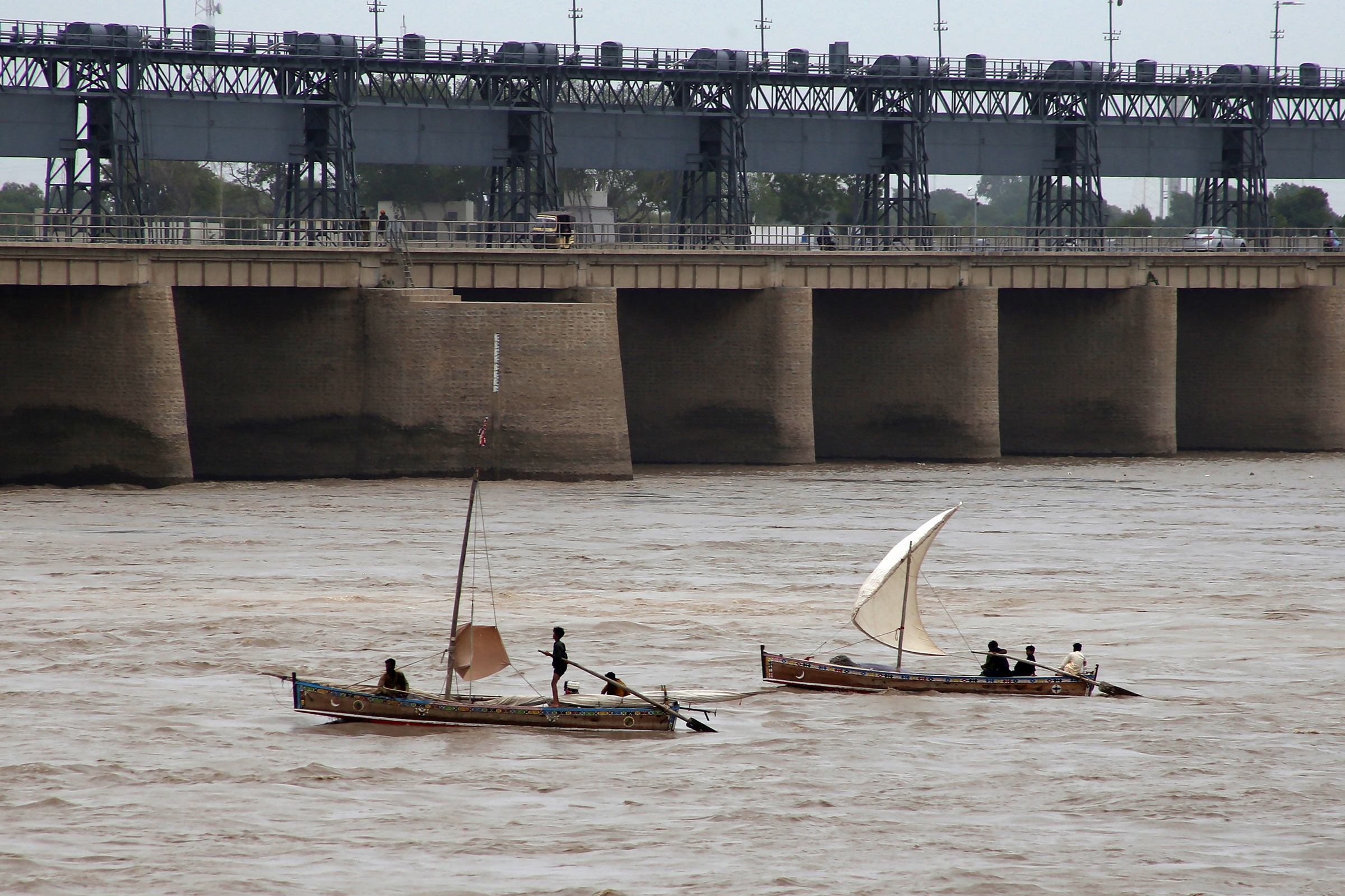 |
Fishermen rowing boats on the Indus River at the Kotri Dam, Hyderabad, Pakistan in 7/2025. Photo: AFP
Since then, the water issue has continued to be a contentious flashpoint. Earlier this month, Pakistan accused India of attempting to "weaponize water" after New Delhi announced two initiatives related to the section of the Chenab River under its control.
Last month, the National Hydroelectric Power Corporation (NHPC) of India issued a tender for a tunnel project to divert water from the Chenab River to the Beas River basin.
The Indian Ministry of Power stated in January that it is conducting dredging and sediment removal at the Salal hydroelectric plant on the Chenab River following the termination of the IWT. This action aims to allow the dam to hold more water, preparing for a plan to close water valves.
However, experts believe that India's existing dams are not capable of completely blocking or diverting water flow; they can primarily only regulate the timing of water release. While reducing water flow would severely impact Pakistan's agriculture and entire economy, any such project would take many years to have a real effect.
An official in India-controlled Kashmir stated that related construction cannot begin before mid-2027 and would take at least 5 years to complete.
Huyen Le (According to AFP)