"Vietnam strictly prohibits all forms of forced labor and rigorously adheres to the regulations of the International Labor Organization (ILO), international treaties, and free trade agreements to which it is a member," stated Ministry of Foreign Affairs spokesperson Pham Thu Hang on 25/7. Her comments came in response to inquiries about the US imposing a new 12.5% tariff on goods from all "investigated" economies under section 301.
The government issued Decree No. 292/2026/ND-CP on 22/7, which prohibits the import of goods wholly or partially extracted, produced, or manufactured using forced labor, the spokesperson added.
"The decision by the United States trade representative (USTR) does not fully reflect the reality of Vietnam's efforts to prevent, reduce, and eliminate forced labor, including its ban on importing products made with forced labor," Ms. Hang emphasized.
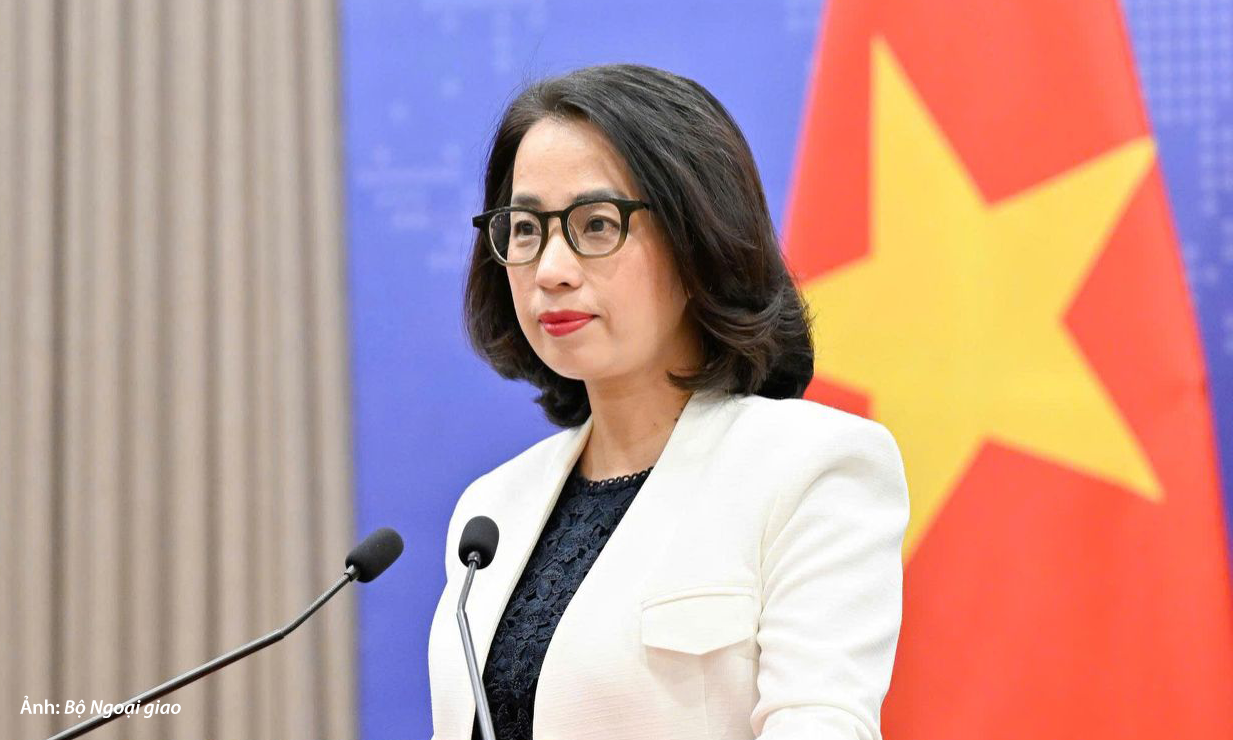 |
Ministry of Foreign Affairs spokesperson Pham Thu Hang. Photo: BNG |
Vietnam will continue constructive and cooperative engagement with the US, urging a full evaluation of Vietnam's implemented measures. This aims to adjust the tariff level in line with the country's realities and its legislative and enforcement efforts.
The USTR previously announced that the US began applying new import tariffs on all goods from "investigated" economies from 0h on 24/7, with some exceptions. 38 countries, including Vietnam, are subject to a 12.5% tariff.
A 10% tariff applies to imports from countries including Argentina, Bangladesh, the United Kingdom, Cambodia, Canada, Ecuador, El Salvador, Guatemala, Honduras, India, Indonesia, Jordan, Malaysia, and Mexico.
For the European Union (EU), Taiwan, Japan, South Korea, and Switzerland, the new tariff, combined with the existing most-favored-nation (MFN) tariff, results in a total of 10% or 12.5%, depending on the specific economy.
The US proposed these tariffs in early June, following an investigation under section 301 of the Trade Act of 1974. This investigation focused on partners' policies to prevent the circulation of products manufactured using forced labor, which the USTR believes disadvantages US competitiveness.
Pham Giang