The controversy began on 28/7 when a video of prime minister Narendra Modi, posted on Facebook five days earlier, suddenly disappeared. Users attempting to access it were informed that the content was restricted in India due to a legal request.
The video aimed to soothe public sentiment amid a university exam leak scandal. Prime minister Modi pledged to tighten exam security measures, investigate those responsible, and announced directives for establishing "fast-track courts" to prosecute individuals found in violation.
Just hours after the video vanished, Meta restored it, explaining the incident as a technical error. However, India's Ministry of Electronics and Information Technology still demanded a written explanation from Meta within 10 days. Meta subsequently stated it was cooperating with authorities to address the matter.
On 3/8, Member of Parliament Nishikant Dubey, who chairs the Parliament's Standing Committee on Information Technology and is a member of the ruling Bharatiya Janata (BJP) party, announced that the committee had called for a direct apology from Meta Chief Executive Officer Mark Zuckerberg.
"The committee made two things clear. The first is that the apology must come from Mr. Zuckerberg," Dubey said after the meeting. "If he does not apologize, then consideration should be given to withdrawing the immunity mechanism under Article 79."
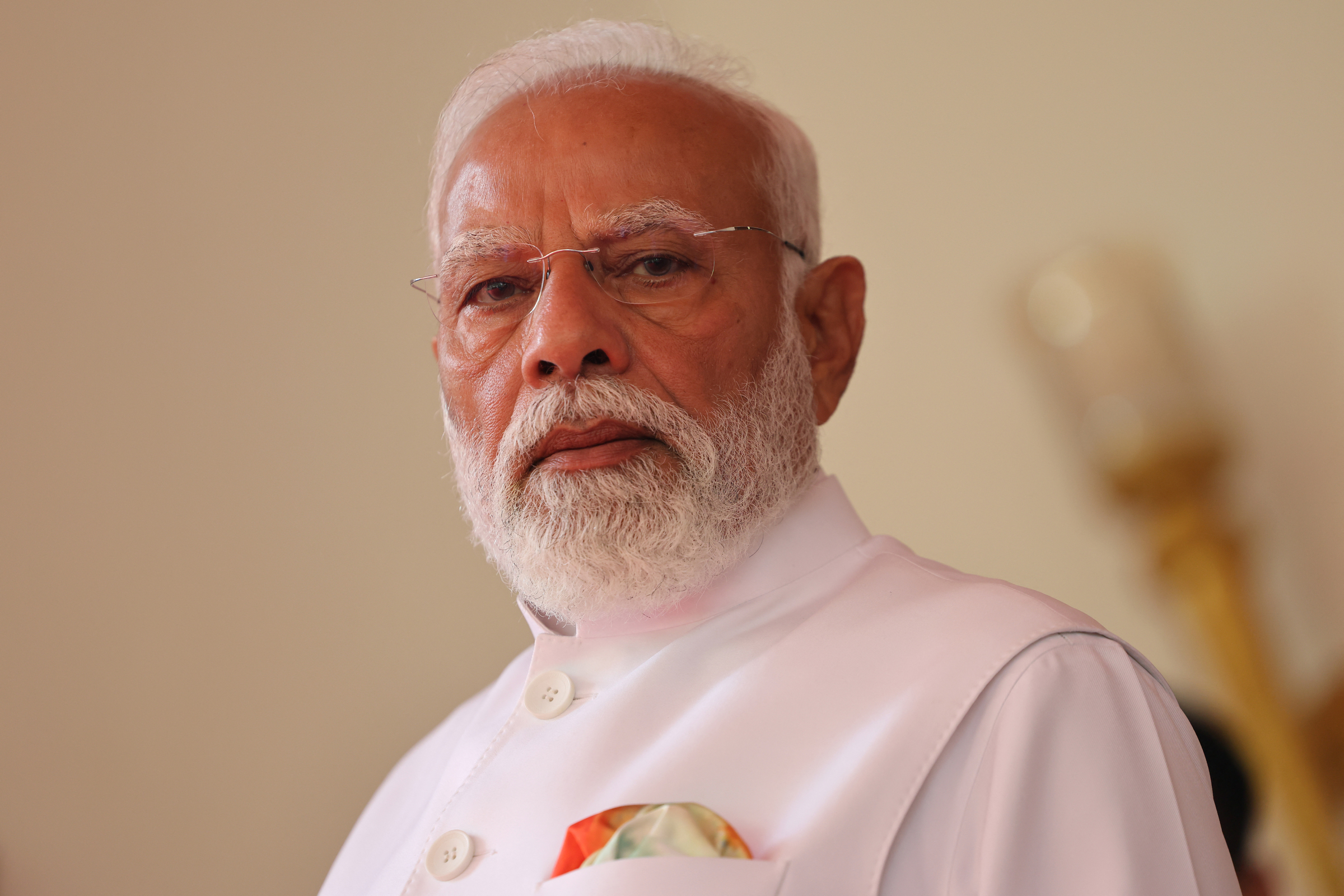 |
Prime minister of India Narendra Modi in Mumbai on 17/2. *Photo: AFP* |
Article 79 of India's Information Technology Act stipulates that online platforms, such as social media networks, internet service providers, and e-commerce marketplaces, are exempt from legal liability for user-generated content if they operate as intermediaries and adhere to their prescribed obligations.
While the parliamentary committee does not possess direct punitive powers, it can issue recommendations for the Lower House to review and vote on.
Dubey suggested that the incident either reflects a systemic error or is a "deliberate attempt to damage the image" of prime minister Modi, stating he does not accept the technical error explanation.
Several BJP members of parliament also questioned the possibility of "biased" algorithms, arguing that content deemed inappropriate for Indian society persists on the platform while mainstream content is removed.
This is not Meta's first dispute with the Indian government. Member of Parliament Dubey recalled Zuckerberg previously apologizing after remarks concerning the 2024 election, where he suggested most incumbent governments worldwide, including India's, tend to lose. Information Technology Minister Ashwini Vaishnaw criticized the American billionaire for spreading misinformation.
India currently stands as Meta's largest market, boasting over 362 million Facebook users, 501 million Instagram users, and 837 million WhatsApp users. For Google's YouTube platform and Elon Musk's X, these figures are 646 million and 15 million daily active accounts, respectively.
Since February, the country has tightened its online content control regulations, now requiring platforms to remove content identified by courts or the government as violating within three hours, a significant reduction from the previous 36-hour timeframe.
By Thanh Danh (Source: RT, First Post, Times of India)