Mongkolkit Suksintharanont, the Thai Alternative party's prime ministerial candidate, sparked widespread debate on 13/1 with a proposal to allow women to marry up to 4 husbands. Writing on social media, Mongkolkit stated that "regarding gender equality, women should be allowed to marry a maximum of 4 husbands, if all parties agree".
Mongkolkit explained that this would be a core gender equality policy for his party. He drew a parallel to Islamic law, which permits men to have up to 4 wives, suggesting his proposal would create a similar framework for women.
The proposal quickly attracted significant public attention in Thailand, garnering nearly 5,500 interactions and over 1,400 comments. Reactions were divided: some hailed it as "progressive" thinking, while others dismissed it as a political stunt by Mongkolkit to attract voters ahead of the general election scheduled for 8/2.
 |
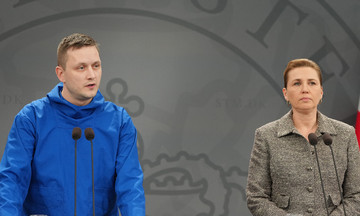
Mongkolkit Suksintharanont (right) speaks at a press conference in 2019. *Khaosod*
This latest proposition is consistent with Mongkolkit's public image, which he often cultivates through unusual and attention-grabbing statements. He has previously put forth a range of unconventional ideas.
His past proposals include strengthening military capabilities, such as acquiring nuclear weapons, establishing a Thai "space force," providing financial incentives for women to have children to counter declining birth rates, and mandating daily exercise for working-age individuals to qualify for pay raises.
Although Mongkolkit did not provide specific details on how the "polyandry" policy would be implemented, his announcement has fueled extensive discussions across Thailand. These conversations touch upon marriage law, gender rights, and the influence of political messaging on public discourse.
The proposal comes amidst a significant political period for Thailand. Prime Minister Anutin Charnvirakul announced the dissolution of parliament on 11/12/2025, paving the way for an early election. Thai law mandates that a general election must be held within 45-60 days following the dissolution of parliament.
By Duc Trung (Khaosod, Bangkok Post, Nation)