The Islamic Revolutionary Guard Corps (IRGC) announced today that "to comply with maritime safety principles and avoid the risk of hitting mines, all vessels intending to pass through the Strait of Hormuz must use an alternative route for transit". This decision came after a two-week ceasefire deal with the United States, struck on the night of 7/4 and early morning of 8/4, just hours before President Donald Trump's ultimatum to Tehran expired. The agreement stipulated Iran would reopen the Strait of Hormuz during the ceasefire, with vessels subject to Iranian armed forces' supervision and specific "technical measures".
To enhance maritime safety and avoid potential mine threats, the IRGC stated all ships must use this alternative. The IRGC also issued guidelines for entry and exit routes in the strait, replacing the historically narrow main channel. The Strait of Hormuz is a strategic shipping lane, measuring only 33-38 kilometers wide at its narrowest points. Historically, the main channel for oil tankers was approximately 3 kilometers wide, situated between the Persian Gulf and the Gulf of Oman. In late March, the IRGC had already guided some cargo and oil tankers through Iranian territorial waters around Larak Island, rather than the strait's main channel.
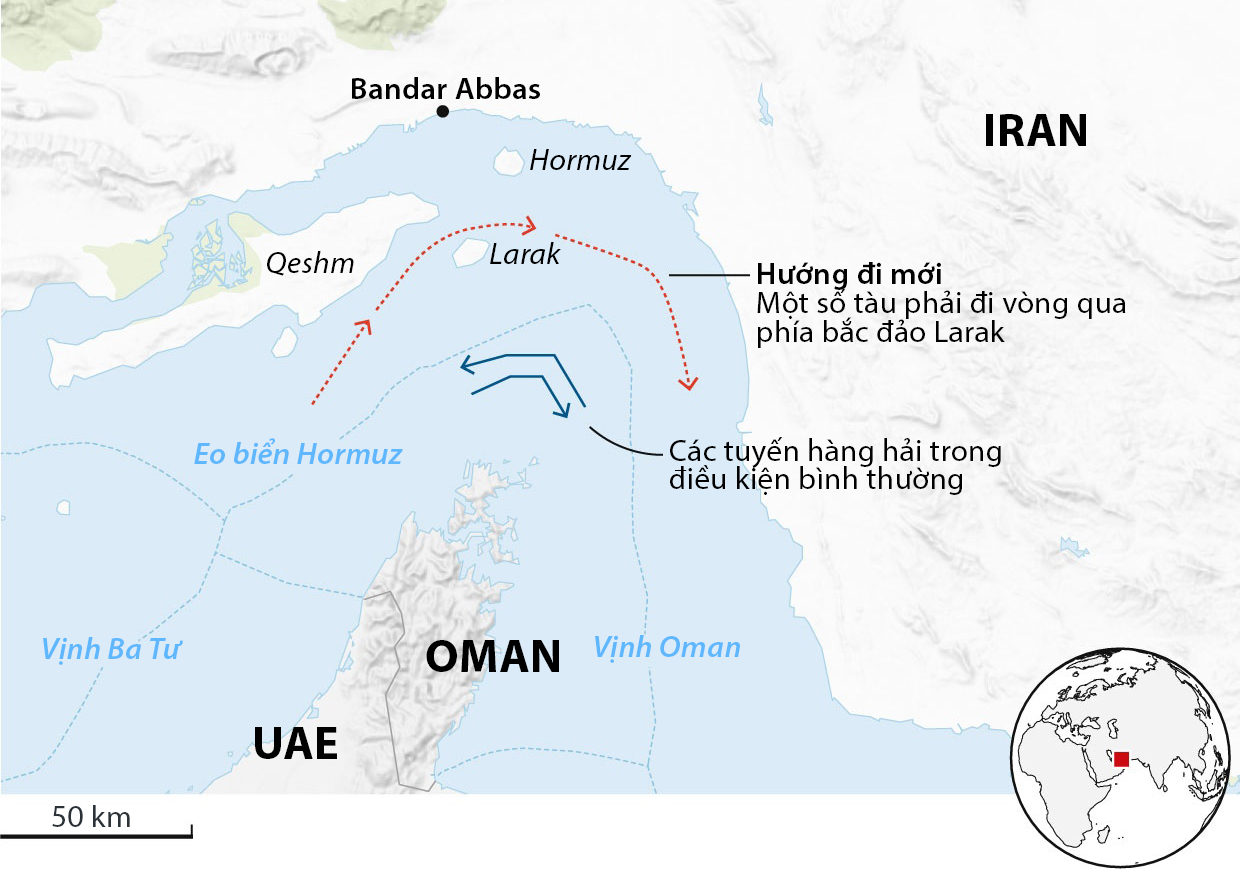 |
The route oil tankers were required to take for safe passage through the Strait of Hormuz, according to IRGC guidance in late March. *Graphic: Guardian* |
A key point of contention arose from Iran's demand for transit fees. Iran informed negotiating intermediaries that it would limit the number of vessels passing through the Strait of Hormuz to about a dozen per day. According to data provider S&P Global Market Intelligence, only 4 ships were permitted to transit the Strait of Hormuz on 8/4 after the ceasefire was announced. This marked the lowest number since the beginning of the month and a sharp decrease from over 100 vessels daily before hostilities erupted. Mediators and maritime brokers reported that vessels were required to agree to advance payments in cryptocurrency or yuan. These fees, which could reach up to 2 million USD for a supertanker with a capacity of approximately two million barrels, varied by vessel size and covered a basic transit charge, security escort fees, and administrative processing fees.
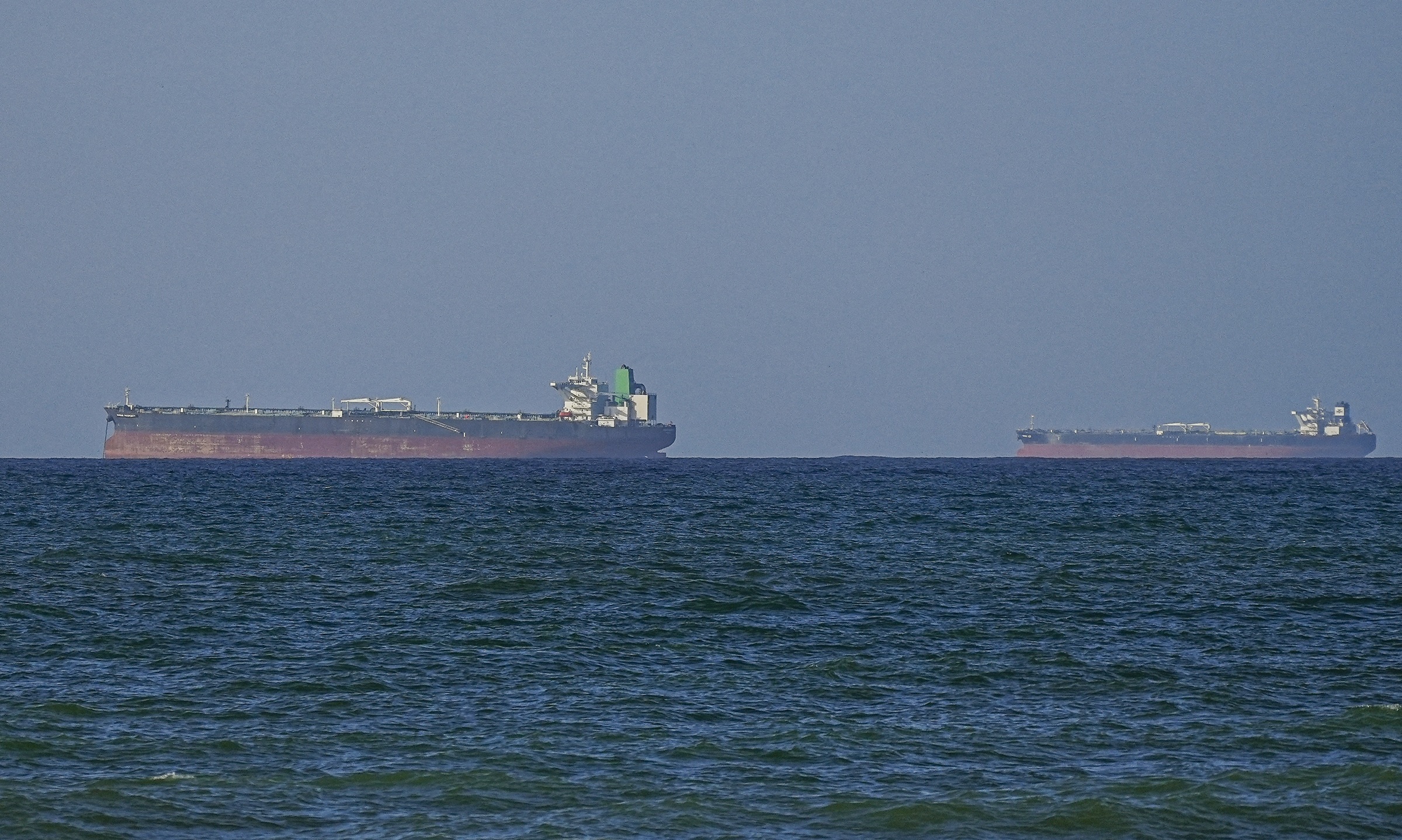 |
Vessels passing through the Strait of Hormuz after the ceasefire agreement was announced on 8/4. *Photo: AFP* |
Gulf Arab nations strongly objected to these fees, arguing that Iran's proposal violated international treaties. Specifically, they cited the United Nations Convention on the Law of the Sea (UNCLOS), which guarantees freedom of navigation through natural sea lanes like the Strait of Hormuz, the English Channel, Gibraltar, and Malacca. International maritime law does not permit governments to levy fees for transit through such natural waterways. Gulf energy producers firmly opposed any agreement mandating payments to Iran, and mediators anticipated that Iran's demands would complicate future negotiations for a lasting ceasefire.
Despite the ceasefire, Iranian media reported on 8/4 that the country temporarily re-closed the Strait of Hormuz. This action was a response to continued Israeli attacks on Lebanon. United States Vice President JD Vance quickly asserted that the ceasefire agreement with Iran did not encompass the issue of Lebanon. He warned Tehran to uphold its commitment to keep the Strait open for oil tanker traffic, stating, "Frankly, if they break the deal, they will face serious consequences."
Huyen Le (According to AFP, Wall Street Journal, NY Times)