On 18/4, Iran's Islamic Revolutionary Guard Corps (IRGC) issued a stern warning, stating that any vessel attempting to enter the Strait of Hormuz would be considered "cooperating with the enemy" and targeted for attack. "We warn all vessels, regardless of type, not to leave their anchorage in the Persian Gulf and the Gulf of Oman," the IRGC announced via its Sepah News site. The IRGC further advised ships to monitor its announcements on Channel 16 and dismissed statements by the US President regarding the Strait of Hormuz as lacking credibility.
This declaration follows a period of conflicting signals regarding the strait's status. On 17/4, Iranian Foreign Minister Abbas Araghchi stated on social media platform X that Hormuz was "fully open" for commercial vessels. However, Iran's military quickly re-imposed restrictions, citing the US's continued blockade of its seaports as the reason.
Hours after the re-imposed restrictions, IRGC armed boats approached and fired upon an oil tanker in the Strait of Hormuz. Iran's Foreign Ministry asserted the country's right to prevent the strait's use for military actions targeting Iran, maintaining that international law permits Tehran to take measures against such attacks.
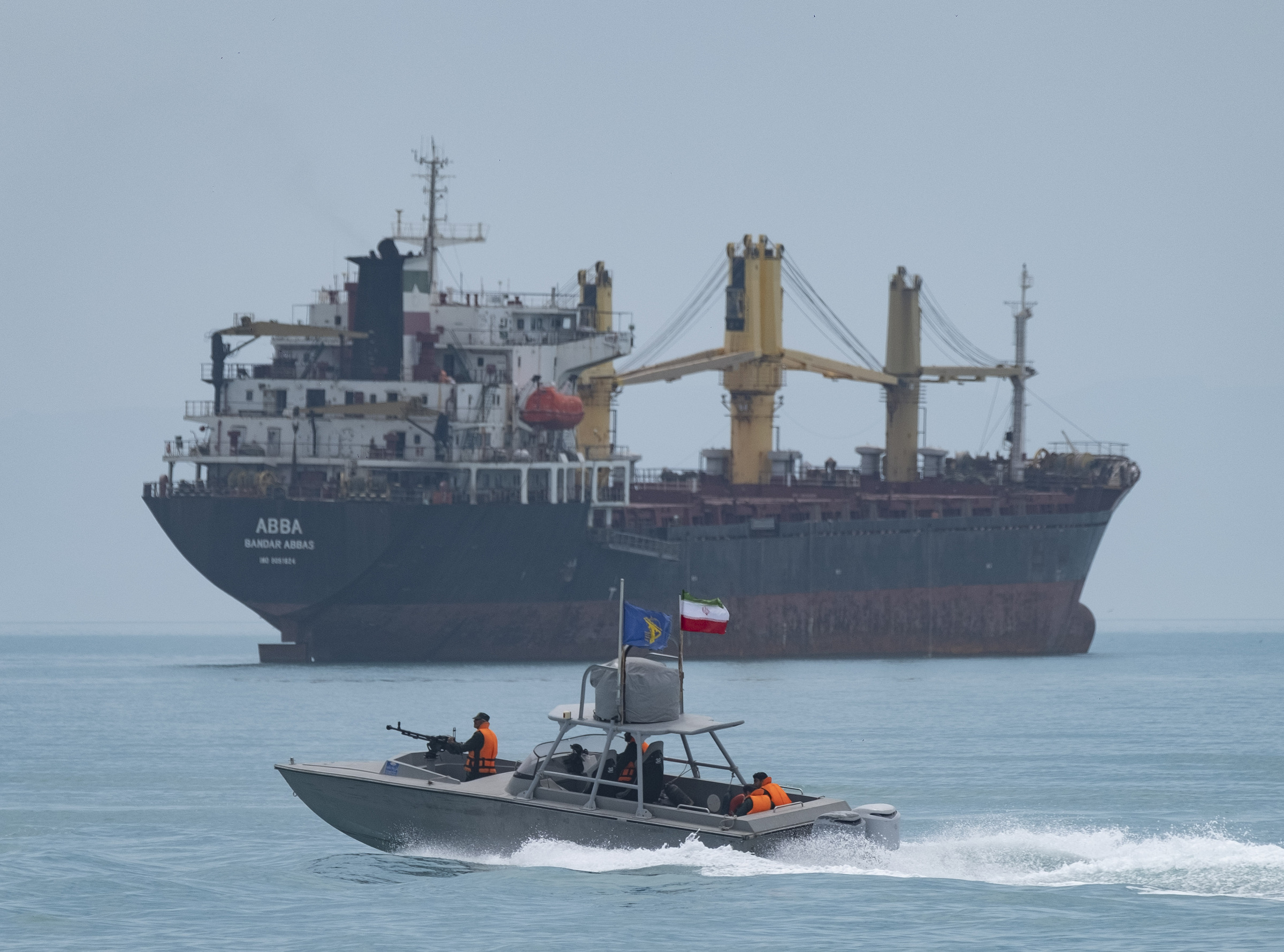 |
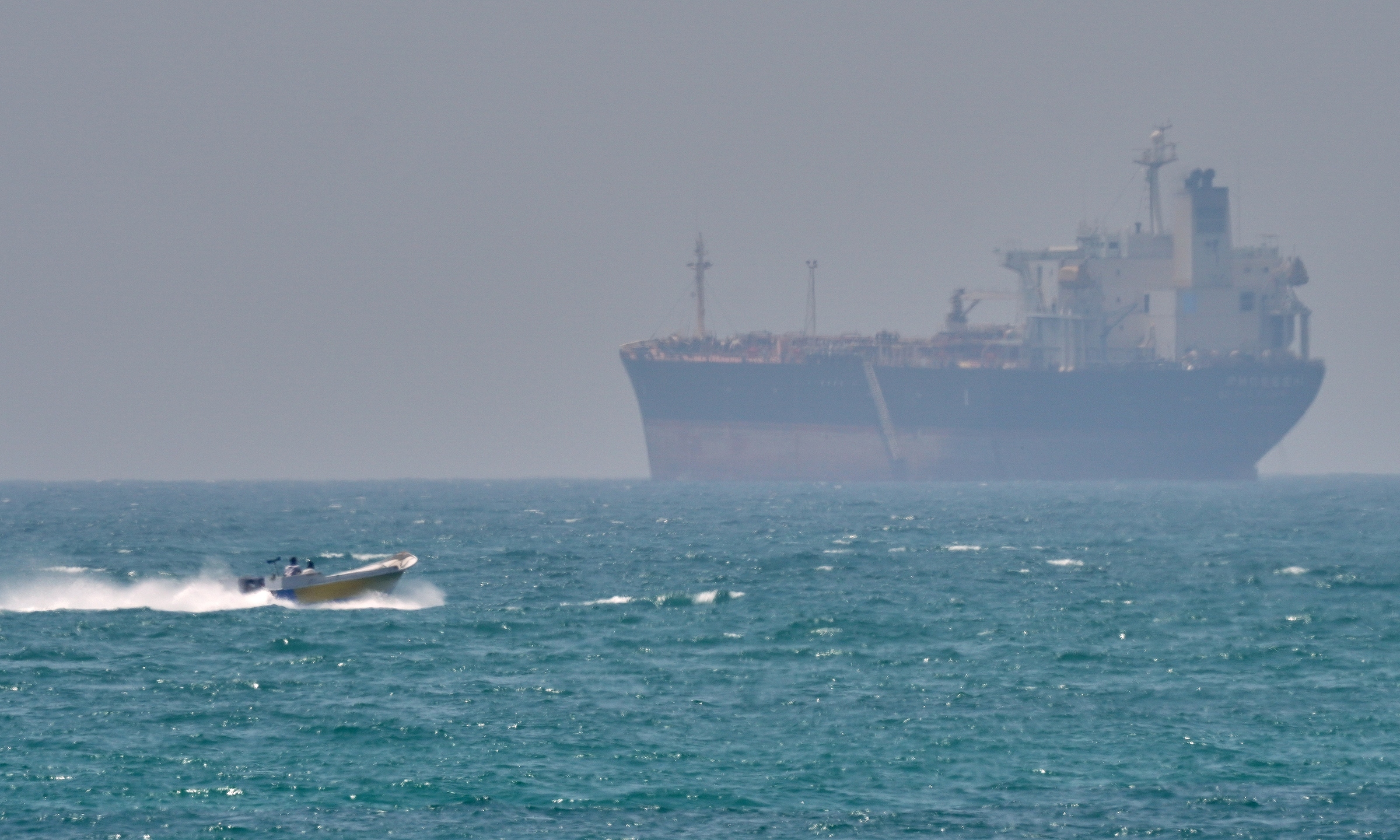
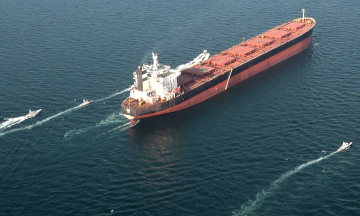
IRGC speedboats moving near a cargo ship in the Persian Gulf on 29/4/2024. AFP
Iran's Supreme National Security Council (SNSC) has declared the country "determined to impose supervision and control over traffic through the Strait of Hormuz until hostilities completely cease." The SNSC emphasized that the US blockade prevents Iran from reopening the route, even partially. Should Hormuz reopen, Iran plans to require vessels to obtain transit permits and pay fees covering security, safety, and environmental protection. A senior Iranian official told CNN that Iran would prioritize vessels willing to pay these fees. "Due to the limited number of permitted transits, Iran has decided to prioritize vessels that respond more quickly to the new regulations of the Strait of Hormuz and pay for security and safety services," the official explained, framing this as part of Iran's efforts to manage vessel traffic "within the context of a new order."
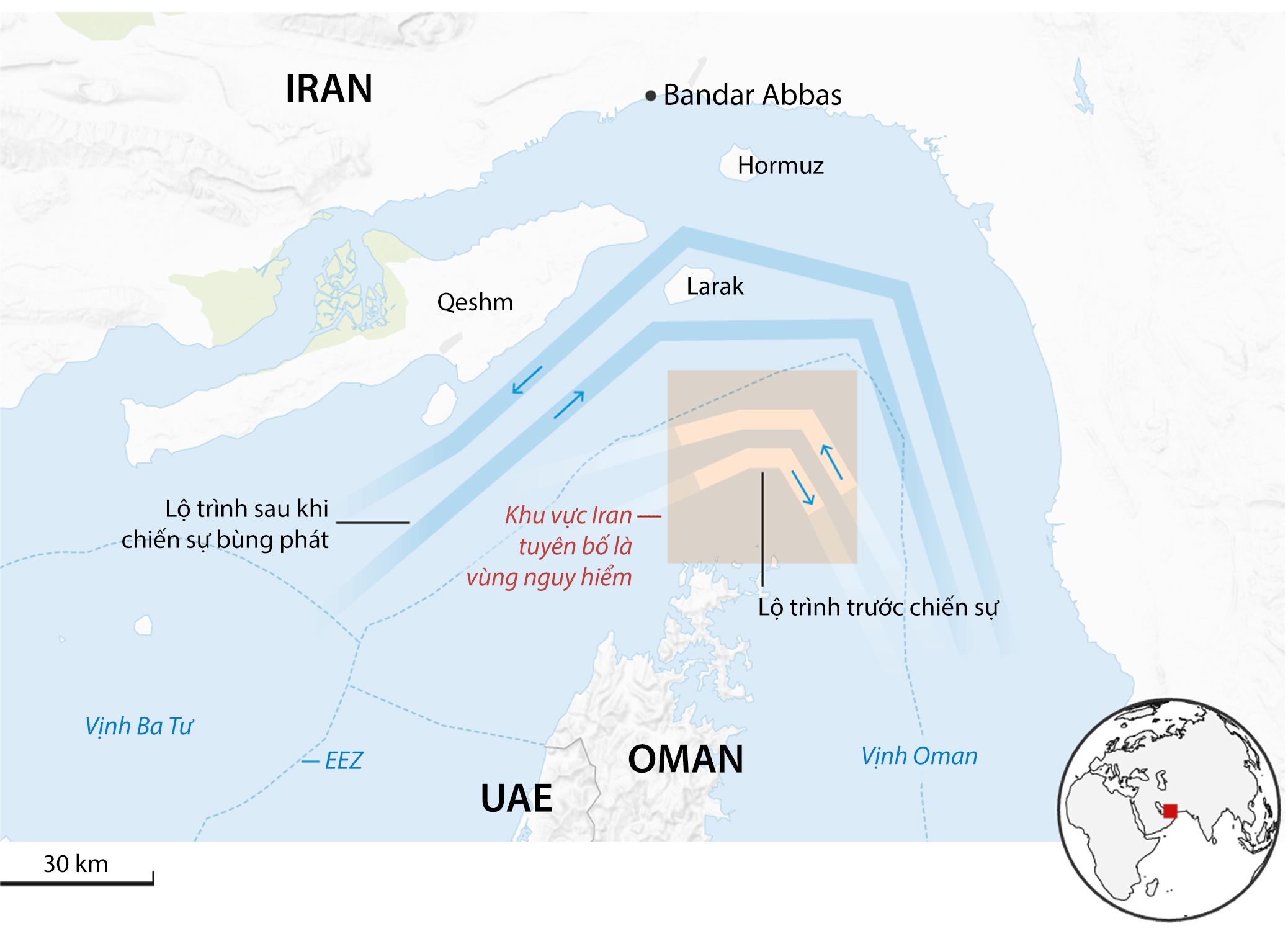 |
The route Iran has outlined for ships passing through the Strait of Hormuz. Guardian
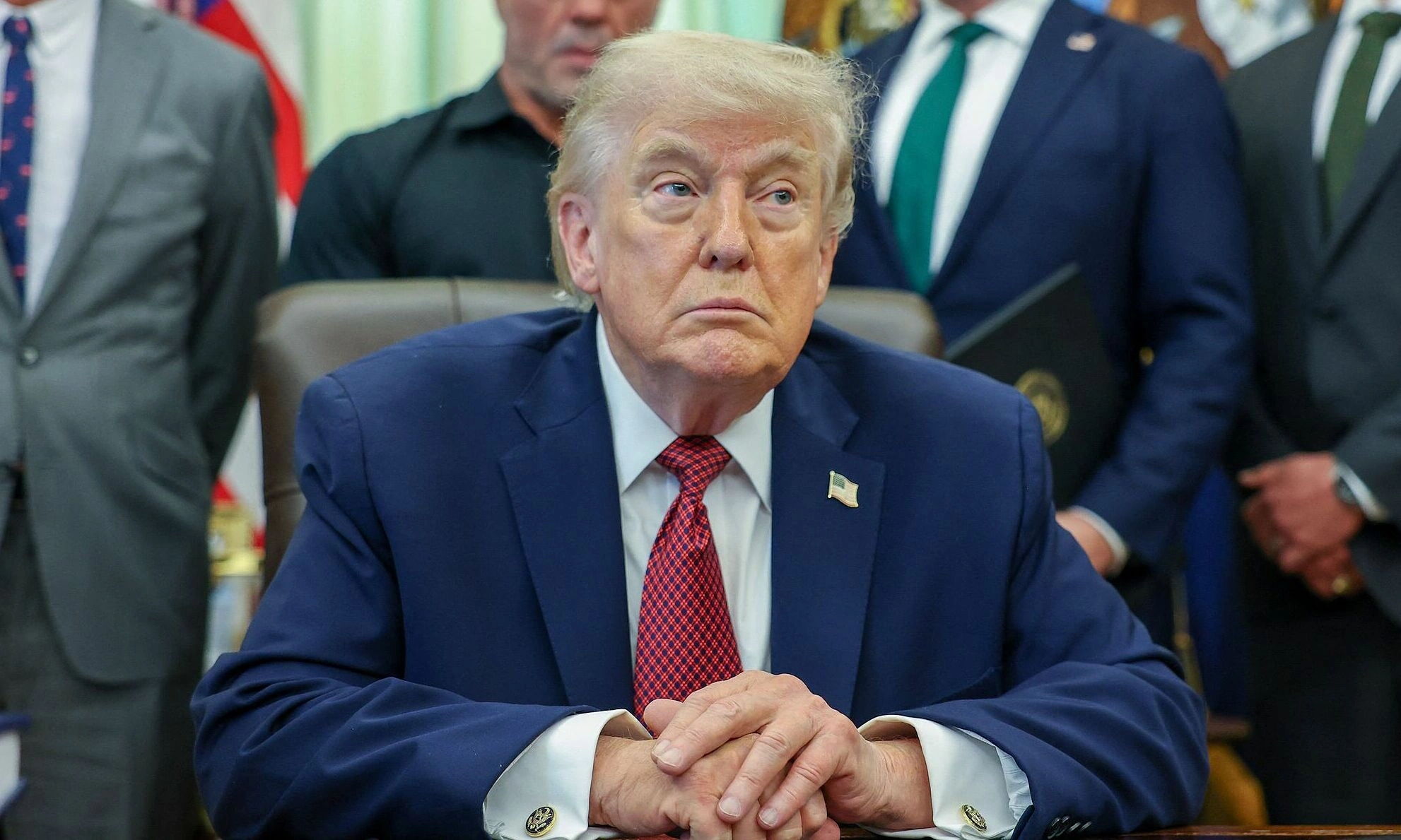
Amidst these developments, Iran's Supreme National Security Council stated on 18/4 that it is reviewing "new proposals" from the US but has not yet responded. Tehran's negotiating delegation, the agency declared, "will not make any concessions, even the smallest, and will strive to protect the interests of the Iranian nation." Concurrently, Axios reported that President Donald Trump convened a meeting with cabinet, intelligence, and military officials to discuss the Hormuz crisis and ongoing negotiations with Iran. Speaking at the White House, President Trump warned Iran against "blackmailing" the US by shifting its stance on the strait but confirmed that dialogue between the two sides is ongoing.
Nhu Tam (According to AFP, Reuters, Al Jazeera)